
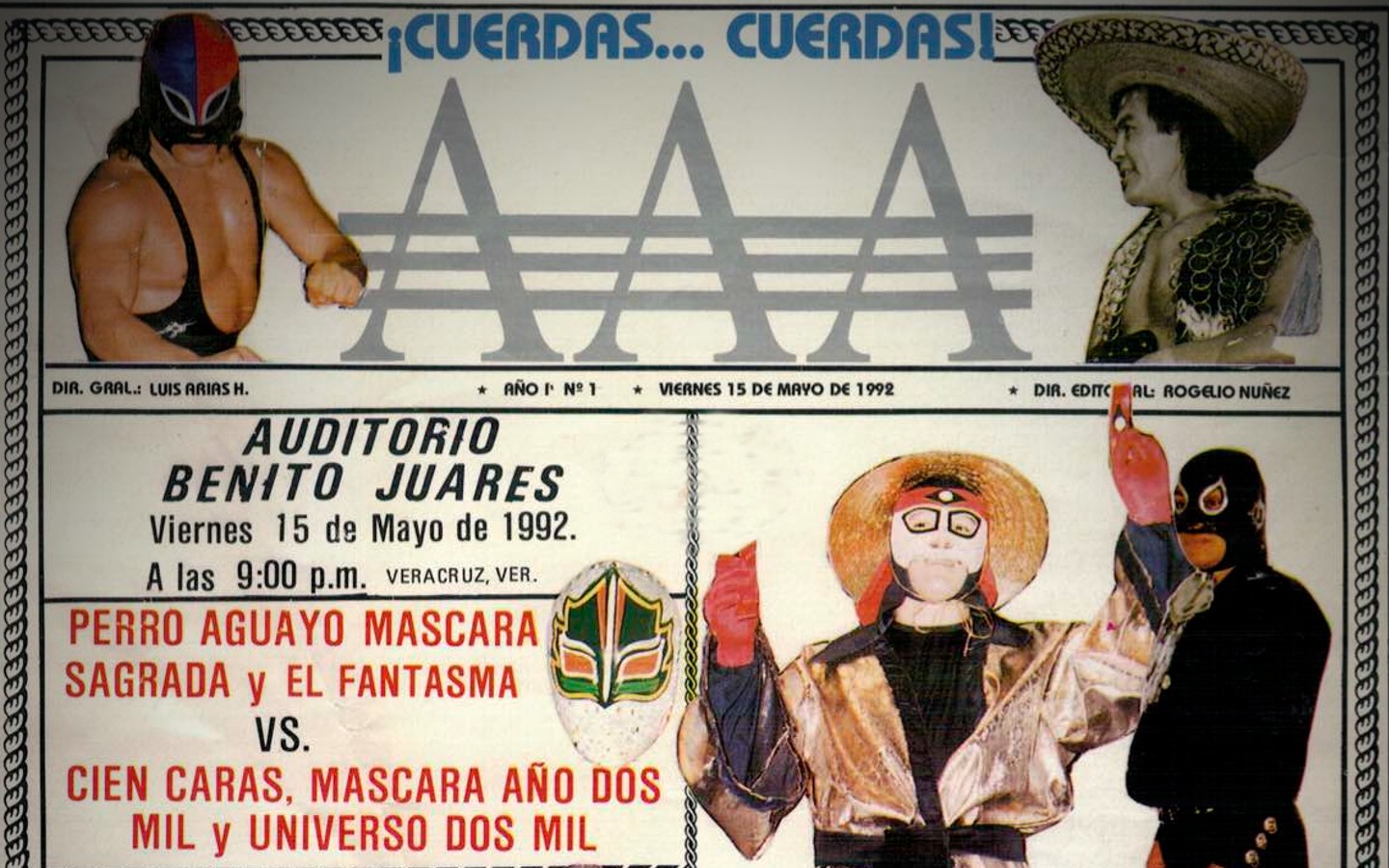
On May 15, 1992, AAA did not look like an institution yet. It looked like a gamble.
Antonio Peña had broken away from the old order, lined up television backing, pulled major stars into his orbit and brought his new promotion to Veracruz for its first card. In hindsight, that night reads like the opening page of a company history. At the time, it was something riskier and more exciting than that. It was a live test of whether Mexican wrestling fans were ready for a different kind of promotion.
They were.
AAA's debut at Auditorio Benito Juárez mattered because it was more than a new logo on a poster. Peña was trying to build a different rhythm for lucha libre, one that leaned hard into television, stronger character presentation, family appeal and the idea that a wrestling show should feel like a spectacle instead of a routine stop on the calendar. That may sound normal now, but in 1992 it felt like a real break from the habits that had defined the established scene.
That week's Wrestling Observer Newsletter treated the split as one of the most important business stories in Mexican wrestling, noting that Peña had publicly launched AAA on May 7, signed 32 wrestlers and booked the first live card for Veracruz just eight days later. Just as important, he had not built the company around Mexico City first. The plan was to tour medium-sized arenas, rotate television tapings and create momentum outside the traditional center of power. It was a bold way to start, especially when the older system still controlled the biggest building and much of the old infrastructure.
The card itself showed exactly what Peña thought the future should look like. The main event put Perro Aguayo, Máscara Sagrada and El Fantasma opposite Los Hermanos Dinamita, Cien Caras, Máscara Año 2000 and Universo 2000, in a trios match filled with star power and instant credibility. The tecnicos won that first headliner, giving the launch night a feel-good ending while still making clear that AAA had serious names from day one.
The undercard mattered too. Octagón teamed with Ángel Azteca and Justiciero against Fuerza Guerrera, Ice Killer and La Parka, and that detail has aged especially well because it marked La Parka's debut. Peña's eye for character was one of the engines behind the whole project, and it is fitting that one of AAA's most enduring visual icons started on the same night as the company itself. There was also a minis match on the bill, which said plenty about what Peña valued. He did not see smaller wrestlers as throwaway comedy. He saw them as part of a complete, colorful wrestling universe.
One of the most fascinating details about the debut is who was not there. Konnan was central to Peña's early vision for AAA and one of the promotion's most important crossover stars, but a work permit dispute kept him off the first taping in Veracruz. In one sense, that could have been a disastrous blow. In another, it proved how much depth Peña had assembled. Even without Konnan in the ring that night, the launch still felt major, still looked loaded, and still carried the sense that a new national force had arrived.
That is the heart of why May 15, 1992 still matters. AAA was not just born that night. It announced its worldview. Peña believed lucha libre could be packaged with more urgency, more movement and more visual flair. He believed television was the key to turning wrestlers into mainstream stars. He believed a promotion could feel modern without losing the emotional core that made Mexican wrestling matter in the first place. The Veracruz debut gave those ideas a public stage.
It also set the pattern for what AAA would become at its hottest. Peña mixed proven names with fresher acts, leaned into trios wrestling, embraced dramatic personalities and understood that presentation could make the whole promotion feel bigger. Within a year, AAA would be ready to stage its first TripleMania and think on an even grander scale. That is why the debut card deserves to be remembered as more than a historical first show. It was the blueprint before the boom.
There is another reason the date stands out. Wrestling history is full of promotions that begin with ambition and disappear before the promise turns into identity. AAA made its identity clear almost immediately. The company felt louder, faster and more extroverted than the promotion Peña had left behind. Fans responded to that energy, especially younger viewers and families who were pulled in by the bright masks, vivid characters and more event-driven presentation. Once television took hold, AAA did not simply survive. It changed the terms of competition.
That impact reached far beyond one night in Veracruz. The promotion helped create new stars, gave a larger stage to talent that fit Peña's vision, and reshaped how major lucha libre could be presented on television. It also became an essential bridge between Mexican wrestling and wider international audiences in the years that followed. If you want to understand why AAA became such a force in the 1990s, the answer starts here, with the first night when the idea had to work in front of a crowd.
The legacy of the debut is not really about nostalgia. It is about recognition. On May 15, 1992, Mexican wrestling got a new power center, and the business has been living with the consequences ever since. AAA's first show in Veracruz was not just the birth of a promotion. It was the moment a different vision of lucha libre stepped into the light and proved it belonged there.