
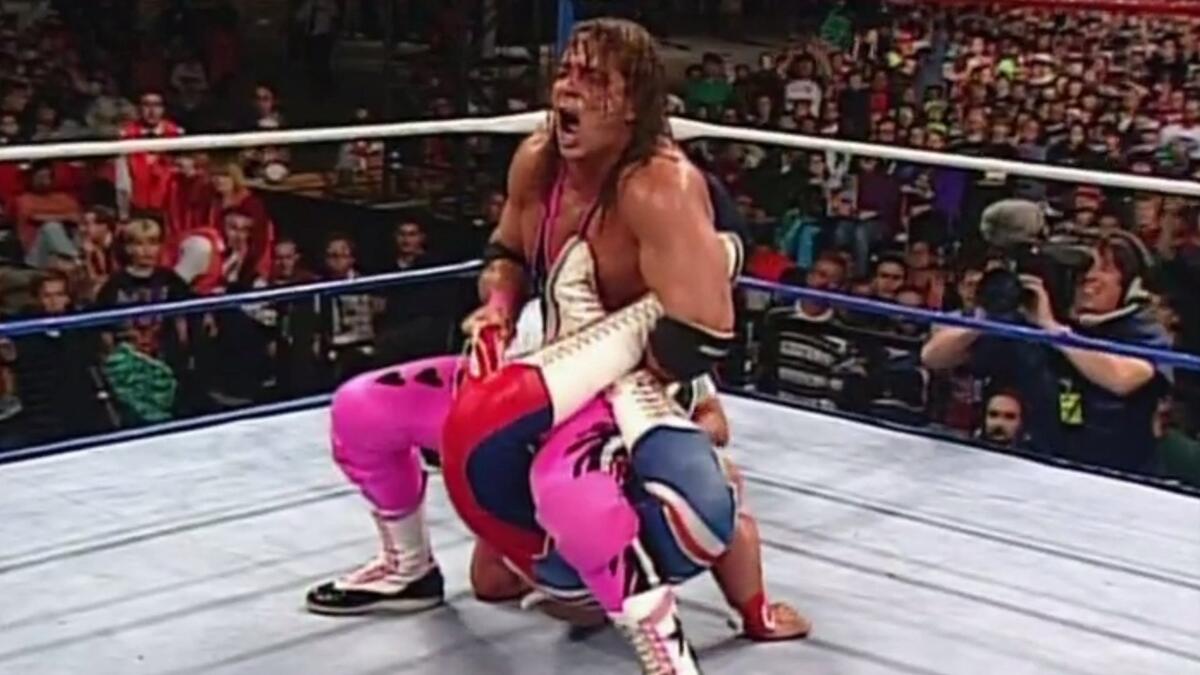
On August 29, 1992, WWF took SummerSlam to Wembley Stadium and made the event feel enormous in a way few wrestling shows ever had. The company drew a paid house of 78,927 in London, a number that later coverage inside the Observer archive treated as one of the strongest attendance achievements the promotion had ever produced. For one afternoon in England, wrestling looked less like a touring television business and more like a major world sporting event.
That scale matters, but it is not the real reason the date still lives so vividly. August 29 is remembered because the biggest match on the show was not the advertised WWF title bout between Randy Savage and Ultimate Warrior. It was Bret Hart defending the Intercontinental Championship against the British Bulldog, with the hometown star walking into Wembley as the local hero and leaving with the belt after 25 minutes that have never really left wrestling conversation.
The result gave Davey Boy Smith the signature singles win of his career. It also gave SummerSlam the match that many fans still use as the standard for what the event can be at its best.
Wembley made SummerSlam feel bigger than America
By 1992, the WWF was not as hot in the United States as it had been at the end of the 1980s boom. Contemporary coverage around the show noted softer business domestically and a lower pay-per-view return than earlier SummerSlam peaks. But the company's popularity in the United Kingdom was strong enough to make a stadium gamble worthwhile, and that is what turned this card into something historically different.
SummerSlam 1992 was the first major WWF pay-per-view staged outside North America. It aired on tape delay in the United States, but in the building that did not matter. Wembley gave the promotion a setting that felt grand, rare and slightly unreal, like WWF had stepped into a larger frame for one night.
That setting also changed the direction of the card. Bret Hart had become one of the company's most reliable workers and one of its most respected champions. Shawn Michaels had been discussed as a future Intercontinental title challenger, but once the company committed to London, there was a much bigger emotional play available. Davey Boy Smith was not simply another opponent. He was the British star who could turn an already major event into a full stadium homecoming.
The move was smart because Wembley did not need a merely good finish. It needed one that belonged to the crowd in the moment. Giving that payoff to Bulldog meant the show had a local pulse from the opening bell of the title match.
Bret Hart and the British Bulldog carried the night
The irony of SummerSlam 1992 is that the nominal main event never became the defining image. Savage and Warrior had the WWF title and the bigger billing, and the show itself leaned on the mystery of where Mr. Perfect's loyalties would fall. But once Bret and Bulldog got their chance, they took over the memory of the event.
Contemporary Observer coverage after the show made that clear. The newsletter's final poll was overwhelmingly in favor of Bret Hart vs. British Bulldog as the best match on the card, far ahead of everything else. That was not a minor distinction on a major pay-per-view. It was a marker that fans knew, almost immediately, which part of SummerSlam 1992 would last.
What made the match hit so hard was that it worked on two levels at once. On one level, it was a classic championship bout built on timing, crowd control and escalation. Bret was already becoming the wrestler you trusted when a company needed a big match to feel serious, and he gave Bulldog a structure sturdy enough for the emotion around him to matter. On the other level, it was pure home-country drama. Every near fall landed harder because the crowd so badly wanted to see Bulldog have his moment.
When Bulldog finally pinned Bret to win the Intercontinental title, Wembley got the ending it came for. That is the part people remember first, but the deeper importance is what the match said about Bret. He lost the title, yet the performance strengthened his standing. Great wrestlers sometimes leave a match with less hardware and more authority, and that is what happened here. Bret came out of Wembley looking even more essential to WWF's future than he had on the way in.
That mattered because the company was entering an awkward transition. Hulk Hogan was absent, the old boom was cooling, and WWF needed stars who could hold the room through craft rather than sheer cartoon force. SummerSlam 1992 showed that Bret could do that. It also showed that if the promotion gave the audience the right emotional hook, Davey Boy Smith could carry a night of real consequence.
Why August 29 still matters to SummerSlam
The lasting value of SummerSlam 1992 is that it combined spectacle and substance. Plenty of wrestling events draw huge crowds. Plenty produce one famous match. This one did both, and it did them in a way that shaped how fans talk about SummerSlam itself.
Wembley became proof that SummerSlam could feel international and historic, not just like WWF's summer stop between WrestleMania seasons. At the same time, Bret Hart vs. British Bulldog became the argument for why the Intercontinental title once mattered so much. The belt did not feel secondary in that setting. It felt like the center of the whole event.
That is why August 29, 1992 still stands above most SummerSlam dates. The show captured a promotion in transition, a market outside North America at full voice and two wrestlers who understood exactly what the building needed. Bulldog got the coronation. Bret helped create the masterpiece. SummerSlam got one of the clearest examples in its history of a match outgrowing the billing beneath it.
Also on this date, SummerSlam 1994 produced Bret Hart's cage-match win over Owen Hart in Chicago, Kevin Owens won the WWE Universal Championship in Houston in 2016, and Tetsuya Naito regained the IWGP heavyweight title at Jingu Stadium in 2020. August 29 has given wrestling more than one major chapter, but Wembley remains the one that feels largest.