
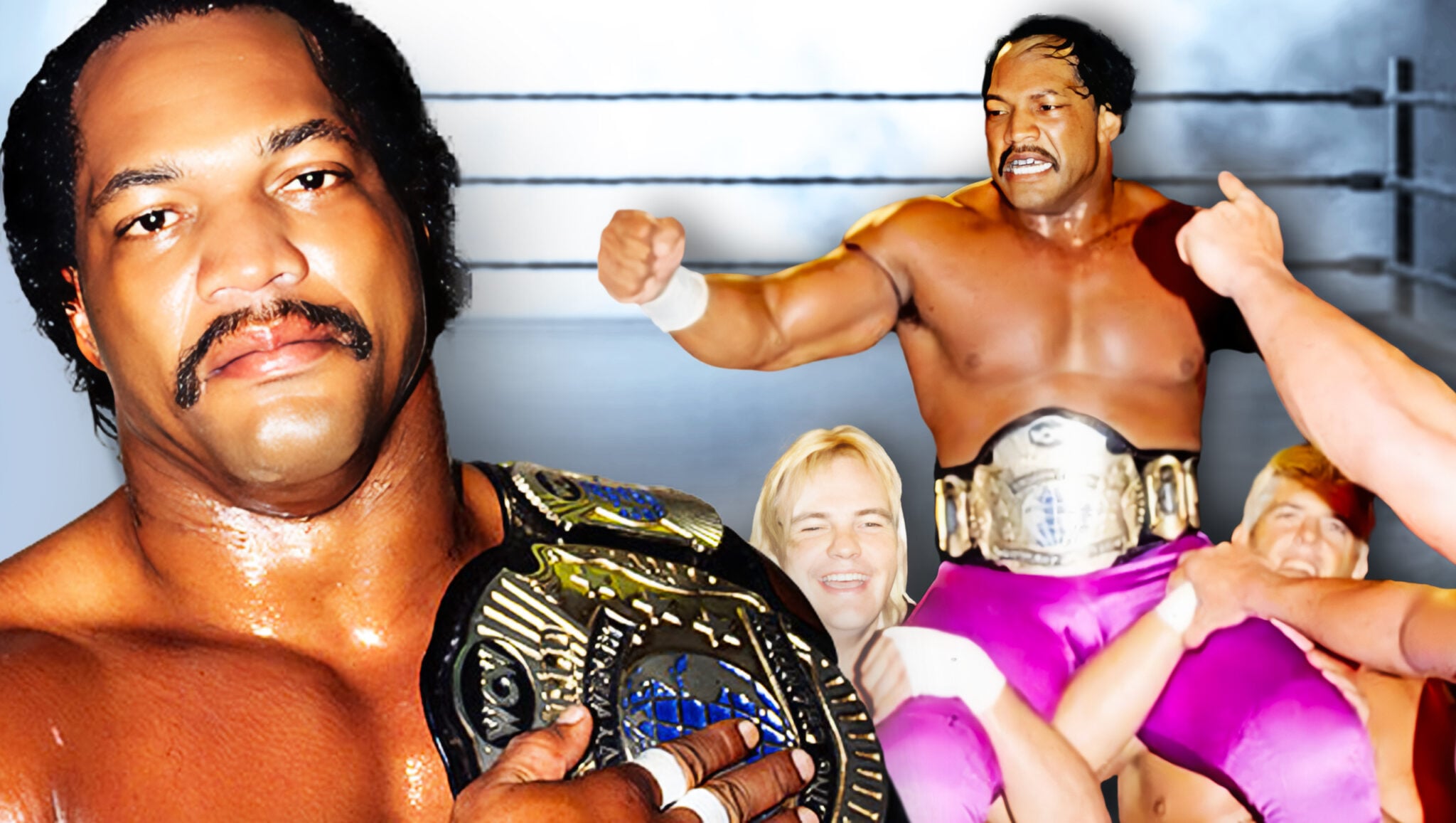
On August 2, 1992, WCW walked into Baltimore with Big Van Vader advertised to defend the world title against Sting. By the end of the night, the promotion had something much bigger than a standard summer main event. Ron Simmons had pinned Vader with a powerslam, won the WCW World Heavyweight Championship, and turned a television taping into one of the most important moments the company ever produced.
That is part of what makes the night so enduring. It did not happen on pay-per-view. It was not the climax of a months-long prestige build in front of the biggest audience WCW could assemble. It happened in a noisy building, on a card built around TV, with a late swerve, a monster champion, and a challenger who suddenly felt like the most natural choice in the world.
How WCW got there in Baltimore
The setup was pure early 90s wrestling chaos. Sting was scheduled for the title match, but an angle earlier in the show took him out after Jake Roberts attacked him with two DDTs on a chair. That gave WCW president Bill Watts an opening to pivot the main event in front of the live crowd.
Simmons was drawn as the replacement challenger from a group of contenders, and the building immediately had a different kind of tension. Vader was not some vulnerable champion waiting to be upset. He was one of the most frightening wrestlers in the business, a huge, violent force who looked built to flatten contenders rather than elevate them. Simmons, for all his athletic gifts and obvious presence, still felt to a lot of fans like a man standing on the edge of the main event rather than fully planted in it.
That is why the finish landed so hard. Contemporary Observer coverage described the match as very good and the crowd as hot from start to finish, which matters because this was not remembered only for symbolism. The bout worked as wrestling first. Vader gave Simmons the kind of opponent a champion has to survive, and Simmons beat him clean in under ten minutes. No foggy finish, no compromise, no half-step. A powerslam, a three count, and Baltimore exploding.
Ron Simmons was ready long before the title came
The title change worked because Simmons did not feel like a charity choice or a headline stunt. By the summer of 1992, he had already built a serious case for himself. He had been a standout athlete long before wrestling, then became one half of Doom, one of the strongest tag teams WCW had in the transition from the NWA years into the early WCW identity. After that team ended, Simmons did not drift. He moved into singles programs, beat Butch Reed in their cage feud, and kept carrying himself like a heavyweight even when the booking did not always put the top belt in reach.
There was also something unusually sturdy about him as a babyface. Simmons was not a polished showbiz talker in the Ric Flair mold, and he was not supposed to be. His credibility came from force, restraint, and the sense that he meant every bit of violence he delivered. When he stepped into the ring with Vader, the visual made sense immediately. This was not a smaller hero trying to steal a miracle. It was one powerhouse meeting another.
That mattered in 1992 because WCW still had an uneven feel about who its true centerpiece stars were. Sting was beloved, Vader was a dominant champion, Roberts had just arrived with major star aura, and Watts was trying to stamp the promotion with his own instincts. Simmons fit that environment because he looked believable in any room. Once WCW made the call, the audience did not have to talk itself into it.
Why the win still means more than one title change
Simmons becoming WCW world champion remains a milestone because it carried both immediate wrestling value and broader historical weight. He was the first Black wrestler to hold WCW's world title, and the victory arrived at a time when major American promotions had rarely trusted Black wrestlers with that level of symbolic centrality. Wrestling had featured great Black stars before Simmons, but giving one the top title in a national promotion was still treated as a genuine barrier being crossed.
What stands out, even now, is how unforced the moment looks once the bell rings. Simmons did not win because the match was framed as a history lesson. He won because the live crowd believed he could beat Vader and then saw him do it. That is the best version of progress in wrestling. The milestone is real, but it is inseparable from the sporting drama.
The Observer's response at the time also caught an important truth. The best thing about the result was not just that Simmons had the belt. It was that the promotion no longer needed to lean on clumsy racial framing every time he moved near the top of the card. The championship itself made the point more cleanly than the hype ever could.
Simmons' reign did not magically solve every problem in WCW, and the company would remain a place of brilliant ideas, baffling reversals, and missed opportunities. But that does not shrink the night. If anything, it sharpens it. Wrestling history is often made in companies that do not always know how to sustain their best instincts. On August 2, 1992, WCW had one of those instincts and followed it.
The Baltimore finish that never really faded
A lot of title changes blur together over time, especially ones that happen away from pay-per-view. This one never has. Part of that is the image of Simmons powering Vader over. Part of it is the sound of a crowd realizing, in real time, that it has seen something bigger than a booking twist. And part of it is that Simmons always felt like the right man for a moment built on toughness and conviction.
There are flashier world title wins in wrestling history. There are bigger gates, more famous arenas, and grander production packages. But Simmons beating Vader in Baltimore still holds up because it came with no wasted motion. WCW put a monster in front of a contender who had earned the audience's respect, trusted the crowd to understand the stakes, and let the finish speak for itself.
More than three decades later, that is still enough. Ron Simmons did not just win a championship on this date in 1992. He gave WCW one of the nights it got absolutely right.