
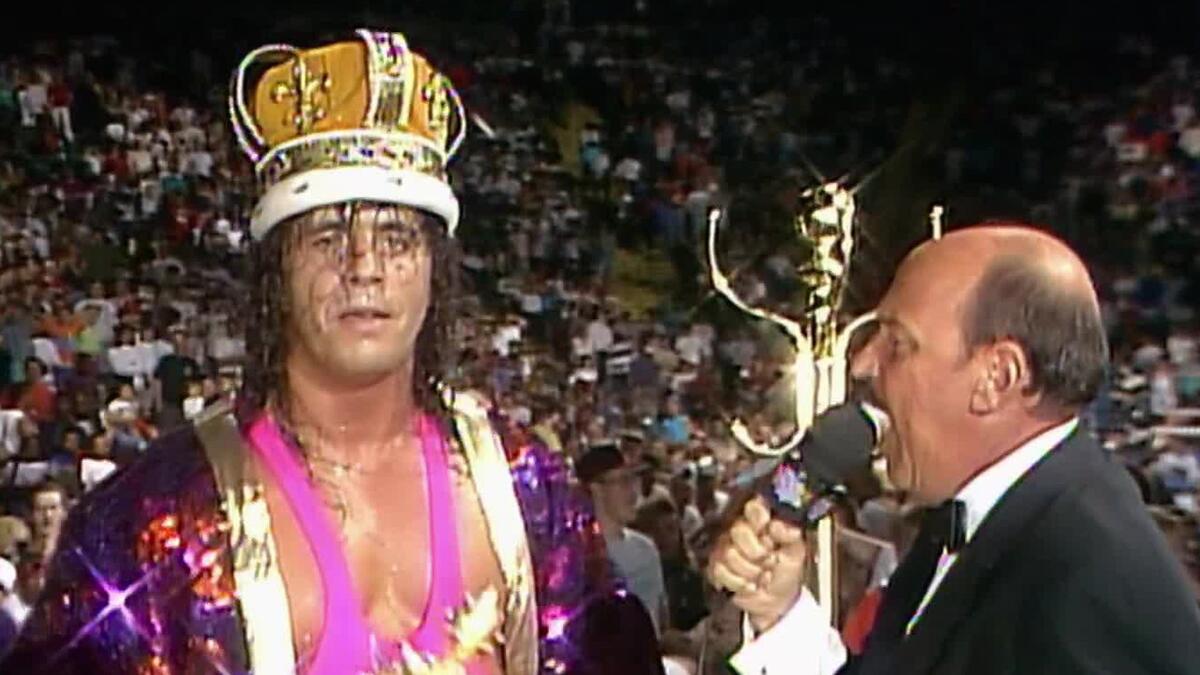
On June 13, 1993, Bret Hart walked into the Nutter Center in Fairborn, Ohio with a chance to win the first King of the Ring pay-per-view and walked out having turned the whole night into a case for why he was the best all-around wrestler in the World Wrestling Federation.
That is not just nostalgia talking. The Wrestling Observer Newsletter framed the show as "the Bret Hart show," and more than three decades later that still feels exactly right. King of the Ring 1993 was a strange turning-point event in company history. Hulk Hogan was still around, Yokozuna was being positioned as a monster champion, Lex Luger was hovering as the next big project, and the cartoon excess of the early 1990s had not fully disappeared. Yet when the bell rang, the wrestler who gave the show its identity was Hart.
He had to do it the hard way, too. The pay-per-view format demanded that he survive three tournament matches in one night. First came Razor Ramon, already one of the coolest acts in the company and a wrestler with enough size and presence to make every Bret comeback feel like a genuine climb. Hart got past him and moved forward, but that was only the start.
The semifinal against Mr. Perfect was the performance that made the whole tournament feel serious. By 1993, Perfect was no longer the untouchable athlete of his peak, but he was still sharp enough to drag someone into a real contest, and Hart did more than just beat him. He gave the match the kind of urgency and precision that made fans believe the tournament itself mattered. It was the bout most remembered coming out of the show, and for good reason. Bret and Perfect wrestled like the crown meant more than a costume and more than a post-match ceremony.
Then came Bam Bam Bigelow in the final, a completely different challenge. Where Razor brought swagger and Perfect brought timing, Bigelow brought mass and chaos. Hart had already spent the night absorbing punishment, so the final had a built-in story before they even locked up. Could the smaller technician still survive after two taxing matches, or would the power wrestler flatten him once the mileage caught up? That tension gave the final real weight. Hart did not just outlast Bigelow. He out-thought him, found his openings, and finished the job to become king.
What made the win resonate was that it did not feel like a hollow tournament victory designed only to fill out a summer pay-per-view schedule. It felt like a declaration of who the promotion could trust when it needed a show carried. Hart was not the loudest character on WWF television. He was not the cartoon giant, the vanity project, or the celebrity crossover. He was the worker who could make the company's biggest event of the season feel more important simply by performing at a level no one else on the card could reach.
That mattered even more because King of the Ring 1993 was also one of the most important hinge-point cards of the era. Later that night, Yokozuna regained the WWF Championship from Hogan in a finish that effectively closed the book on Hogan's original run with the company. The title change was supposed to feel monumental, and historically it was. But it was Bret's tournament journey that gave the event its heartbeat. Hogan's loss signaled the end of one chapter. Bret's win made it easier to imagine what the next one could look like.
In that sense, the date sits right in the middle of the company's shift into the New Generation. Hart had already been world champion, and he was already respected by fans who cared about match quality. But this was one of the clearest nights where the company put its faith in his strengths and got paid back for it. Three matches in one evening asked him for stamina, variety and emotional control. He had to work as the underdog, the technician, the survivor and finally the man who could stand tallest at the end. Few wrestlers in company history could have played all of those notes in one night without the act feeling forced.
The aftermath only strengthened the memory of it. Jerry Lawler attacking Hart during the coronation gave Bret an immediate next feud and, more importantly, gave the tournament win a life beyond the final bell. That was always one of the smart pieces of the show. Hart was not crowned and then left in place as a static photo op king. He was pushed straight into the next conflict, which made the victory feel like movement instead of decoration.
There is also something fitting about Bret's greatest one-night tournament performance arriving at a moment when WWF still had not fully decided what kind of company it wanted to be. Around him were oversized gimmicks, broad comedy, celebrity framing and old top stars still casting shadows. Hart's answer was simple. Wrestle better than everyone else and make that impossible to ignore. On June 13, 1993, that approach won the night.
That is why this event has aged so well for Bret's legacy. When fans talk about the Hitman at his absolute peak, they often jump to the Austin rivalry, the Owen feud, or the classic title matches with Bulldog and Perfect. All of those belong in the conversation. But King of the Ring 1993 deserves its own shelf because it showed Hart as a complete main event craftsman. He was not relying on one famous promo, one shock turn, or one legendary stipulation. He simply had to be excellent over and over again until the whole building, and eventually the whole audience at home, understood who the night belonged to.
Other June 13 milestones surfaced in the archive as well. WCW's surprise 1998 house show main event in Pittsburgh saw Bill Goldberg pin Sting in a match that was never originally scheduled, while Prince Devitt's 2010 Best of the Super Juniors win marked the first time a foreigner had taken that tournament since 1996. Both mattered. Neither matched the way Bret's 1993 performance captured a company in transition and bent the story toward him.
On this day in 1993, the first King of the Ring pay-per-view needed a centerpiece. Bret Hart gave it one, and in the process turned a summer tournament into one of the defining snapshots of his career.