
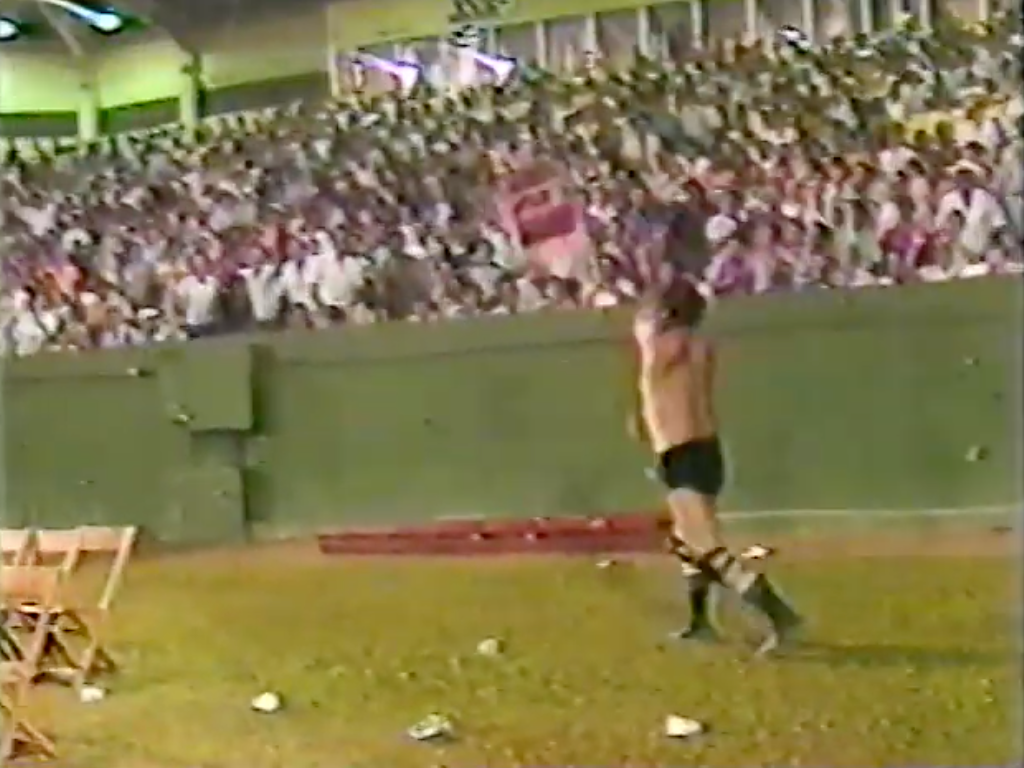
On August 8, 1993, Carlos Colón beat Terry Funk in Bayamón in what was billed as his final match ever, and the result mattered for more than the usual retirement-match sentiment. For Puerto Rico, and for World Wrestling Council in particular, the night felt like a curtain call for the wrestler who had carried the promotion through its hottest years and given the island one of its few truly homegrown superstars.
That is what makes the date stand out. Wrestling retirements are rarely simple, but this one was presented as the end of Colón's in-ring run at the top of the company he helped build. He was not just another veteran being honored on the way out. He was the central figure in WWC history, the wrestler around whom the territory's biggest rivalries, biggest stadium shows and biggest emotional swings had long been organized.
Why the Bayamón setting mattered so much
The match took place as part of WWC's 20th anniversary event at Bayamón Stadium, which tells you how much symbolic weight the promotion wanted the night to carry. Colón's popularity had peaked in the early 1980s, when he was often the man at the center of the island's biggest outdoor cards. He had been the local constant in a territory that brought in names from all over the wrestling world, from Ric Flair to Bruiser Brody to Abdullah the Butcher, but the emotional connection always came back to Colón as Puerto Rico's standard-bearer.
By 1993, the landscape was different. The major territorial boom was gone. Wrestling still mattered in Puerto Rico, but not with the same sense that the whole scene revolved around one larger-than-life local hero defending the home front. That is why an advertised Colón retirement on the promotion's anniversary card was bigger than a simple main event. It was WWC acknowledging that one of the engines of its identity had reached a finishing point.
The rest of the show reinforced that feeling. Colón entered the night as Universal champion, but the company also ran a three-city tournament to establish the next titleholder after his exit. Greg Valentine beat Invader #1 in the final on the same August 8 card to win the vacant championship. In other words, this was not just about celebrating a legend. WWC was trying to stage a handoff while still giving the old ace one last emotional spotlight.
Why Terry Funk was the right final opponent
Funk made sense as the man across the ring because he carried the right kind of chaos and credibility. He was already one of wrestling's great drifters, a former world champion who could make any territory feel dangerous just by walking into it. In Puerto Rico, where blood-feud wrestling and personal hatred had always drawn better than polite exhibition, Funk was an ideal opponent for a farewell built around emotion rather than clean athletic closure.
That pairing also underlined what kind of star Colón had been. His best nights were not built on a national television machine or on polished corporate branding. They were built on local identification, grudges and the sense that every major outsider had to answer to him when they came to Puerto Rico. Funk fit that tradition perfectly. A retirement match against a respected but volatile outsider let the crowd see Colón in the role that had defined him for years, defending his ground and surviving one more brawl.
Contemporary coverage also placed the bout inside a broader moment for the territory. The anniversary event was not treated as nostalgia for nostalgia's sake. It was framed as a genuine milestone for the promotion and for the biggest drawing card it had ever produced. That distinction matters. Plenty of veterans get farewell matches because it feels polite to give them one. Colón got his because WWC history was impossible to tell without him.
What August 8 said about Carlos Colón's legacy
The most revealing detail is that Colón retired as champion. Promotions do not usually send a top belt out the door with someone unless they want to make a point. WWC clearly did. Colón was not being reduced to a ceremonial figure. He was still being presented as the man whose position mattered so much that the next phase of the company had to be structured around his departure.
That says a lot about how deeply he had shaped Puerto Rican wrestling. Colón was never simply a top babyface. He was the face of a whole local wrestling language, the righteous defender, the brawler willing to bleed, the figure who made imported stars feel like invaders even when they were bigger names globally. Fans did not just buy tickets to watch him win. They bought into what he represented for the promotion.
It also explains why the date still lands historically even if wrestling retirements are always a little slippery in hindsight. The importance of August 8, 1993 is not that it permanently froze Colón in place. It is that WWC chose to present that night as the closing chapter of its foundational hero, and in doing so admitted that the old era could not last forever.
There is a bigger territorial story inside that. By the early 1990s, many of wrestling's old regional strongholds were either gone or surviving in smaller form after national expansion changed the business. Puerto Rico held on longer than most because it had stars the audience felt belonged to them. Colón was the clearest example. A farewell for him was never just personal. It was tied to the fading of the environment that had made him possible in the first place.
That is why this date deserves more than a quick mention in the record books. On the surface, it was Carlos Colón beating Terry Funk in Bayamón. Underneath that, it was WWC saluting the wrestler who had carried its pride, its bloodiest feuds and its biggest nights, while also acknowledging that the territory had entered a different age.
Also on this date
August 8, 1993 had another notable title change in the wider wrestling landscape. At an ECW television taping in Philadelphia, Tito Santana beat Don Muraco to win the ECW title. It is a fascinating snapshot of how different the company still looked before the Extreme era fully hardened. But the deeper historical weight on this date sits in Bayamón, where Colón's advertised farewell brought one of Puerto Rican wrestling's central runs to its symbolic finish.