
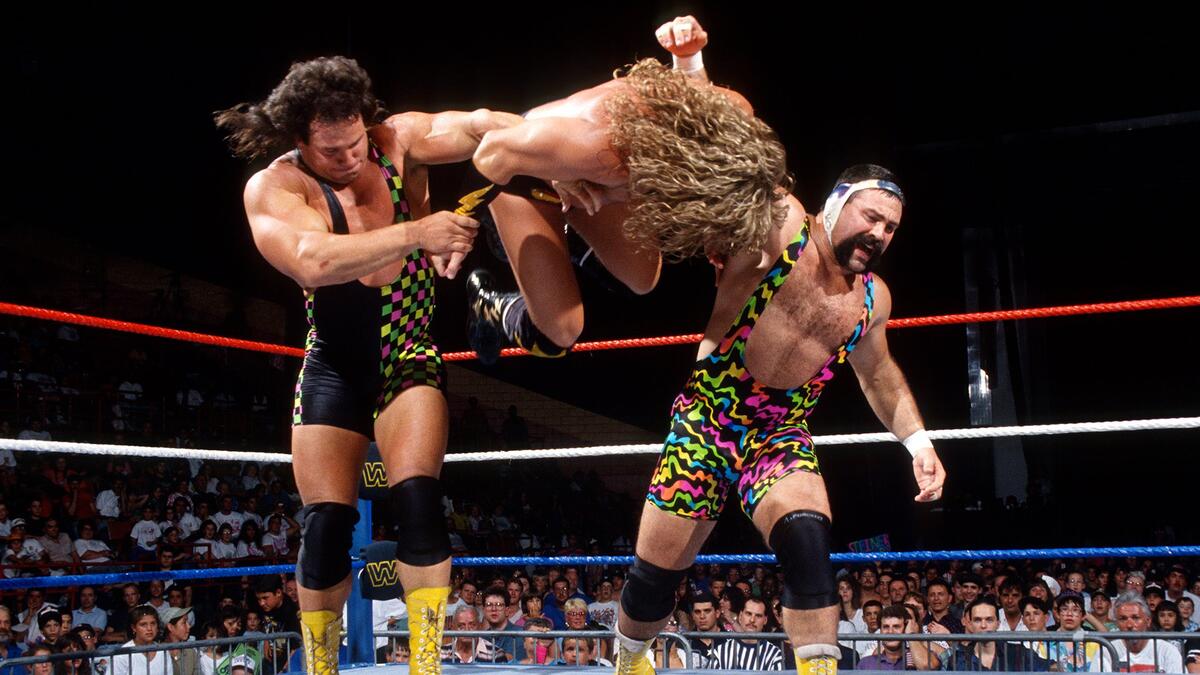
On June 14, 1993, the Steiner Brothers beat Money Inc. at a WWF Wrestling Challenge taping in Columbus, Ohio and finally got their hands on the tag team titles. It was a title change taped for television, staged in front of roughly 3,700 fans, and in the moment it probably felt like a reward for a team that had already spent months proving it belonged at the top of the division.
Looking back, it reads as something bigger than that. The Steiners did not just win belts that night. They brought a different kind of credibility into a company that was still trying to figure out what came after its 1980s boom, and the title switch showed the WWF knew it.
By the summer of 1993, Rick and Scott Steiner were already one of the most respected tag teams in the world. They had the amateur credentials, the explosiveness and the reputation that came from shining in WCW and Japan before they ever put on a WWF logo. In a tag scene that often leaned hard on gimmicks, catchphrases and broad character work, the Steiners felt like a team that could maul you for real and then hit you with something spectacular a second later. Scott had freak-athlete burst. Rick had the bulldog snarl and the sense that he enjoyed the violence a little too much. Together, they felt like a throwback and a preview at the same time.
Money Inc., on the other side, were exactly the kind of champions the early-1990s WWF trusted. Ted DiBiase and I.R.S. were polished, dependable heels who understood television, knew how to control a crowd and never let the belts look unimportant. Their act was never about being the most dynamic team in the company. It was about being smug, protected and annoying enough that the babyfaces had to chase them. That formula worked, and it gave the Steiners the right kind of target.
The Observer's coverage of the period pointed out that WWF was leaning into faster angles and more frequent title switches, almost in a Memphis-style rhythm, as it searched for ways to stay lively during a cooling business period. That broader context matters here. The Steiner Brothers were not crowned in the middle of some settled golden age. They won the titles at a time when the company was experimenting, reshuffling and trying to spark interest wherever it could.
That made the choice of champions revealing. If the company wanted a quick jolt, it still could have gone with another cartoon act or another safe short-term gimmick play. Instead, it put the belts on a team that represented intensity, legitimacy and athletic quality. The Steiners had already worked the previous night's King of the Ring pay-per-view, teaming with the Smoking Gunns in an eight-man match against Money Inc. and the Headshrinkers. The next night, the feud paid off with the title switch in Columbus.
There is an irony to the way the reign is remembered. The first Steiner title run in the WWF was brief. Money Inc. regained the belts two days later, and the titles changed hands again before the week was out. On paper, that kind of hot potato can make a championship win feel less important. In practice, June 14 still stands out because it was the moment the company made its decision. The belt changes that followed were part of the chaos of the era. The first win was the statement.
And it was a useful statement for the WWF to make. The company was in transition everywhere you looked. Hulk Hogan's original run was ending. Bret Hart was becoming the wrestler who could steady a major show with pure ring work. Yokozuna was being rebuilt as a monster champion. Lex Luger was waiting in the wings as the next big national project. In the middle of all that, the tag division needed an identity of its own. Putting the belts on the Steiners was a way of saying that tag wrestling could still feel serious, urgent and rooted in competition even inside a promotion that was often tugged in louder directions.
It also helped that the Steiners were different from most WWF babyface acts of the time. They were not underdogs in the Bret Hart mold, and they were not all charisma and swagger like the Rockers had been a few years earlier. Their appeal was more blunt. They looked like they could throw champions across the room, and then they actually did it. Fans did not have to imagine toughness with the Steiners. That was the whole presentation.
June 14 matters for another reason, too. It was one of those nights that captured what made the team special before the WWF machine fully sanded down the edges of the era around them. Later generations would remember Scott for the chainmail promos and the wild reinvention of Big Poppa Pump. Rick would always have his barking entrance and his cult popularity. But the Steiner Brothers of 1993 were still, first and foremost, one of wrestling's great pure tag teams. Their timing, urgency and violence all landed at once. A title win over Money Inc. felt less like a ceremonial handoff and more like a collision that had finally gone the challengers' way.
The reign that followed did not rewrite the whole company. The New Generation was still uneven, and the WWF would keep searching for the right mix of athleticism, personality and star power. But that does not make the Columbus win small. If anything, it makes it more interesting. June 14, 1993 was not a neat beginning to a long dynasty. It was a flashpoint, a night when the company briefly aligned itself with one of the best tag teams in the world and let the belts reflect that.
Other June 14 milestones surfaced in the archive as well. Pegasus Kid won New Japan's Top of the Super Junior tournament in Osaka later that same year, Keiji Muto defended the IWGP heavyweight title against Hiroyoshi Tenzan in 1995, Go Shiozaki won NOAH's vacant GHC heavyweight title in 2009, and Masato Yoshino captured the Open the Dream Gate title in 2015. All were strong candidates. For broad audience recognition and for what it said about a major North American promotion in transition, the Steiner Brothers' WWF breakthrough had the most weight.
On this day in 1993, the WWF tag belts moved to Rick and Scott Steiner for the first time. The reign itself was short. The signal it sent about who still looked like the real thing in a changing company has lasted much longer.