
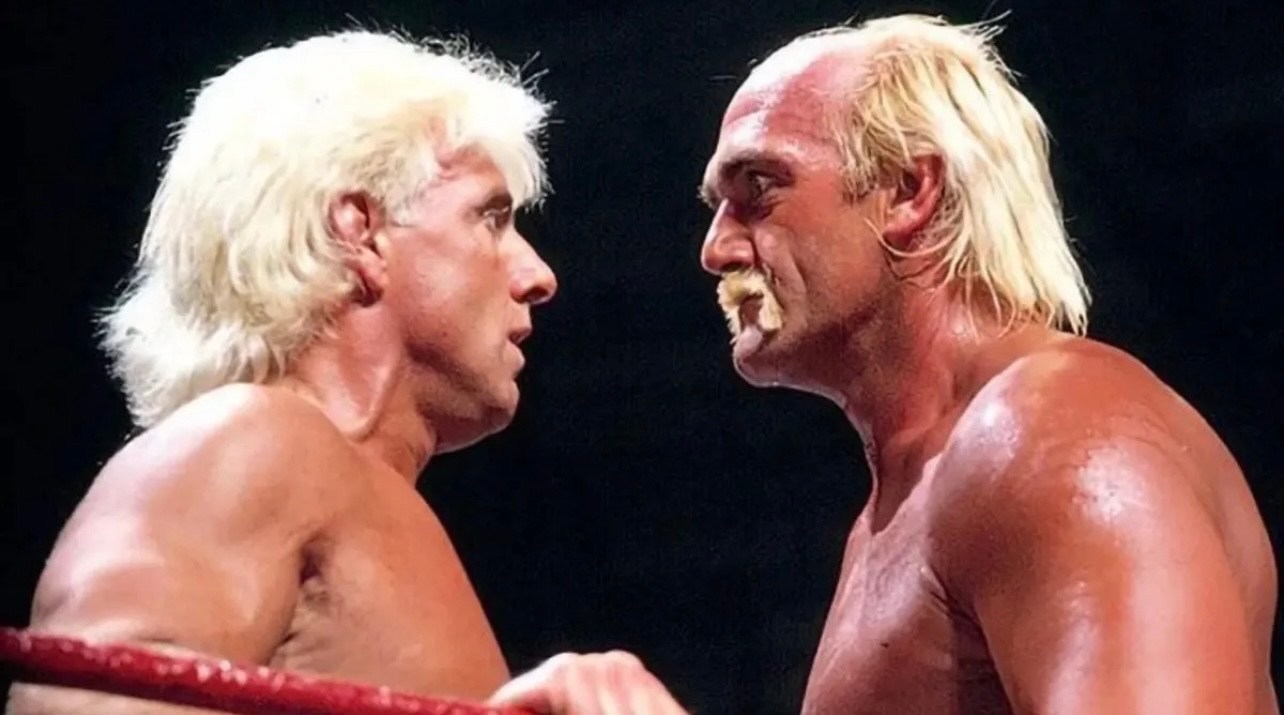
On August 24, 1994, WCW put its biggest possible match on free television and watched the numbers jump into the history books.
Hulk Hogan defending the WCW title against Ric Flair on Clash of the Champions XXVIII was not remembered as a perfect match, and it was not even remembered as a perfect show. What it did become was something more important to WCW in that moment. It became proof that Hogan's arrival had changed the company's ceiling overnight.
By the end of the night in Cedar Rapids, the Hogan vs. Flair main event had drawn 4.126 million homes for its peak quarter hour, the biggest cable audience ever attached to a single pro wrestling match to that point. For a company that had spent years looking up at WWF, and had only brought Hogan in a few weeks earlier, that number mattered more than any tidy critical review ever could.
Why this was WCW's biggest available play
Clash of the Champions had always been designed as a special kind of weapon. The series gave WCW a way to present pay-per-view level matches on TBS without asking fans to open their wallets. In earlier years, that formula helped make stars and keep the company visible. By 1994, WCW needed it for something more urgent.
Hogan had just come in from WWF, won the WCW title from Flair at Bash at the Beach, and instantly become the centre of the promotion. That changed the scale of everything. A normal television main event was no longer enough. If WCW was going to test how far Hogan could move the needle, the cleanest experiment was obvious: put him back in the ring with Flair, give the match a prime-time stage, and make sure everyone knew it was happening.
That was the real importance of August 24. It was not only a rematch between two giants of their era. It was WCW asking a much bigger business question in public. Could Hogan make Turner-owned wrestling feel mainstream again on cable television?
The answer, at least for one night, was yes.
The audience came for Hogan vs. Flair
The Wrestling Observer Newsletter's coverage of the show captured just how strong the result was. Clash of the Champions XXVIII did a 4.5 rating, the highest rated television special on TBS in 1994. The full show averaged 2.754 million households, making it the second most widely viewed wrestling show in TBS history at the time. Then the main event pushed even higher.
That last quarter hour, driven by Hogan and Flair, reached 4.126 million homes and set a new cable record for a wrestling match. The quarter did a 6.7 rating and an 11.3 share, which put it among the biggest cable wrestling main events of the modern era.
Those numbers did not happen by accident. WCW stacked the show with as much television drama as it could. Hogan was attacked before the match in a knee injury angle, the company spent the night teasing whether he could even make it to the ring, and the card kept circling back to the question. Ricky Steamboat also beat Steve Austin for the U.S. title on the same broadcast, but even a title change of that quality was pushed into the background by the company's determination to make Hogan's condition the story of the night.
When the main event finally arrived, the match itself was built around that bad knee. Flair and Sherri worked it relentlessly, Hogan fought through it, and the finish came when Sherri struck Hogan's knee with her shoe and sent him to the floor, allowing Flair to win by count-out. There was confusion afterward, with Michael Buffer briefly announcing Flair as the new champion before the mistake was corrected and Hogan remained champion.
It was messy. It was overbooked. It was exactly the sort of finish that can leave a crowd annoyed even when the heat is real.
And none of that stopped the match from drawing a huge audience.
The record came with a warning
That is what makes August 24, 1994 so interesting to revisit now. The show was a massive television success, but it also exposed the cost of building all of WCW around Hogan.
The same reporting that celebrated the record also made clear that many viewers did not love the ending. WCW had created a scenario that seemed to beg for either a title change or a cleaner payoff, especially after spending the full broadcast selling Hogan's injury. Instead, the company chose the kind of escape hatch that protected the champion, kept the feud alive and left plenty of frustration in its wake.
In other words, WCW got the number it wanted, but it also showed what Hogan-era booking would often look like. The company could generate enormous interest with his name, but that did not mean it was willing to follow that interest to the boldest possible finish.
There was another warning sign in the building itself. Despite the television success, the live house was only about 4,200 fans in a setup reportedly cut to around 6,000 seats. The home audience was enormous. The in-person turnout was merely fair. That split mattered because it hinted at what Hogan could do best for WCW right away: make the company feel hotter on television than it necessarily was in every market on the ground.
That was still a win in 1994. Turner cared deeply about ratings, WCW needed momentum, and a free TV special that produced the most watched cable match ever was impossible to dismiss. But the contradictions were already there. Hogan brought instant relevance, yet the promotion also became more dependent on protecting the Hogan machine at every turn.
Why the night still matters
There are better matches than Hogan vs. Flair on this Clash. There are cleaner endings. There are bigger live gates in WCW history. But August 24, 1994 still deserves its place because it showed, in one night, what Hogan was worth to a struggling national promotion.
He gave WCW a sense of scale it had been chasing for years. Flair gave him the ideal foil, a familiar rival with enough star power to make the match feel historic before the bell even rang. The result was a free television main event that felt big enough to command attention far beyond the usual wrestling diehards.
That is the memory worth keeping. Not just the awkward finish or the title confusion, but the fact that WCW put Hogan and Flair on TBS and got a record audience back for it. In an era when cable numbers still shaped the way wrestling promotions saw themselves, that made August 24 one of the defining business nights of 1994.
WCW did not solve every problem it had. It did not even produce the perfect version of its biggest feud. What it did produce was a measurable piece of history. For one late-summer night in Cedar Rapids, Hogan and Flair made free television feel like the centre of the wrestling world.