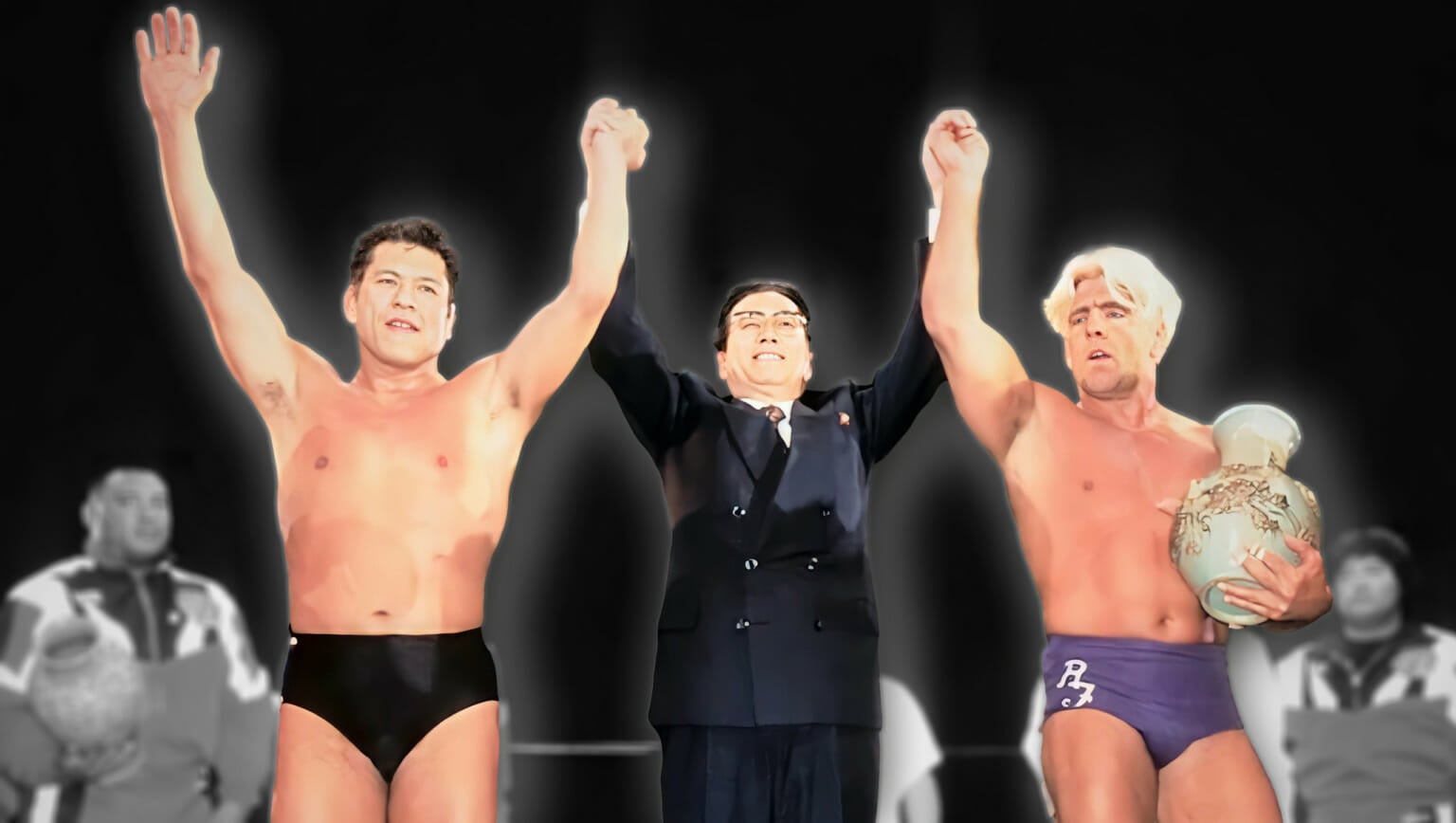
On April 28, 1995, pro wrestling walked into Pyongyang's May Day Stadium and blew up every crowd number the business thought it understood.
The first night of Collision in Korea, the joint New Japan Pro-Wrestling and WCW event staged as part of the Pyongyang International Sports and Culture Festival for Peace, drew a reported 150,000 fans. Even with all the usual caution that comes with wrestling attendance claims, that was still an astonishing figure. It nearly doubled the benchmark the business had spent years measuring itself against, and it did it in the least normal wrestling setting imaginable.
By the time the second night reportedly went even higher, the record had been smashed twice in 24 hours. But April 28 is the date where the old scale broke first. Wrestling's biggest crowd ever, at least by the figures accepted at the time, stopped belonging to WrestleMania III and started belonging to a show in North Korea that still feels half surreal even now.
The setting is a huge part of why the date still stands out. This was not just a supershow dropped into a hot wrestling market. It was a state-backed spectacle in one of the most politically closed countries on earth, built around Antonio Inoki's unusual place in both wrestling and public life. Muhammad Ali was at ringside. Foreign guests were escorted by government handlers. The show aired live across North Korea. And on night one, neither Inoki nor Ric Flair even wrestled. The main event on April 28 was IWGP heavyweight champion Shinya Hashimoto going to a 20-minute draw with Scott Norton.
That alone says a lot about the event. Collision in Korea was not built like a normal North American pay-per-view where the entire night rose and fell on one main event. The size of the happening was the story. Hashimoto, one of New Japan's defining heavyweight champions of the decade, and Norton, the powerhouse American who fit perfectly into that harder-edged 1990s New Japan environment, closed the first night in front of a reported crowd so massive that the match itself almost became secondary. The scale swallowed everything.
The May 8, 1995 Observer coverage treated the attendance story as the real headline, and that remains the cleanest way to understand the show. Wrestling had packed major buildings before. It had drawn stadium crowds in the United States, Canada and Japan. But 150,000 for one night changed the frame completely. Before Pyongyang, the accepted reference point was Hulk Hogan vs. Andre the Giant at the Pontiac Silverdome in 1987. After Pyongyang, even that famous number looked small.
What makes April 28 so fascinating is that it was not simply a bigger version of a familiar wrestling success story. It was a collision of wrestling, politics, diplomacy and spectacle. Inoki saw these trips as something larger than just cards and gates. WCW saw international reach and publicity. North Korea saw a chance to stage a giant public event with global names attached to it. All three motives were different, and all three were visible in the finished product.
That is why the event still feels hard to file away neatly. It was historically important, but not in the way fans usually talk about historically important wrestling shows. Nobody points to Collision in Korea the way they point to WrestleMania X-Seven, Starrcade 1983 or the first ECW pay-per-view. It is not remembered because it changed match style, promo language or weekly television. It is remembered because it proved that pro wrestling, under the strangest possible circumstances, could become part of a geopolitical show of force and still function as wrestling.
There is also something very 1990s about the whole thing. This was an era when wrestling still had one foot in the territory past, one foot in the coming Monday Night War, and enough looseness around the edges for an idea this bizarre to actually happen. A modern major promotion can fill football stadiums and generate bigger revenue, but it is hard to imagine any company today replicating the combination of political theater, logistical risk and sheer unreality that defined Pyongyang in 1995.
For that reason, April 28 matters as more than a trivia answer about attendance records. It marks the day wrestling's sense of scale changed. Even if you are skeptical of every claimed number from that weekend, the opening night still landed as something enormous, unprecedented and impossible to ignore. The business has produced cleaner classics, hotter crowds and more influential cards. It has almost certainly never produced a stranger summit.
And the date carries other echoes too. April 28, 1997 saw Owen Hart beat Rocky Maivia for the Intercontinental title on Raw, an important piece of the Hart Foundation story. April 28, 2009 brought the death of Pacific Northwest star Buddy Rose. In 2017, Brazo de Oro died suddenly at 57, another reminder of how often wrestling history on any given date can swing between triumph and loss.
Still, the image that hangs over April 28 is Pyongyang. A reported 150,000 people, a ring set inside one of the biggest stadiums on earth, Muhammad Ali in attendance, Hashimoto and Norton working the main event, and the old attendance records suddenly looking like they belonged to another age. Wrestling has spent decades trying to become bigger. On this day in 1995, it became stranger, grander and harder to believe than ever.