
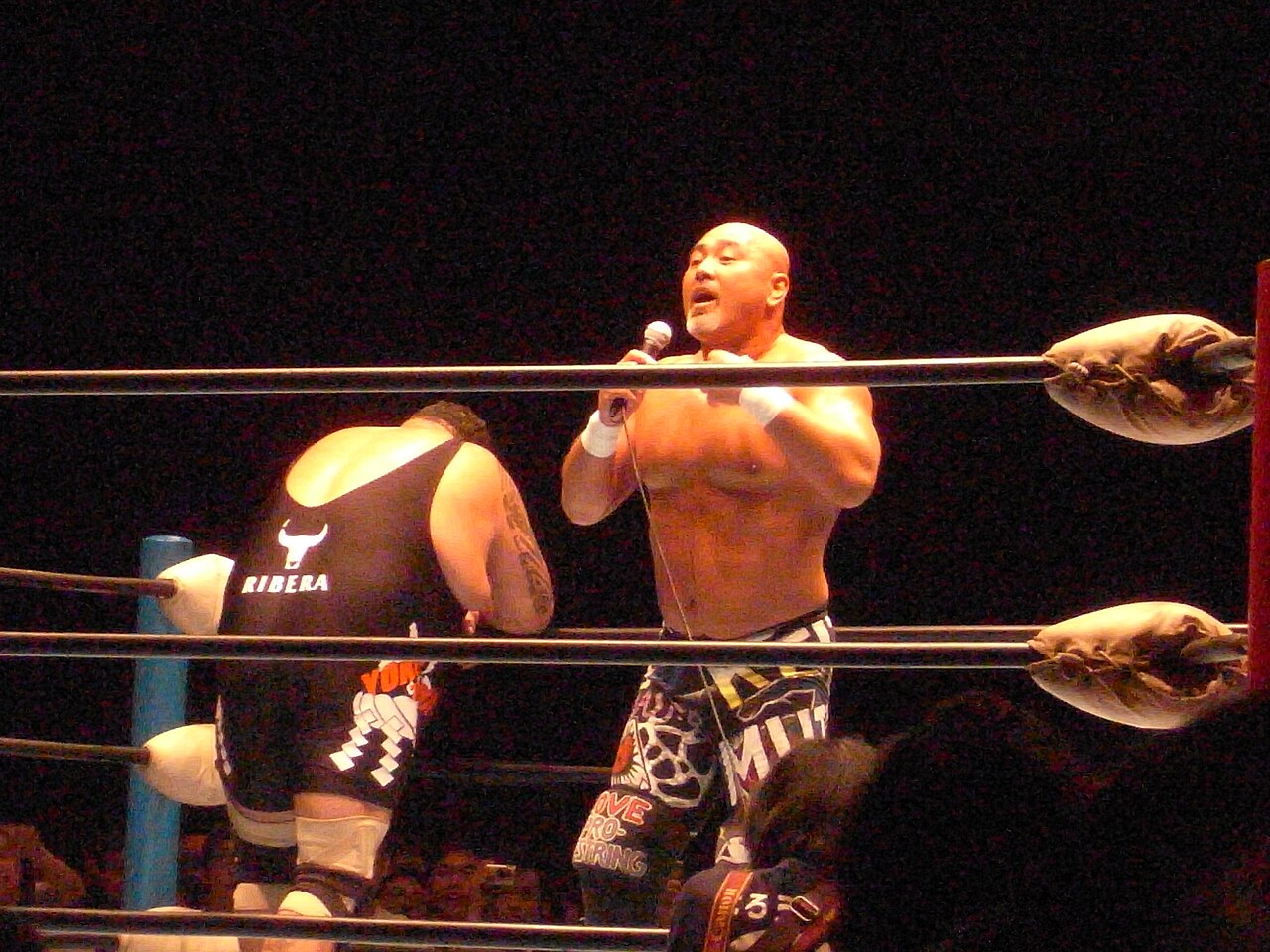
On August 15, 1995, Keiji Muto beat Shinya Hashimoto in the G1 Climax final at Tokyo's Sumo Hall and gave New Japan one of those tournament endings that means more in hindsight with every passing year. The finish itself was simple enough, three moonsaults, 24 minutes, a trophy, a packed building. The larger point was harder to miss. Muto left that night as the first reigning IWGP heavyweight champion ever to win the G1, which told fans that New Japan's biggest title and its hardest annual proving ground were now fully tied together.
That may sound obvious now, because the G1 has long since become one of wrestling's defining badges of greatness. In 1995 it still needed nights like this to harden that reputation. The tournament had only been around in its G1 form since 1991. It was already prestigious, but it was still building the kind of history that makes later generations treat a win as career-shaping instead of merely impressive. Muto and Hashimoto helped give it that weight.
There was a deeper layer to it for Muto himself. He had lost the final of the first G1 to Masahiro Chono four years earlier, and even in defeat that tournament helped lock in the Three Musketeers era of Muto, Chono and Hashimoto. By the summer of 1995, all three were established stars, but they were established in different ways. Chono had already done major work in making August feel like his month. Hashimoto had grown into the hardest-edged presence of the group. Muto, flashy and athletic but no less serious when the stage demanded it, used August 15 to make his own place in that hierarchy feel just as permanent.
Why the 1995 G1 changed Muto's standing
Contemporary Observer coverage framed the 1995 tournament as a five-night sellout run at the 11,500-seat Sumo Hall, which matters because the crowd size tells you what New Japan had become by the mid 90s. This was not a promotion relying on one giant Tokyo Dome spectacle to prove its strength. It was asking fans to come back, night after night, for a round-robin heavyweight tournament built around the idea that the company's elite could all realistically beat one another.
Muto fit that environment perfectly. He was the kind of wrestler who could look almost too theatrical in some settings and completely ideal in others. The G1 demanded both stamina and identity. A wrestler had to survive multiple top-level opponents, but he also had to make those matches feel distinct. Muto's best work always had that balance. He could give fans the bigger visual moments, the moonsault, the burst of speed, the sense that the match could suddenly tilt, without losing the structure underneath.
That is what made this win more than a nice line on a resume. New Japan was saying that the champion was not above the tournament. If anything, the champion had to go through it and survive it. Muto beating Hashimoto in the final gave the G1 a different sort of authority. It was no longer just a route toward the title picture. It was strong enough to test the titleholder himself.
The path through Hashimoto, Norton, Flair and Chono
Part of the reason August 15 still holds up is that Muto's road to the trophy actually felt worthy of the claim he was making. He won his block with a 2-1 record, beating Ric Flair and Masahiro Chono while taking a loss to Shiro Koshinaka. In the semifinal he got past Scott Norton, another reminder that the tournament was not built around one clean superstar march to the finish. On the other side, Hashimoto won his block after beating Norton and Hiroyoshi Tenzan, then advanced by putting Chono away in the semifinal.
That line-up says a lot about New Japan in 1995. Flair's presence added outsider prestige. Norton brought brute force. Chono and Hashimoto gave the field its familiar internal rivalry. Muto had to feel like the most complete wrestler in the mix to come out the other end, and the final was laid out in a way that reinforced exactly that. It started carefully, built on the mat, and only later turned into the kind of escalating near-fall fight that made both men feel durable and dangerous.
Hashimoto was the right final opponent for this story as well. Nobody in New Japan carried physical credibility quite like he did in that era. He hit harder than almost anyone, his offense always looked like it had consequences, and beating him in a major singles match still felt like a statement rather than a routine result. Muto did not win by outmuscling him. He won by surviving him, adjusting to him, and finally overwhelming him once the opening was there.
That difference matters. Wrestling history remembers certain wins because they reveal what a wrestler is. August 15, 1995 revealed that Muto could be more than the brilliant stylist or the spectacular athlete. He could also be the man who held the company's biggest championship and still came through its toughest annual exam.
What the win meant for the G1 itself
The G1 had already produced major finals before this one, but Muto becoming the first reigning IWGP champion to win it helped settle an important question about what the tournament could be. In a lot of promotions, a round-robin tournament is something the champion either avoids or enters with the understanding that the format exists to give other people a path toward him. New Japan chose the opposite approach. It let the champion jump into the same storm and come out with even more stature.
That decision helped the G1 age well. Later stars would benefit from a tournament that already felt unforgiving, prestigious and central to the identity of the promotion. Muto's 1995 win was one of the results that helped fix that image in place. It told fans that the G1 was not a detour from the real story. It was the real story for that stretch of the summer.
It also rounded out Muto's own legend in a satisfying way. He had been part of the first G1 final in 1991 and lost. Four years later, as champion, he came back and won the tournament outright. There is a symmetry to that which wrestling fans always remember, because it feels earned rather than imposed. The wrestler who helped launch the modern G1 had now added one of its foundational champion's victories.
Also on this date
August 15 became an important date in G1 history more than once. Later finals on the same date saw Manabu Nakanishi win the 1999 tournament and Satoshi Kojima win the 2010 edition. Those are significant results in their own right, but the 1995 final still stands apart because it gave the G1 one of its clearest early statements. When Keiji Muto beat Shinya Hashimoto, he did more than win a summer tournament. He helped show what winning the G1 was supposed to mean.