
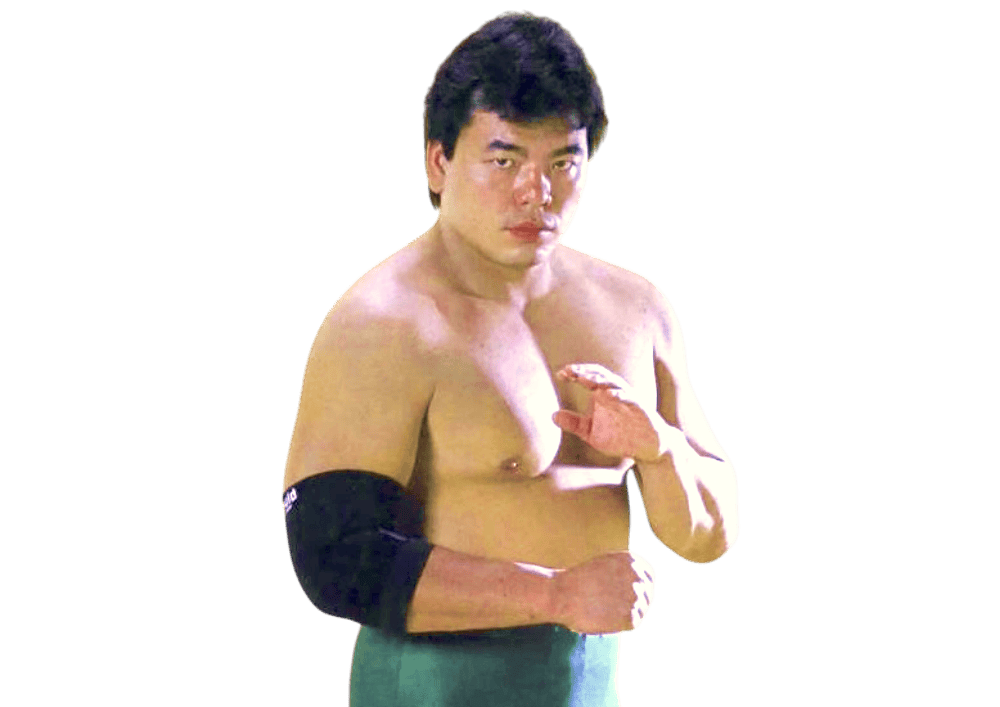
On July 24, 1995, All Japan Pro Wrestling returned to Budokan Hall with the kind of main event that felt less like a routine title defense and more like a referendum on the entire promotion. Mitsuharu Misawa walked in as Triple Crown champion. Toshiaki Kawada walked in as the rival who had spent years chasing him, resenting him, and trying to prove that he belonged on the same level. By the time it was over, Misawa had survived 24 minutes and 16 seconds of punishment, retained the title in front of a sellout crowd of 16,300, and added another chapter to one of wrestling's greatest rivalries.
The result itself was simple enough. Observer coverage of the show recorded Misawa pinning Kawada to keep the Triple Crown after a punishing fight built around big drops, hard kicks, and the sort of escalation that made 1990s All Japan feel different from everything else in wrestling. But that bare summary does not really explain why this date still carries weight. What happened in Budokan was not just a champion beating a challenger. It was the purest version of what made Misawa vs. Kawada matter in the first place.
By the summer of 1995, their rivalry had already outgrown the usual title-match framework. Misawa was the ace, the man with the calm face and the impossible sense of balance in chaos. Kawada was the one forever pushing against that order, the fighter who seemed to carry years of frustration in every kick and every glare. He was not simply trying to win a belt. He was trying to crack the system that always seemed to place Misawa one step higher.
That tension gave the match its shape. Kawada did not approach Misawa like a respectful contender hoping for openings. He fought like a man who understood that he could not outwait Misawa and could not afford to let the champion settle into rhythm. The tone was mean early and stayed that way. Misawa answered in kind, because Kawada had a way of dragging the best version of him to the surface. Misawa's greatness was never only about resilience. It was about knowing exactly when to absorb, when to answer, and when to turn a fight in a single burst.
Budokan had seen big All Japan matches before, but this one carried a particular edge. Misawa and Kawada did not wrestle as if they were trying to impress a ratings board or build toward a neat finishing sequence. They wrestled like rivals who knew each other's habits too well to waste time. Every exchange felt like accumulated history. Every comeback felt costly. Even before the finish, the match had the sense of two wrestlers dragging each other toward the limit to see whose conviction held longer.
Misawa's win came after the kind of finishing stretch that defined the era. He had to go deeper into his arsenal and deeper into his own toughness to finally put Kawada away. That mattered. Kawada was not framed as a noble loser who came close and earned applause. He was shown as dangerous enough to force the champion into a darker, more violent answer. In other words, losing did not diminish him. It sharpened the tragedy of his place in the story.
That is a big part of why this match has lasted. Plenty of classic matches are remembered for difficulty, endurance, or spectacle. This one is remembered because the struggle felt personal without ever needing melodrama. Misawa and Kawada were telling a story fans already understood, the ace protecting his place and the rival trying to prove that history was not destiny. The physical style made the stakes feel even heavier, but the emotional hook was just as strong. You did not need subtitles, promos, or weeks of explanation to understand what each man wanted.
The rest of the Budokan card helped underline how important the night was. Kenta Kobashi and Akira Taue fought to a 30-minute draw in the semifinal, setting up Taue as Misawa's next challenger, while Jumbo Tsuruta worked a rare singles match and reminded everyone of the depth of the promotion around its central stars. Even so, the night belonged to the main event. When people talk about All Japan's mid-1990s peak, this is the sort of card they mean, a major building, a loaded lineup, and a main event that felt like the entire identity of the company distilled into one match.
What makes July 24, 1995 stand out all these years later is that it captures Misawa's reign at its most revealing. He was not champion because he looked invincible in the cartoon sense. He was champion because the biggest nights made him respond with a little more force, a little more nerve, and a little more certainty than everyone else. Kawada could hurt him, stagger him, and even make you believe the order was finally about to change. Misawa could still find the answer.
For Kawada, the loss fit the cruel logic of his greatest story. He was too good to be dismissed, too dangerous to be treated as a stepping stone, and too proud to settle into a comfortable second place. That is exactly why his failures against Misawa landed so hard. They were not failures of talent. They were failures against the one opponent who demanded absolutely everything.
That is why this match still matters beyond tape-trader mythology or star ratings. July 24, 1995 was a snapshot of a promotion at full creative and athletic confidence. It was wrestling presented as a serious athletic drama, with no wasted movement and no need to tell the audience how important it was. Budokan knew. The wrestlers knew. You can still feel it watching the match now.
Also on this date, wrestling history gave us Great Sasuke's title-vs.-mask win over Super Dolphin in 1993, the AAA and IWC co-promoted New York card in 1994, and WWE's Shield triple threat at Battleground in 2016. But for pure enduring significance, it is hard to beat the night Misawa and Kawada turned Budokan Hall into their private battlefield.