
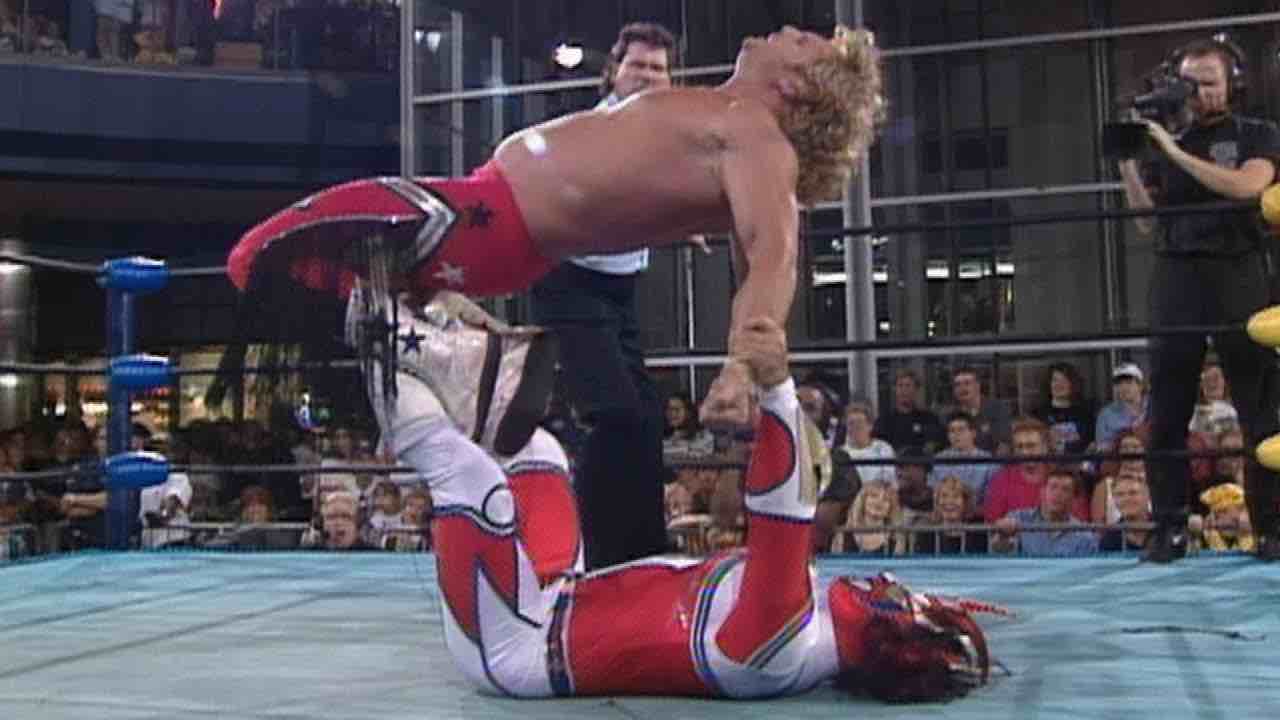
On June 19, 1995, WCW had not yet launched Nitro, had not yet won a ratings battle and had not yet turned Monday nights into wrestling's most famous weekly fight. What it did on that date was almost as important. It made clear that the fight was coming.
That is the real weight of June 19. This was the day the company's challenge to Raw moved out of internal planning and into the open as a serious national strategy. In hindsight, fans know exactly where that road led. It led to Monday Nitro, to the Monday Night War, to one of the most commercially important boom periods wrestling ever saw and, eventually, to a complete reshaping of the American business. But on this day, none of that was guaranteed. It was still a gamble, and a massive one.
The contemporary Observer coverage laid out just how bold the move looked in real time. The plan was for WCW to add a live Monday night show on TNT and run directly opposite Raw. At that stage the program did not even have a final title. The version being discussed internally was a live show every third week with taped episodes spun off from those tapings, major arena locations and matches strong enough to feel like true headline television rather than a secondary studio product.
That matters because WCW in mid-1995 was not yet the machine people remember from the peak of the nWo era. Hulk Hogan was the centerpiece of the promotion, but weekly television had not become essential appointment viewing. Raw already had the built-in audience, stronger momentum and the status that comes with being the country's top rated wrestling show. Challenging that slot was not a safe expansion. It was a direct bet that WCW could force a national conversation by standing in front of the market leader every single week.
The roots of the move went back to Eric Bischoff's June 5 meeting with Ted Turner. According to the reporting at the time, Bischoff had long argued that WCW's ratings disadvantage was tied to time slot and visibility. Turner responded by giving him the exact comparison he had asked for. By June 8, the idea had already been brought to the WCW front office in an employee meeting led by Harvey Schiller. In other words, June 19 was not the start of the thinking. It was the moment the thinking became public enough to count.
There was also an unmistakable edge to the whole thing. The same reporting said the Monday slot was no accident and that Turner had been irritated by Vince McMahon's earlier letters urging him to shut WCW down. Inside WCW, the move was described less as routine scheduling and more as a declaration that the company was ready to stop coexisting and start attacking. Schiller, who had previously spoken about focusing on WCW's own product rather than obsessing over the competition, was said to have taken a much harder line once this plan was in motion. That shift alone tells you how serious the decision had become.
One of the most fascinating things about June 19, 1995 is that it captures the war before the mythology hardened around it. Nitro was not yet Nitro. The famous Mall of America debut was still months away, and even the initial target date being discussed then, August 7, would later change before the show finally launched on September 4. Lex Luger's surprise arrival, the Outsiders angle, Hogan's heel turn and the nWo explosion were all still in the future. On this day, what existed was not the legend. It was the commitment.
That commitment changed the psychology of the business. For years, WWF had been the company everybody else reacted to. Promotions might compete regionally, chase talent or try to counterprogram around the edges, but very few had both the television support and the nerve to challenge the flagship national wrestling show head-on in prime time. WCW now had both. Turner-owned television gave Bischoff the platform, and June 19 was when the rest of wrestling had to take seriously the idea that this was no vanity project.
It was also the point where Bischoff put himself under the brightest light of his career. If WCW failed in that slot, the excuse about time periods and audience habits would disappear. The company would be losing on the same night, against the same opponent, in the same basic conditions. That is part of why the date still matters. June 19 was not only a declaration of war against the WWF. It was a self-imposed test for WCW management. Either the company would prove it could think and act like a first-tier weekly competitor, or it would expose its own limitations in public.
Seen from 2026, the historical importance is obvious. The decision that surfaced on June 19 opened the door for a run of television aggression that transformed wrestling promotion, talent movement and fan habits. Once Monday nights became the center of the business, everything escalated. Production values sharpened. Surprises became more valuable. Stars became more mobile. Creative risk became more urgent. Even promotions not directly involved in the war had to live in the world it created.
There is a temptation to treat the Monday Night War as if it began only once the famous moments arrived on screen. But the war had to be imagined before it could be televised. It had to be approved before it could be branded. It had to be announced before it could become history. June 19, 1995 was that moment.
On this day, WCW did not yet beat Raw. It did something more foundational. It decided to meet Raw in its own ring, on its own night, and force American wrestling into a new era.