
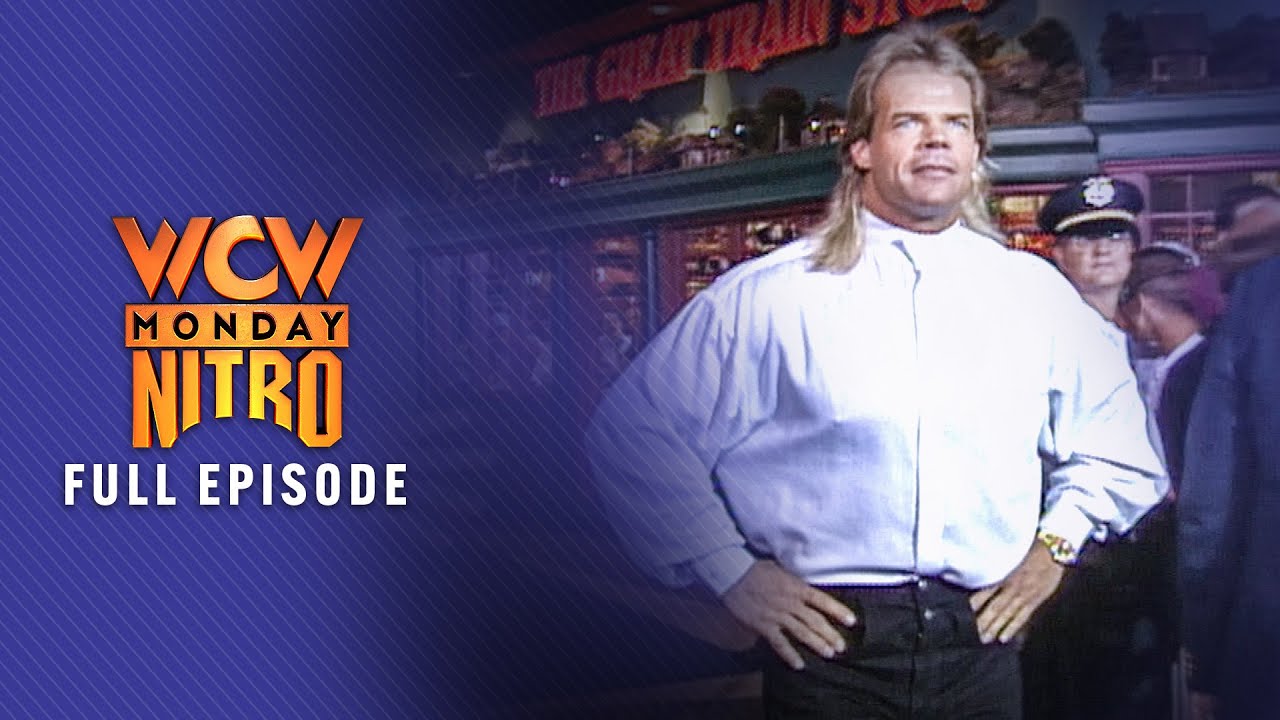
On September 4, 1995, WCW stopped acting like the national No. 2 promotion and started behaving like a company that thought it could win. Monday Nitro debuted live from the Mall of America in Minneapolis, and in two hours it did more than launch a new television show. It changed the rhythm of the business.
For years, wrestling on major American cable had settled into familiar habits. WWF had the stronger Monday slot, a cleaner national identity, and the kind of weekly appointment viewing that competitors had trouble matching. WCW had stars, money, and Turner backing, but it often felt like a promotion with pieces that did not quite fit together. Nitro was the night those pieces suddenly looked dangerous.
The setting mattered right away. Rather than opening in a standard arena with a predictable studio feel, WCW put its first episode in one of the strangest and most memorable locations wrestling had used on that scale. The ring sat inside the Mall of America, the crowd was packed in tight, and the whole presentation had the nervous energy of something new trying to prove itself in real time.
The card was built to feel important from the start. Jushin Liger faced Brian Pillman, Ric Flair met Sting, and Hulk Hogan defended the WCW title against Big Bubba Rogers. That was not a throwaway launch lineup. It was a statement that WCW understood the first night had to feel loaded, especially with Nitro going head to head with Raw on Monday night.
WCW made the first episode feel unpredictable
That point is what still stands out most. Nitro was not just live. It was designed to make viewers think anything might happen.
The wrestling itself helped. Liger and Pillman gave the show a fast opening that immediately felt different from the heavier main event style most American television wrestling still leaned on in 1995. Flair and Sting brought star power and familiarity, but even that match was used to move bigger pieces around the board. Hogan versus Big Bubba was a title match built less around technical excellence than around giving the program a true headline bout and an angle to send people into next week.
The live crowd came through on television as well. That sounds simple, but it mattered. A debut can look overproduced or cautious when a company is trying too hard to prove it belongs. Nitro looked alive. It looked like a show happening in the moment rather than one assembled in a conference room and polished into safety.
That was crucial because WCW was not just filling airtime. It was trying to break one of the few real habits American wrestling fans still had. Raw had already become a weekly destination. If WCW wanted people to sample something else, the show had to feel urgent enough that missing it might mean missing a real moment.
Lex Luger turned a launch into a shock
Then WCW found the moment that made the night historic.
Lex Luger appeared on the debut episode only days after wrestling WWF dates, which is why his arrival landed with such force. He walked out during the Flair vs. Sting match, said nothing, and let the image do the work. Later, after Hogan retained the title and was jumped by the Dungeon of Doom, Luger made the save. The segment ended with Luger and Hogan going nose to nose before setting up a title match for the following week's Nitro.
Today, in an era of constant spoilers and instant news, it can be hard to fully recreate how jarring that was. In 1995, a promotion-level jump like that still had real power, especially when it appeared to come from nowhere. Luger was not presented as a nostalgic cameo or a one-off surprise. He was presented as a major player who had just crossed enemy lines and immediately inserted himself into the world title picture.
That did two jobs at once. On the surface, it gave WCW a cliffhanger for the second episode. More importantly, it established Nitro's identity on night one. This was not going to be a safer, cheaper imitation of Raw. It was going to be a show willing to use surprise, live television, and real-time momentum as weapons.
That idea ended up being more important than any one finish on the card. WCW had introduced a television product where fans suddenly had a reason to believe that the most interesting thing in wrestling might happen on a Monday night, live, before anyone could flatten it into routine.
Why September 4, 1995 still matters
A lot of famous wrestling shows age into legend because of match quality. Nitro's first episode is remembered for something different. It reset the stakes.
WCW had already spent money, signed names, and made plenty of noise before September 1995. What it had not done was create a weekly show that felt like a genuine strategic answer to WWF's biggest television advantage. Nitro did that immediately. It was live almost every week. It was built around big names and angles. It wanted surprise to be part of the brand. And because it aired opposite Raw, every strong segment carried an extra layer of meaning.
That is why this date matters beyond the familiar phrase "Monday Night Wars." The war only became real when viewers had a reason to change the channel, or at least keep a finger on the remote. Nitro's debut created that reason. It told fans that Monday nights were no longer settled territory.
It also gave WCW a clearer self-image. The company that showed up at the Mall of America was not perfect. The announcing was rough in places, the format still needed refining, and the long-term booking chaos that would later define parts of the Nitro era had not magically vanished. But on this night, WCW understood exactly what it needed to be: louder, livelier, less predictable, and bold enough to force a fight.
That is the legacy of September 4, 1995. WCW did not win the entire war that night, and it did not need to. It only needed to prove there was finally a war worth watching. Nitro's first episode did exactly that, and wrestling on American television was never quite the same again.