
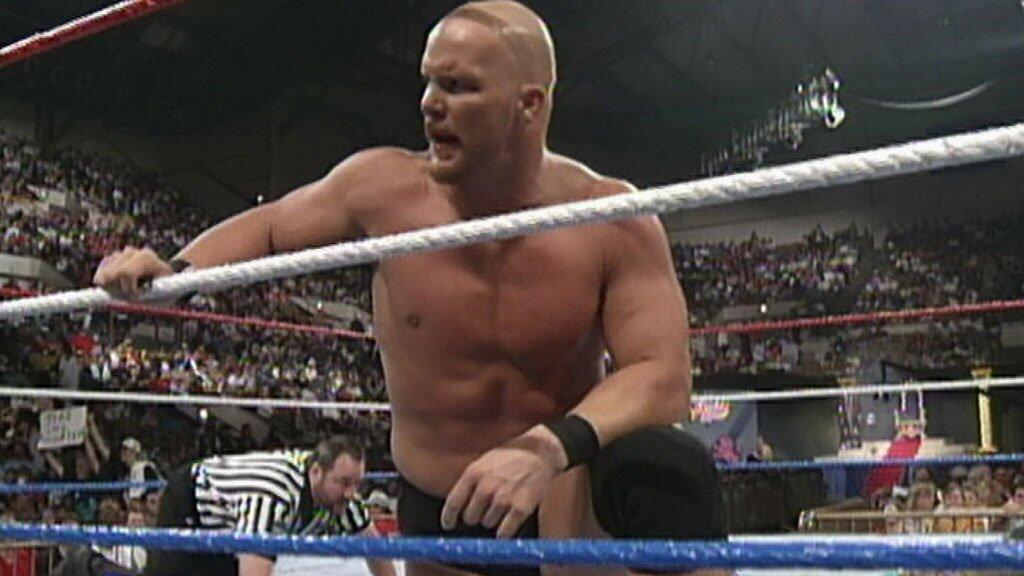
On June 23, 1996, Steve Austin won the King of the Ring tournament in Milwaukee and left with something much bigger than a crown.
By the end of the night, he had a catchphrase, a clearer identity, and the kind of defining moment that wrestling history keeps circling back to. The match itself was short. The promo afterward was shorter. But that combination became one of the most important pieces of business WWF produced in the 1990s.
King of the Ring 1996 arrived at an interesting time for the company. Shawn Michaels was the WWF champion and clearly its best in-ring performer at the top of the card. Undertaker and Mankind were building a rivalry that would become one of the era's signature feuds. Bret Hart was away. Hulk Hogan was long gone. The promotion had talent, but it was still looking for the next voice that could pull the whole presentation into a different mood.
Austin, newly deep into the "Stone Cold" version of himself, was not yet that man in the public imagination. He was a sharp-tongued heel with great timing, a hard edge, and a style built around stripping the glamour out of a match. He did not wrestle like a cartoon superhero. He wrestled like someone trying to ruin your night.
That made him a strong fit for the tournament, but not yet an obvious symbol of where the company was going.
Contemporary Observer coverage of the show treated it as a well-received pay-per-view, with Shawn Michaels vs. Davey Boy Smith as the top match and Austin's semifinal win over Marc Mero standing out as one of the event's stronger performances. Austin beat Mero in 16:49 in the opener of the tournament portion, then moved on to face Jake Roberts in the final after Roberts advanced through a storyline injury angle with Vader.
The Austin vs. Roberts final only lasted 4:28. Roberts came in selling damaged ribs, Austin attacked the injury immediately, and the match was structured less as an even contest than as a showcase for Austin's cruelty. Roberts made one brief comeback, but the result never really felt in doubt. Austin hit the Stone Cold Stunner, got the pin, and claimed the tournament.
If that was all June 23 gave wrestling history, it would still be a memorable checkpoint in Austin's rise. But the reason the date still matters is what happened once the bell was over.
Roberts had returned to television with a born-again preacher presentation, leaning openly on religion and redemption in his promos. Austin took that setup and detonated it in the winner's interview. He mocked Roberts' Bible talk, mocked the piety of the character, and then landed on the line that outlived the tournament itself: "Austin 3:16 says I just whipped your ass!"
That sentence changed the temperature of the room.
It was funny, mean, simple, and instantly repeatable. More important, it gave Austin a slogan that matched the character he had been building in the ring. Plenty of wrestlers have won tournaments. Very few have walked out of one with a whole new language attached to them. Austin did.
What stands out looking back is that the promo did not feel polished in the corporate sense. It felt live, sharp and slightly dangerous, exactly the kind of thing WWF had often tried to bottle without quite finding the right vessel. Austin sounded like a wrestler talking because he had something to say, not because he had memorised a slogan in advance. The irony, of course, is that he created one of the most durable slogans the business has ever had in the process.
The rest of the card matters here too, because it shows why this moment broke through. King of the Ring 1996 was a solid show, but not an all-time classic from top to bottom. Michaels and Davey Boy delivered a strong main event for the WWF title. Mankind scored a shocking near-clean win over Undertaker with help from Paul Bearer. Ahmed Johnson beat Goldust for the Intercontinental title. There was good material on the night, but none of it lodged in wrestling culture the way Austin's coronation did.
That is the real lesson of June 23. Wrestling history does not always turn on the technically best match. Sometimes it turns on the performer who most clearly announces a new era of tone.
Austin's win was important because it sharpened the direction of his career, but it also hinted at a broader change inside WWF. The company had spent years cycling through brighter, safer archetypes. Austin felt colder than that. He was not asking fans to admire him as a role model. He was asking them to enjoy his defiance, his aggression and his refusal to play nice with anybody, including the old moral language of wrestling babyfaces.
That did not instantly remake the company overnight. Austin still had more road ahead of him before he became the central figure of the promotion. But June 23 gave WWF proof that his voice connected in a different way. It is one thing to push a wrestler because management likes him. It is another when the audience suddenly has a phrase it wants to keep repeating for years.
WWE has long treated the promo as one of the early signposts toward the Attitude Era, and it is easy to see why. "Austin 3:16" was not just a catchphrase. It was a mission statement for a new kind of top star, one who could take the traditional tournament prize, sneer at it, and make the real story about himself instead.
On this day, Steve Austin did not merely win King of the Ring. He took a mid-year pay-per-view, a wounded Jake Roberts, and a few live microphone seconds, and turned them into the beginning of wrestling's next vocabulary. That was the real victory in Milwaukee, and the business is still speaking some version of that language now.