
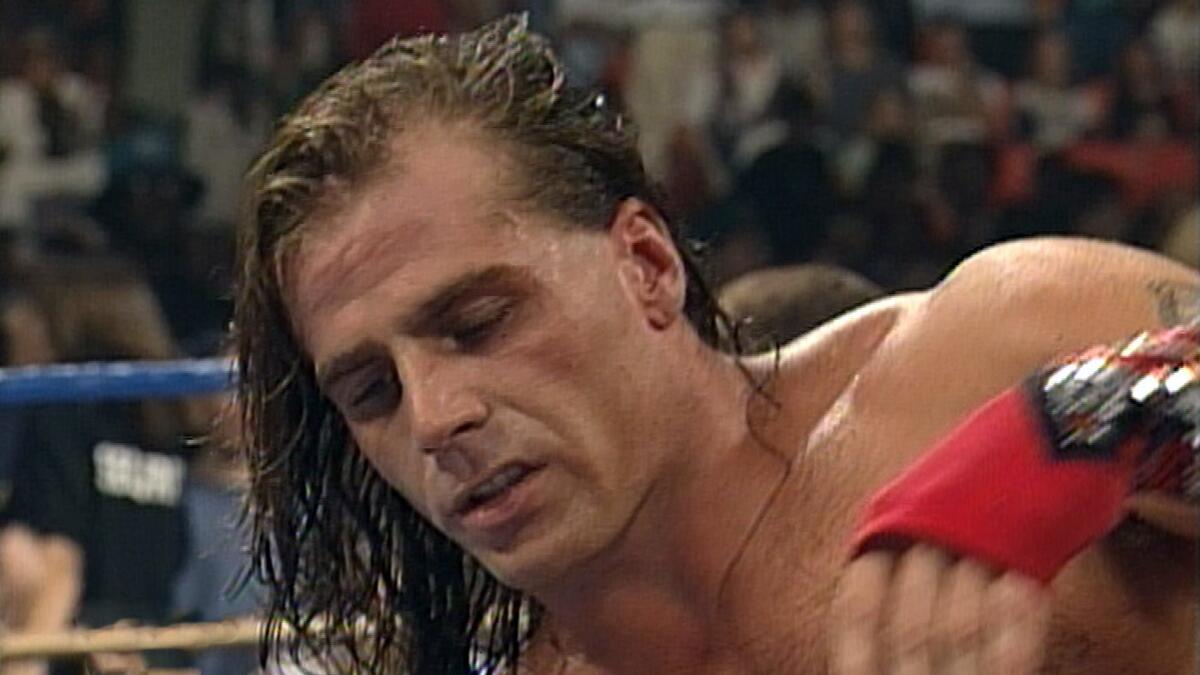
On May 26, 1996, WWF tried to run another routine In Your House pay-per-view and wound up producing one of the weirdest nights in company history.
Beware of Dog was supposed to be a compact spring show from the Florence Civic Center in South Carolina, built around Shawn Michaels defending the WWF Championship against British Bulldog. Instead, it became the pay-per-view that a thunderstorm swallowed. Power failed in the building, the broadcast fell apart, fans at home stared at dead air, and the promotion had to come back two nights later to finish the job in another city.
That alone would make the date memorable. What gives it real historical weight is how neatly it captured where WWF stood in 1996. The company was still deep in the New Generation period, still trying to keep pay-per-view momentum alive, and still vulnerable in ways modern wrestling fans almost never get to see. A storm did not just ruin a show that night. It exposed how fragile live television could be, and how quickly a promotion had to improvise when everything went wrong at once.
When the broadcast went dark in Florence
The show had barely settled in before it went sideways.
Smoking Gunns beat The Godwinns to win the WWF Tag Team Championship, with Sunny's involvement setting up her move toward managing the Gunns. Marc Mero then beat Hunter Hearst Helmsley in a lively match that was one of the few bright spots of the original broadcast. After that, the weather took over.
A severe storm knocked out power in the arena, and with it went the pay-per-view feed. Viewers did not get a dramatic cliffhanger or a polished contingency plan. They got confusion. The screen went blank. Announcers could only stall. The promotion had no choice except to tell customers to hang on and hope the feed could be restored.
By the time power came back strongly enough to finish the night, the show was broken beyond repair. Only the main event, Michaels vs. Bulldog, made air from Florence after the interruption, and even that did not land the way a WWF title match was meant to. The match ended in disputed fashion, with confusion around Bulldog's shoulders at the count, and what should have felt like a major championship defense instead came off as an exhausted finish to a broadcast that had already lost the room.
The contemporary Observer coverage of the show treated it as an all-time pay-per-view fiasco, and it is hard to argue with that description. This was not a bad finish or a cold crowd. This was a national wrestling event being derailed by the elements in real time.
The night WWF had to rebuild on the fly
What makes Beware of Dog stand out is that the story did not end with the blackout.
Because the show fell apart on Sunday, WWF used the Memorial Day weekend replay slot on May 28 to patch the card back together from North Charleston. That replay was not just a simple re-air. It became a hybrid event, part replay and part emergency second show. The matches that had aired on Sunday were shown again, and the rest of the card was completed live from a different building.
That gave the whole pay-per-view a surreal split identity. Savio Vega and Steve Austin wrestled their strap match for the replay audience, with Ted DiBiase's departure from the company folded into the stakes. Goldust and Undertaker had their casket match under proper television conditions. Vader and Yokozuna even worked a finish that differed from what had happened in Florence.
That last detail is what really dates the event to its era. WWF was not dealing with a modern social media audience that could instantly compare every camera angle and result. It was dealing with angry customers, cable replay logistics, and a company mindset that believed the show still had to be salvaged somehow, even if that meant turning one pay-per-view into a two-city artifact.
For fans who lived through it, that made Beware of Dog unforgettable. For younger fans looking back, it feels almost impossible that a major promotion once solved a pay-per-view outage by effectively staging the missing half of the event again two nights later.
Why the chaos mattered in 1996
The storm itself was bad luck. The reason the date matters is bigger than weather.
In May 1996, WWF was already a company in transition. Michaels was champion, Steve Austin was not yet the central star he would become, Mero was still a fresh arrival, and the promotion was trying to squeeze value from the lower-priced In Your House concept while it searched for a hotter creative identity. The company was not cold in every area, but it was hardly bulletproof.
Beware of Dog showed both sides of that moment. On one hand, the event revealed how limited WWF still was. A power outage could wreck the entire night. There was no deep technical safety net, no streaming platform to instantly reset the viewer experience, and no slick production trick that could hide the mess. On the other hand, the scramble to finish the card also showed a stubborn kind of old-school problem solving. WWF could not erase the disaster, but it could try to repackage it into something sellable.
There is also an odd historical value in the card itself. Austin's strap match sat in the middle of the show just weeks before King of the Ring changed his career. Sunny's alignment with the Gunns kept pushing her toward becoming one of the promotion's defining personalities of the period. Michaels and Bulldog reflected the company's ongoing attempt to anchor the main event scene with workrate and star presentation, even if that particular match never became a classic.
So when fans remember Beware of Dog, they are not just remembering a blackout. They are remembering a snapshot of WWF before the Attitude Era hit full force, when the company could still look small, vulnerable, and strangely resourceful all at once.
That is why May 26, 1996 still holds up as more than trivia. Plenty of wrestling history is built on great matches, huge debuts, or career-defining promos. This date is remembered because everything malfunctioned and the promotion had to reveal itself in the middle of the mess. The show was a disaster, but it was also honest. It showed exactly how wrestling companies survive, by improvising in public and hoping the audience comes back with them.
Also on this date, Hector Garza died in 2013 at 43, ending the career of one of the most charismatic stars of modern Mexican wrestling.