
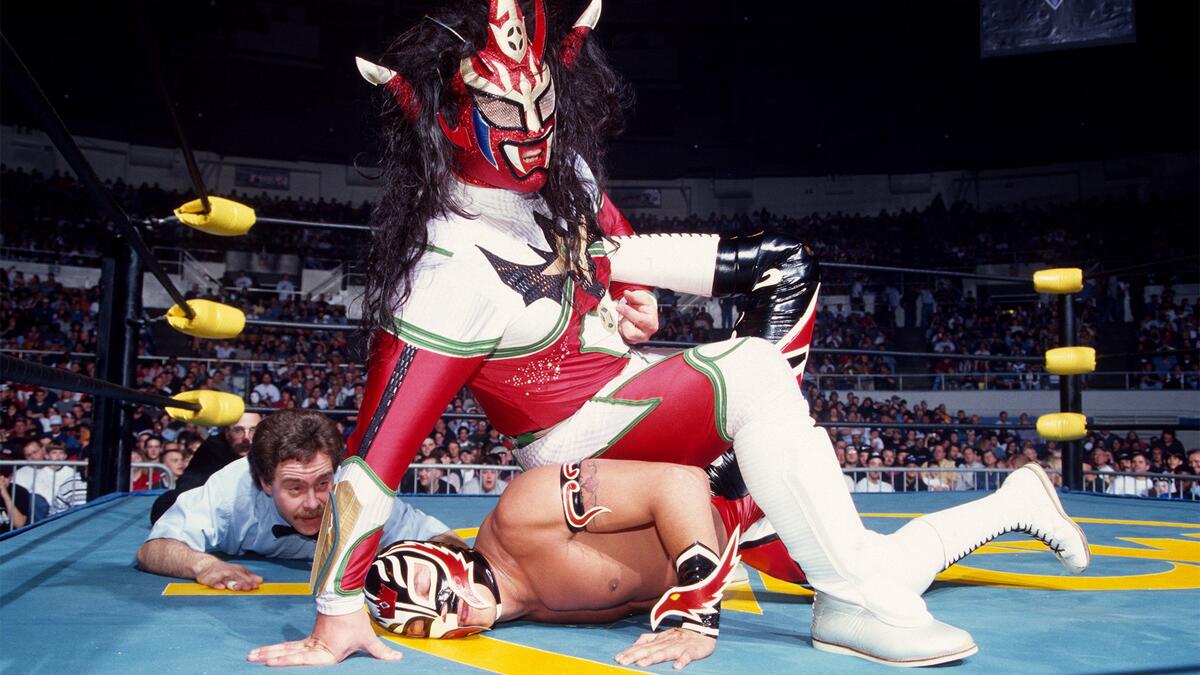
On August 23, 1996, Jushin Liger went into surgery to remove a brain tumor, and for a brief moment one of wrestling's most inventive careers stopped being about titles, dream matches and innovation. It became about whether he would be able to wrestle at all.
That date matters because Liger was not some fading veteran trying to squeeze out one last comeback. He was still one of the defining junior heavyweights in the world, a wrestler whose speed, timing and imagination had already changed what fans expected from the division. He had dazzled crowds in New Japan, crossed over into WCW, and built a reputation as one of the few wrestlers who could look futuristic without feeling artificial.
So when doctors discovered the tumor in August 1996, the shock was not just that a major star was seriously ill. It was that a wrestler whose whole identity seemed built on motion suddenly had to confront the possibility that the movement might end.
Liger had to tell the crowd himself
Earlier that month, Liger took the microphone after a match and explained the situation in direct terms. Doctors had found a tumor in his brain. A biopsy would determine whether it was malignant, and surgery had already been scheduled for August 23. If the result was good, he believed he could come back. If it was not, his career might be over.
That honesty is part of why the story still hits so hard. Wrestlers are conditioned to project control, even when their bodies are falling apart. Liger instead let fans see the uncertainty. He was not selling an angle or trying to manufacture sympathy. He was laying out the stakes as clearly as he understood them, and the reaction reflected that. The farewell tone around the moment was real because nobody knew whether they were hearing from an active wrestler or saying goodbye to one.
The timing made it even more striking. Liger was still important enough to the junior heavyweight scene that his absence would have changed cards, rivalries and the shape of an entire style. By the mid-1990s, his influence was already everywhere. The risk was not only that wrestling might lose a great performer, but that one of the form's true innovators might have his story cut off in mid-sentence.
He kept one more promise before August 23
Once the biopsy suggested the tumor was not cancerous, the outlook improved, but the situation was still serious. Even then, Liger chose to wrestle on August 18 in Aomori before going under the knife. Contemporary coverage made clear that part of the reason was personal. He felt he owed that market an appearance after missing an earlier commitment there because of a broken ankle.
That detail says a lot about why Liger became such a beloved figure. The mythology around him was built on spectacular moves and a larger-than-life look, but the substance underneath it was old-school professionalism. He did not treat that final pre-surgery booking as beneath him or too risky to matter. He treated it like an obligation worth honoring.
By the time the surgery date arrived, the fear had shifted from the worst possible diagnosis to the reality of what brain surgery still means, even in the best circumstances. Reports in the days that followed were encouraging. The tumor was described as benign and relatively small, and the conversation quickly turned from survival to recovery.
August 23 became the hinge point of Liger's second act
What makes August 23, 1996 more than a health scare is what came after it. Liger did return, and the version of him that followed was not a diminished imitation of the old one. He was different, smarter and in some ways even more complete.
Before the surgery, Liger had already helped redefine junior heavyweight wrestling through speed and risk. After it, he gradually became a master of economy. He could still thrill a crowd, but he no longer had to prove himself by flying at every opening. The later Liger mixed bursts of explosiveness with sharper structure, better pacing and the kind of palm strikes and counters that made every movement feel deliberate.
That adjustment mattered for more than his own longevity. It gave the rest of wrestling a model for how a revolutionary performer could age without turning into a tribute act. Liger did not simply survive the crisis. He adapted his work so well that he remained relevant for decades, the rare pioneer who also knew how to evolve once the sport caught up to him.
That is why August 23 deserves to be remembered. It was the day the first version of Jushin Liger was forced to stop, and the day the longer, deeper legacy began to take shape. A career that could have ended in fear instead found a second life, and wrestling got to keep one of its great minds for far longer than anyone could safely assume that month.