
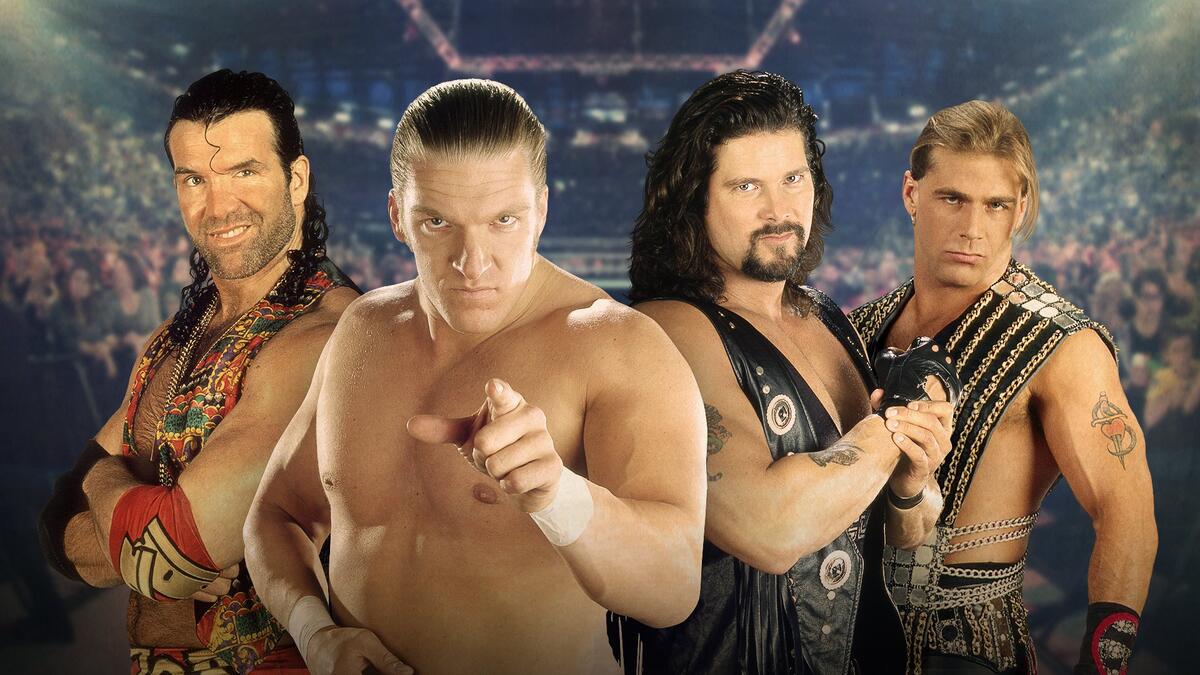
On May 19, 1996, WWF ran what should have been just a hot Madison Square Garden house show. Instead, it became one of the most replayed and re-litigated nights in wrestling history.
The show itself was loaded. The Godwinns beat the Bodydonnas for the WWF Tag Team Championship. Hunter Hearst Helmsley worked Razor Ramon. Shawn Michaels defended the WWF Championship against Diesel inside a steel cage. Madison Square Garden was sold out, and by the numbers it was a huge night for the company, with 18,800 fans in the building, 16,564 paid, and a gate reported at $319,411. For a non-pay-per-view event in that era, those were monster figures.
But none of that is what made May 19 unforgettable.
What people remember is what happened after the bell, when four wrestlers stopped pretending for a minute and let the audience see the real friendship underneath the characters.
The night the act stopped
Kevin Nash and Scott Hall were on their way out of the company. As Diesel and Razor Ramon, they were finishing up their WWF runs before heading to WCW in mid-June. Fans in New York already seemed to sense it. Contemporary coverage of the show noted chants of "You sold out" and "Please don't go" aimed at both men, a strange mix of resentment and affection that told you the audience understood the business was changing.
Hall lost to Helmsley earlier in the night. In the main event, Michaels escaped the cage after landing Sweet Chin Music on Diesel to keep the WWF title. That should have been the end of it.
Instead, Michaels stayed. He embraced Diesel. Then Razor Ramon came out. Helmsley followed. The four men, all linked behind the scenes as members of the Kliq, stood together in the ring and acknowledged the crowd.
That might not sound scandalous now. In 2026, wrestling lives on behind-the-scenes footage, podcasts, documentaries and social media clips where everybody breaks character whenever they feel like it. In 1996, it was different. Michaels and Ramon were babyfaces. Diesel and Helmsley were heels. They were not supposed to stand shoulder to shoulder and let the audience see that the feud was performance and the bond was real.
That is why the moment landed like a thunderclap.
Why Madison Square Garden felt bigger than a house show
The Garden always carried extra symbolic weight for WWF. This was the building the company measured itself against, the room where success looked real. That night only deepened the feeling. It was the second straight Garden sellout for the promotion, the first time that had happened in more than a decade, and the whole weekend swing was strong enough to underline that Michaels, Diesel and the rest of the top roster were still drawing.
So the famous hug did not happen on a dead loop show in front of a tired crowd. It happened in the company's most mythic arena, on a night when the audience was fully engaged and knew it was watching a farewell.
That mattered. The Curtain Call was not memorable just because four stars broke character. It was memorable because they did it in a place where wrestling history already felt heavier, and because the crowd treated it less like a mistake than a genuine goodbye.
Reports from the time described fans getting emotional as the four men climbed the corners and flashed their hand signals. Some in the audience saw it as one of the coolest things they had ever witnessed at the Garden. Others in the locker room saw a kayfabe violation that crossed a line. Both reactions help explain why the incident has never really faded.
The fallout Helmsley felt, and Steve Austin benefited from
The famous version of this story is that everybody in the ring changed wrestling forever. That is true in a broad sense, but the immediate consequences were not shared equally.
Nash and Hall were already leaving. Michaels was the reigning world champion and a protected centerpiece. Helmsley was the one who stayed behind, and history has long treated him as the guy who absorbed the punishment. The common telling is that he lost the King of the Ring push that had been lined up for him, opening the door for Steve Austin to win the tournament a few weeks later and deliver the "Austin 3:16" speech that helped launch a new wrestling megastar.
That chain of events is part of why the Curtain Call still feels larger than one emotional sendoff. It was a genuine turning point. The incident exposed how much influence the Kliq had backstage, showed how fragile the old babyface-heel divide had become, and nudged the timeline toward the version of WWF that would soon lean much harder into blurred reality, insider tension and antiheroes.
It did not create the Attitude Era by itself. Wrestling history is never that neat. But it did feel like one of the last major moments of the old system cracking in public before the business rebuilt itself around a more knowing audience.
Why the Curtain Call still matters
The Curtain Call has lasted because it sits at the crossroads of so many bigger stories. It was a goodbye for Hall and Nash before they helped ignite WCW's boom. It became part of Triple H's rise because of the punishment lore attached to it. It hangs over Austin's breakout because of what happened after King of the Ring. And maybe most importantly, it captured the moment when fans started being treated less like people who had to be protected from the truth and more like people who could handle the contradictions.
That may be the real reason May 19, 1996 still stands out. The hug itself lasted only a moment. The business shift behind it lasted for years.
At Madison Square Garden, on a night built around a cage match and a farewell, wrestling briefly dropped the mask. Once that happened, it was never quite able to put it back on the same way again.