
On July 8, 1996, WCW put one of its biggest long-term ideas into focus in less than ten minutes.
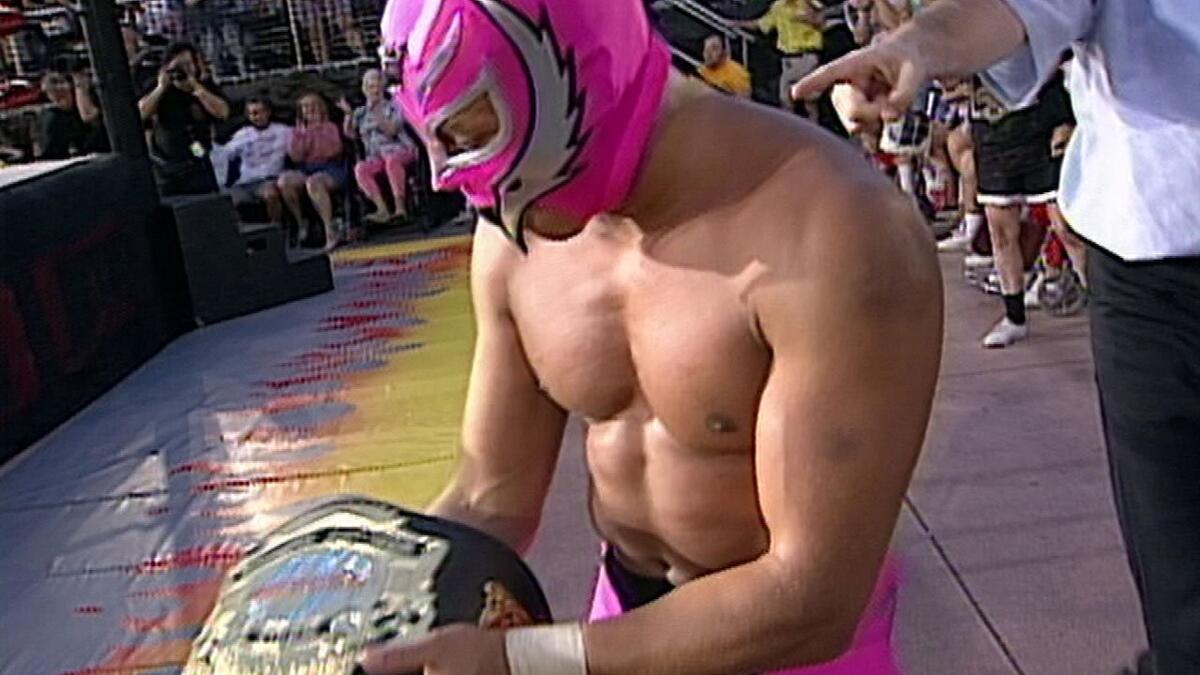
That night on Nitro from Disney-MGM Studios in Orlando, Rey Mysterio beat Dean Malenko to win the Cruiserweight Championship. On paper, it was one title change on an episode dominated by fallout from Bash at the Beach and Hulk Hogan's shocking heel turn the night before. In practice, it felt like a statement about where wrestling on American television was headed.
Mysterio was still new to a lot of WCW viewers. He had already shown flashes of how different he was, and his win over Psicosis at the pay-per-view had earned him this shot, but this was the kind of stage where a wrestler stops being an interesting newcomer and becomes part of the identity of the show. That is what happened here.
WCW already had the championship, and it already had gifted smaller wrestlers. What it needed was a moment that made the division feel essential instead of decorative. Mysterio and Malenko gave it one.
Dean Malenko gave Rey Mysterio the perfect mountain to climb
The match worked because Malenko was exactly the right champion for it.
He was not flashy. He was cold, exact, and mean in the way a great television heel technician can be. That made him the perfect opponent for Mysterio, whose appeal came from speed, risk, and the sense that he could create something out of almost nothing. Malenko gave the match structure. Mysterio gave it electricity.
The opening stretch told the whole story. Rey flew around him early, forcing Malenko to react, and the crowd immediately understood that this was not going to look like the rest of the show. Once Malenko cut him off, the bout became a fight over whether that speed could survive contact with someone this punishing.
That tension is why the finish landed so well. Malenko battered him, slowed him down, and kept trying to turn the match into something more grounded and painful. Mysterio kept slipping out of danger just long enough to make the next burst feel possible. When he finally caught Malenko with the match-ending hurricanrana, it felt sudden but not lucky. It felt earned.
That balance matters when people remember the bout now. This was not just a highlight reel full of athletic stunts. It was a clean piece of wrestling storytelling. Malenko made you believe Rey could be broken. Rey made you believe he could break the pattern anyway.
A title win that helped define Nitro's second layer
The timing of the match gave it extra weight.
WCW in July 1996 was building one of the most important top-end stories in modern wrestling. The nWo angle was about to dominate conversation, ratings, and the larger memory of the era. But a weekly wrestling show cannot live on one angle alone. It needs texture. It needs contrast. It needs reasons to care from the opening bell through the main event.
That is where the cruiserweights became so valuable.
Mysterio winning the title the night after Bash at the Beach showed that WCW could offer two very different attractions at once. At the top, it had paranoia, star power, and the biggest industry war story of the decade. Underneath that, it had a division that felt faster, sharper, and less familiar than what most major American promotions were presenting on television.
That combination was a huge part of Nitro's identity at its best. The main event scene made people argue. The cruiserweights made people stare.
Mysterio was central to that because he was so easy to understand on sight. He was small by heavyweight standards, masked, explosive, and impossible to watch passively. You did not need a long introduction to understand why he mattered. The moment the bell rang, the match explained him.
That made the title change more important than a normal Monday night switch. It was not just about moving a belt from one talented wrestler to another. It was about choosing the kind of performer who could best represent a division that was becoming one of WCW's clearest advantages.
Why this moment still matters in Rey Mysterio's story
A lot of wrestlers win their first major title and it feels like a checkpoint. This one felt like an arrival.
Mysterio would go on to have bigger matches, more famous rivalries, and a much larger legacy than anyone could fully see on that summer night in Orlando. But this was one of the first times American television audiences got the full argument for him in one package. He was sympathetic without being fragile, spectacular without losing the thread of the match, and exciting in a way that made the whole division feel newer.
That last part is important. Great wrestlers do not only get themselves over. Sometimes they change how fans understand a slot on the card.
Before Mysterio, smaller wrestlers in major American promotions were often framed as novelties, specialists, or brief attractions. After Mysterio, it became much easier to picture a different future. A cruiserweight match could open a show and steal it. A masked flyer could be one of the most beloved acts in a national company. A wrestler who gave up size could make up for it with pace, timing, and nerve.
The following week's Observer coverage rated the title match four and a quarter stars, which tells you how strongly it landed even in a period packed with major stories. More importantly, fans remembered it. They kept remembering it because the match did not feel like filler tucked between bigger names. It felt like a piece of the future breaking into the present.
The night WCW's smaller ring wars stopped feeling like a side dish
There is a temptation, when looking back at 1996 WCW, to let everything become part of the nWo story. That is understandable. The angle was enormous.
But wrestling history is usually richer than one headline. On the same night the company was figuring out how to ride its hottest invasion angle, it was also showing how broad the promotion could be when it trusted different kinds of talent. Rey Mysterio beating Dean Malenko is one of the clearest examples of that.
It was a title change. It was a breakout. It was a promise.
Most of all, it was a reminder that a wrestling boom is not only built by giants, betrayals, and catchphrases. Sometimes it is built by a masked 21-year-old hitting the ropes at a speed the audience has not quite seen before, then flipping an expert wrestler onto his shoulders for three.
On this day, Rey Mysterio did not just win his first WCW title. He helped turn the cruiserweights into required viewing.