
On May 27, 1996, WCW took one of the biggest creative swings in modern wrestling history and landed it clean.
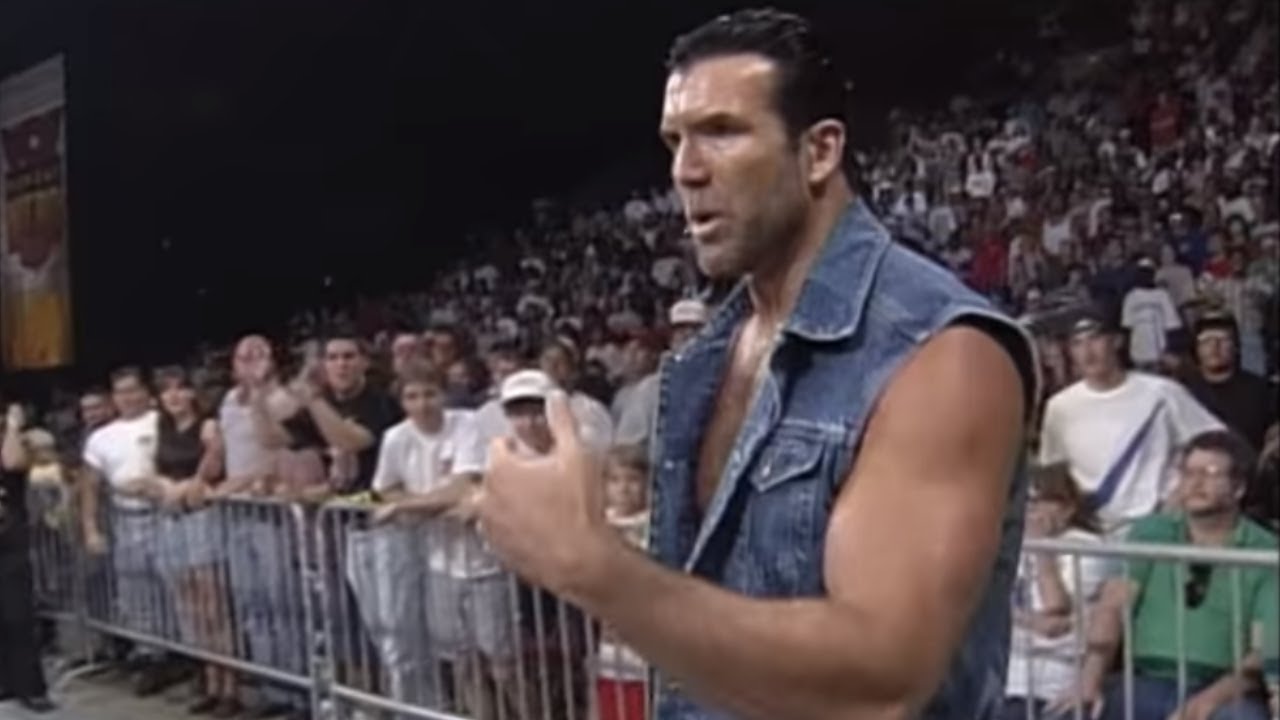
Scott Hall walked through the crowd on Monday Nitro, stepped into the ring in street clothes, grabbed a microphone and made it feel like the walls between promotions had suddenly cracked open on live television. Fans knew him. They knew where he had just been. They also knew nobody was supposed to simply drift from one national company onto another company's show and act like the fight was real.
That was the genius of it.
Hall's first appearance did not look like a polished debut package. There were no dramatic graphics, no formal introduction and no attempt to reset him as a new WCW character. Instead, the whole thing played like an intrusion. It was messy in exactly the right way, and that mess changed the temperature of the industry.
When Scott Hall hijacked Nitro in Macon
The setting made the moment even sharper. May 27 was the first night Nitro expanded to two hours, part of WCW's escalating push in its fight with WWF. In theory, that should have made the show feel bigger from the opening bell. In practice, much of the episode was ordinary television until Hall arrived in the middle of a forgettable match between Steve Doll and The Mauler.
Contemporary Observer coverage noted that the show itself was largely flat outside of Hall's appearance. That only made the angle hit harder. A sleepy broadcast instantly became must-see television because one man in a denim vest walked in as if he had no business being there.
Hall did not present himself as a standard free-agent signing. He leaned into the attitude and cadence fans already associated with Razor Ramon, while carefully staying in a gray zone that made the whole thing feel dangerous. He mocked WCW on its own air, referenced the parody war between the two companies, and made it sound like he had arrived as an invading force rather than a new roster addition.
The crowd reaction was not a neat explosion at first. It was closer to confusion, shock and delayed recognition. That is a big part of why the segment still holds up. Fans were trying to process what they were seeing in real time. In 1996, before every surprise was spoiled online hours in advance, that uncertainty had real power.
By the end of the night, Hall returned for a second appearance and pushed the idea further. He was not there to have a match. He was there to declare a turf war. Nitro had spent months trying to win a ratings battle. On this night, it found a far more compelling story than ratings.
Why the angle felt so different in 1996
Wrestling had used reality and fiction together before. Promotions had always borrowed from real-life contract disputes, personal grudges and territorial politics. But Hall's debut hit a different nerve because it arrived at exactly the right moment.
WWF was vulnerable. Hall and Kevin Nash had just left at a time when the company's New Generation era was looking thin and uncertain. WCW already had bigger names on paper, but it still had a habit of introducing ex-WWF talent in familiar, often clumsy ways. This was different. Hall was not framed as another former rival worker showing up for a fresh start. He was framed as evidence that the war between companies had spilled into the ring.
That distinction mattered.
Instead of asking fans to accept a new gimmick, WCW asked them to believe what they were already half-ready to believe, that one promotion could try to infiltrate the other. Eric Bischoff and company took the resentment, mockery and paranoia that had been building between the two sides and turned it into television. The angle did not just acknowledge the competition. It weaponised it.
There was also perfect timing in Hall himself being the messenger. He was cool without trying too hard, physically imposing without needing a bodybuilder aura, and believable as a troublemaker the second he smirked into the camera. He did not need a long speech. His presence did most of the work.
A lot of famous wrestling moments look inevitable in hindsight. This one did not feel inevitable in the moment. It felt like the kind of thing somebody might get punished for attempting. That tension is part of why it connected so deeply.
How Scott Hall changed WCW's future
Hall's arrival on May 27 was not the full nWo story yet, but it was the spark that made the explosion possible.
Kevin Nash followed two weeks later. Bash at the Beach brought the third man reveal and Hulk Hogan's heel turn. Soon the New World Order was not just an angle, but the center of WCW's identity and the engine of the late 1990s boom. Merchandise exploded. Nitro became appointment viewing. The Monday Night Wars stopped feeling like a trade story and started feeling like pop culture.
That does not mean everything that followed was perfect. WCW would eventually drown in its own excesses, and the nWo became bloated enough to smother the promotion it once electrified. But none of that changes what happened on this date. Before the shirts, before the catchphrases, before the endless spinoffs, there was just Hall climbing over the barricade and making wrestling feel unpredictable again.
That unpredictability was priceless in 1996. Fans had seen invasions before in smaller forms, but not like this, not on this scale, and not with this much confidence behind it. The segment trusted the audience to understand the subtext. It trusted that fans knew Hall had just been on the other side of the war. It trusted that viewers would keep watching because they needed to know who came next.
WCW had stars long before May 27, 1996. It had ambition, money and national reach as well. What it did not have, at least not in this form, was a single moment that made the whole business feel newly alive.
Scott Hall gave it that moment.
He did not win a title that night. He did not wrestle a classic match. He did something arguably more important. He shifted wrestling's center of gravity with one intrusion, one performance and one idea that suddenly made every Monday night feel bigger than it had the week before.