
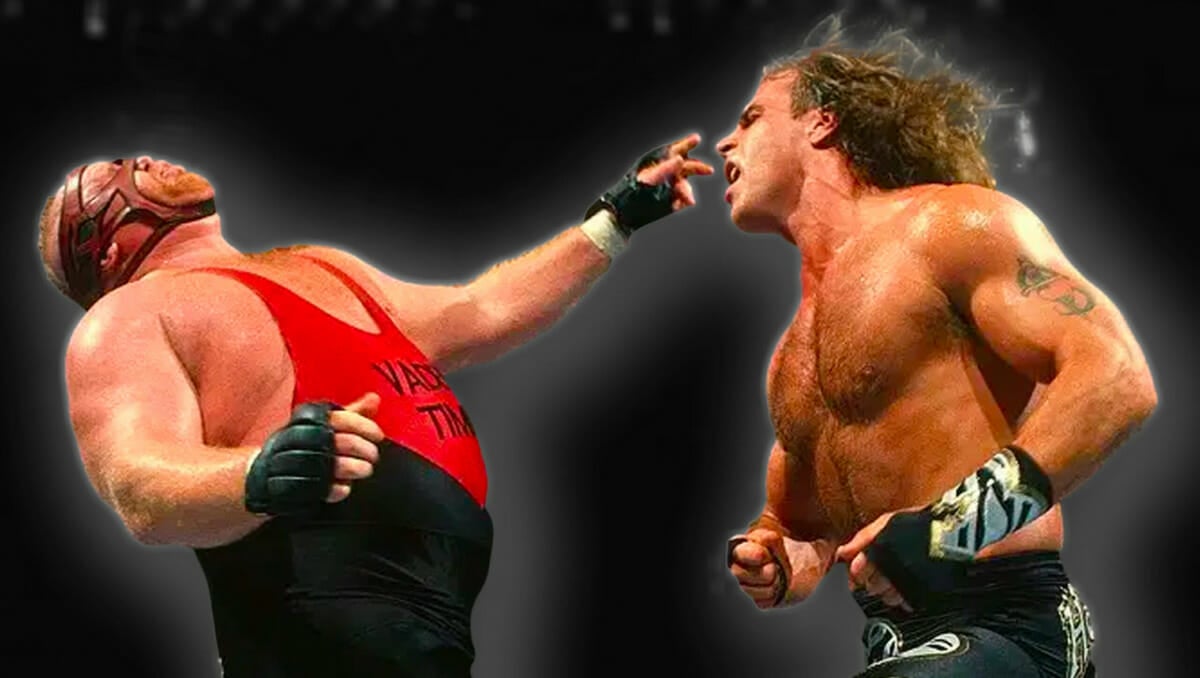
On July 21, 1996, WWF brought In Your House: International Incident to General Motors Place in Vancouver and landed on one of the more revealing nights of its entire pre-Attitude Era stretch. The show drew 14,804 fans, with 11,955 paid, the largest live attendance and gate the In Your House line had produced to that point. That alone made it important. WWF was proving it could still sell a building in a major way, even on a secondary pay-per-view that was never positioned like WrestleMania, Royal Rumble or SummerSlam.
What makes International Incident worth revisiting now is the contradiction at the heart of it. The crowd was there, the headline names were there, and the main event did its job. But the show also felt like a company in transition, one that had stars and momentum in pieces without quite having a complete identity from top to bottom. In that sense, it was a perfect snapshot of WWF in the summer of 1996.
The central attraction was Shawn Michaels, still very much the face of the promotion as WWF Champion, teaming with Intercontinental Champion Ahmed Johnson and Sycho Sid against Camp Cornette's trio of Vader, Owen Hart and British Bulldog. It was a loaded six-man on paper, and it had a clear purpose. Vader needed to feel like a real threat before SummerSlam, Michaels needed a major pay-per-view main event to carry, and the company needed a strong closing match on a show that otherwise had a lot of moving parts and not many sure things.
The match delivered. Michaels did what he often had to do in that period and acted as the engine of the whole thing, taking the punishment, creating the urgency and making the match feel bigger once the pace picked up. Sid, who was already developing that strange and undeniable connection with live crowds, reportedly got one of the strongest reactions of the night in Vancouver. Ahmed brought force and chaos, including a stretch where he threw a series of rough back suplexes on Owen Hart that looked nasty even by 1996 standards. Camp Cornette, meanwhile, gave the match structure. Hart and Bulldog were polished enough to keep everything together, and Vader always felt like the one man in the ring who could change the entire temperature with a single blow.
That was the point of the finish too. After Michaels fought through most of the closing stretch, Jim Cornette got involved at the key moment, grabbing Michaels at ringside just as the champion was lining up a superkick. Vader charged in, crushed him in the corner and followed with the Vader Bomb for the pin. It was a simple finish, but an effective one. Vader pinning Michaels on pay-per-view gave the SummerSlam title match a layer of credibility it badly needed. For one night, the monster challenger looked like he belonged at the center of the promotion.
The problem was that much of the rest of the card felt more like scene-setting than a truly essential event. Undertaker's match with Goldust ended when Mankind emerged from under the ring and dragged him into the darkness, another chapter in the bizarre feud that would lead to the Boiler Room Brawl. There was memorable imagery in that angle, but it also underlined how much of the show was really about getting to next month. Jake Roberts did not appear, Henry Godwinn was inserted as Mankind's replacement opponent, and the explanation around Roberts' absence added to the sense that parts of the night were being patched together on the fly.
That tension is what makes International Incident such an honest piece of wrestling history. The following week's Observer coverage captured it well, treating the event as a major live success while also arguing that the pay-per-view itself felt oddly missable once it was over. That sounds harsh until you look at the role the show was built to play. This was not meant to be a definitive statement. It was meant to keep the machine moving toward SummerSlam. In that narrow sense, it worked. Vader got his pin. Undertaker and Mankind moved deeper into their feud. The company got out of Vancouver with a strong house and its next big matches still in place.
But the bigger value in looking back at July 21, 1996 is seeing how many future directions were sitting on the same card at once. Steve Austin was still working below the main event against Marc Mero, not yet the undisputed center of the company but already inching toward it. Sid was getting louder reactions than many supposed top stars. Michaels was still the champion and still brilliant bell to bell, but the company around him had not fully settled on how to build a can't-miss pay-per-view world every month. You can feel WWF trying to hold together its old model while several newer, stranger and more volatile pieces are beginning to push through.
That is why International Incident matters more than its reputation might suggest. It was not one of the all-time great shows of the decade, and even at the time it was not treated that way. But it tells you a lot about where WWF stood. The promotion could pack an arena. Michaels could anchor a main event. Vader could still be presented as a dangerous problem. Undertaker and Mankind were building something much darker than the usual mid-90s WWF formula. And under all of it, the company was still looking for the mix that would turn solid business into must-see creative momentum.
A year later, the mood around WWF would feel dramatically different. On this night in Vancouver, though, the promotion was still in that uneasy middle ground, commercially alive, creatively inconsistent and full of pieces that had not completely clicked into place. International Incident did not solve all of that. What it did do was preserve the feeling of a company on the edge of change, with Shawn Michaels at the center, Vader charging toward SummerSlam, and a sold-out building willing to believe the next leap might be just around the corner.