
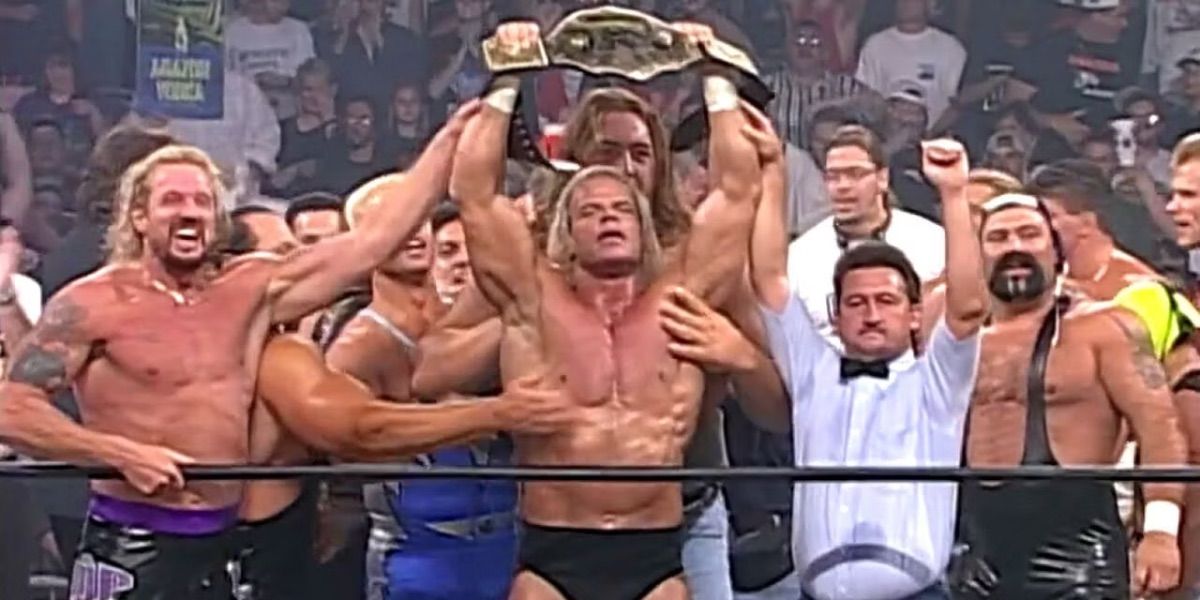
On August 4, 1997, WCW reached one of those rare television nights where the building, the storyline, and the timing all lined up at once. It was the 100th episode of Monday Nitro, the Palace of Auburn Hills was packed, and for once the question was not whether Hollywood Hulk Hogan and the nWo would escape again. It was whether WCW would finally let one of its own feel bigger than the machine built to crush him.
That man was Lex Luger.
By the end of the night, Luger had forced Hogan to submit to the Torture Rack and won the WCW World Heavyweight Championship in the middle of live cable television. It was a shock finish even in an era built on swerves. More than that, it was a release. For one night, WCW gave its audience the payoff it had been begging for. The nWo was not just rattled. It was beaten clean in the main event.
The title reign itself would not define the decade. The moment did. And in the summer of 1997, that distinction mattered more than ever.
A title change nobody expected to get on free TV
That is the first thing worth remembering about the night. WCW did not save this switch for pay-per-view. It put it on Nitro.
In hindsight, that decision says a lot about how hot the Monday night war had become. Wrestling was no longer operating like a business that could afford to hold every big surprise for the box office. Television was the battleground now. Ratings were bragging rights, momentum, and increasingly the whole conversation.
The Observer's coverage of the show made clear just how huge the response was. Nitro drew a record 4.34 rating that night, and the Hogan vs. Luger title match peaked even higher late in the broadcast. More than 17,000 fans filled the Palace, with WCW also posting one of the biggest live gates in company history. That was not just a healthy house. That was a company riding a wave and smart enough to throw gasoline on it.
Luger was the right choice for that kind of gamble. He was not presented as an underdog in the small, scrappy sense. He looked like a star, carried himself like one, and had enough history in WCW to make the title win feel meaningful. But he also represented something WCW had been missing during the nWo's reign of chaos: a homegrown babyface victory that fans could celebrate without caveats.
When Hogan lost by submission, that was the real jolt. This was not a dusty finish, a fluke cradle, or a cheap disqualification. Hogan got caught and gave up. For a company that had spent more than a year teaching its audience that the nWo could twist every big moment back in its favor, that clean finish landed like a thunderclap.
WCW finally made the nWo look vulnerable
The biggest reason this title change still matters is not that Luger was champion. It is that WCW briefly remembered the value of hope.
The nWo angle had transformed the promotion, but by August 1997 it also carried a risk. When one side wins too often, fans stop watching to see justice and start watching to see the next variation of the same scam. That kind of heat can make stars. It can also numb an audience if the balance never shifts.
Luger's win snapped that pattern.
WCW had spent the summer building tension around Sting's silent war with Hogan, while also trying to keep its broader babyface side alive. Luger's victory fit perfectly into that larger picture. He was not meant to replace Sting as the promotion's long-term answer to the nWo. He was the emotional bridge that reminded viewers an answer might still exist.
That is why the celebration after the match remains such an important part of the memory. It was not just Luger standing with the belt. It was the sense that the entire company had been waiting for a deep breath. Babyfaces poured out, the crowd erupted, and the title finally felt like something WCW wrestlers were desperate to win rather than a prop Hogan carried between nWo speeches.
Even the numbers reflect that energy. WCW did not merely win the night. It grew through the broadcast, with viewers staying for the teases, the interviews, the Sting tension, and finally the title match. Fans sensed something big was coming, and for once WCW rewarded that instinct instead of punishing it.
Why the moment mattered more than the reign
Luger's championship run was never going to be remembered for length. What people remember is the feeling.
That is often the real test for wrestling history. Plenty of title reigns last longer. Fewer create a moment that instantly tells you where you were in the story. On August 4, 1997, WCW told its viewers that Nitro was still capable of surprise, that the babyfaces were not doomed to look foolish forever, and that live television could carry the kind of payoff usually reserved for a major stadium show.
It also showed why Luger remained such a useful figure in the late 1990s. He could frustrate people at times. His career has always inspired debate. But when wrestling needed a larger-than-life hero for one explosive night, he fit the part. The rack on Hogan was simple, the reaction was enormous, and the image of Luger with the belt felt bigger than any technical critique of the match itself.
There is also a broader lesson in the booking. Promotions often get trapped protecting the long game so carefully that they forget to make the present feel alive. WCW did the opposite here. It took a risk, gave the audience a cathartic payoff, and made the 100th Nitro feel like a landmark instead of just a round number.
That is why this date still holds up. Not because it launched a new era, and not because it changed the final shape of 1997. It holds up because it captured the exact moment when WCW understood what its audience wanted to feel. Fans wanted to believe the nWo could bleed. They wanted one night where the house heroes stood tall. They wanted a main event surprise worthy of all the noise wrestling was making that summer.
Lex Luger gave them that night.
For one roaring Monday in Auburn Hills, WCW stopped teasing resistance and finally showed it. That was enough to make August 4, 1997 one of Nitro's defining dates, and one of the purest crowd-pleasing title changes of the entire Monday night war.