
On August 16, 1997, Plum Mariko died at 29 after suffering catastrophic injuries in a match the night before. There are deaths in wrestling history that feel distant because they belong to another era, another territory, another version of the business. Mariko's death has never felt distant in Japan. It remains one of the clearest reminders that pro wrestling's beauty and violence have always lived uncomfortably close together.
For longtime fans of joshi wrestling, the loss still lands with a particular heaviness because Mariko was not some outsider on the fringe of the scene. She had been there from the beginning of JWP's first generation, debuting in 1986 alongside names who would help define women's wrestling in Japan for years. She was small, technically sharp and credible in a way that made her stand out. Her style leaned into submissions and grit, but she also worked in an environment that demanded enormous physical punishment from women who were often expected to wrestle at a blistering pace and absorb frightening landings as a matter of routine.
That is part of why August 16 still matters. Mariko's death was not treated as a freak accident that came from nowhere. It was understood, even at the time, as the awful endpoint of a system that had been asking too much for too long.
A tragedy that had been building
The match itself took place on August 15 in Hiroshima. Mariko teamed with Command Bolshoi against Mayumi Ozaki and Rieko Amano. Late in the bout, Ozaki hit a Liger Bomb, a move that was dangerous by nature but not unusual for that era. Mariko was knocked unconscious on impact. She never recovered.
Contemporary coverage in the Wrestling Observer Newsletter made clear how quickly the shock turned into broader concern. Mariko was rushed to the hospital for emergency surgery and died the next day. What made the story even harder to process was the sense that her body had already been warning everyone. She had suffered multiple major injuries over the years. Reports after her death pointed to repeated concussions, persistent head pain and visible fatigue in the period before the match. In other words, this was not simply one bad landing in isolation. It was a wrestler pushing through damage in a culture that too often rewarded exactly that kind of toughness.
Japanese women's wrestling in the 1990s produced some of the greatest in-ring work the sport has ever seen. It also carried a terrifying physical cost. The standard was so high, and the pressure to match it so intense, that brutal neck bumps, piledrivers, powerbombs and head-first landings became normalized. Fans loved the urgency and realism. Wrestlers built entire careers on their willingness to endure it. Mariko's death forced everyone to look at that style from a different angle.
Why Plum Mariko mattered
Mariko was never the biggest commercial star of her generation, and that matters here because it says something about how wrestling history remembers people. The superstars stay visible. The workers who hold promotions together sometimes fade unless something pushes people to look closer. August 16, 1997 was one of those dates.
She was a foundational JWP figure, a trained shooter with real presence despite her size, and a wrestler respected for her seriousness. Earlier in the decade, she had held junior titles and carved out a role as a dependable performer in one of the strongest women's scenes wrestling has ever produced. She was part of the ecosystem that made that scene possible. Not everybody can be the ace, but a promotion cannot become great without wrestlers like Mariko who make the middle of the card feel legitimate, competitive and hard.
There is also something especially sad in how her career had evolved by 1997. Injuries had already changed what she could do and how she was used. She had missed long stretches after breaking both collarbones in separate incidents and was no longer in the same position she had occupied earlier in the decade. Even so, she kept wrestling. That decision came from pride, love of the craft and the expectations built into the culture around her. It also came from a business that was not always good at protecting the people who gave themselves to it.
The lesson wrestling could not ignore
Mariko is widely remembered as the first wrestler in Japan to die from injuries suffered in a match. That alone would make the date historically significant. But the real reason the story endures is what followed.
Her death triggered soul-searching across Japanese wrestling about medical oversight, concussion awareness and the broader assumption that performers should simply work through pain until they physically could not. The discussion did not magically solve wrestling's safety problems. No single tragedy ever does. But it did strip away the excuse that the danger was theoretical.
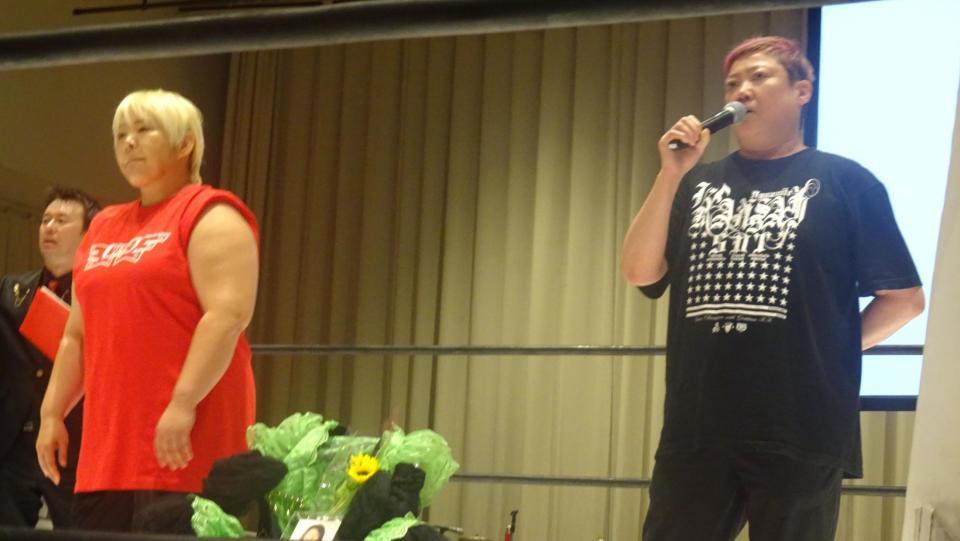
That is why memorial shows for Mariko have continued for decades. They are not only acts of remembrance. They are also warnings. Later coverage around those memorial events made clear that people in the scene still talk about her death as a lesson in what happens when preparation, health and caution lose out to habit and obligation. In that sense, Mariko's legacy is larger than her win-loss record or title history. She became part of the industry's conscience.
Wrestling often celebrates endurance as a virtue above all else. Fans admire the wrestlers who tape themselves up, work hurt and refuse to come off the road. Promoters have long benefited from that mentality. Mariko's death exposed the dark side of it. Courage is real, but so is institutional failure, and the two can look dangerously similar when a wrestler is being praised for continuing despite injuries that should have stopped everything.
Why August 16, 1997 still holds weight
Some On This Day stories are about triumph, the kind of date fans revisit because it launched a career or crowned a champion. This one is harder than that. It survives because wrestling cannot honestly tell its own history without it.
Plum Mariko's death did not just take away a respected wrestler in her twenties. It forced a reckoning with how much damage the sport was willing to normalize, especially in an era when joshi wrestlers were producing extraordinary work at an extraordinary physical price. If you want to understand both the brilliance and the brutality of 1990s Japanese wrestling, August 16, 1997 is one of the dates you have to sit with.
That is why Plum Mariko is still remembered. Not only because she died, but because her death made ignoring the cost impossible.