
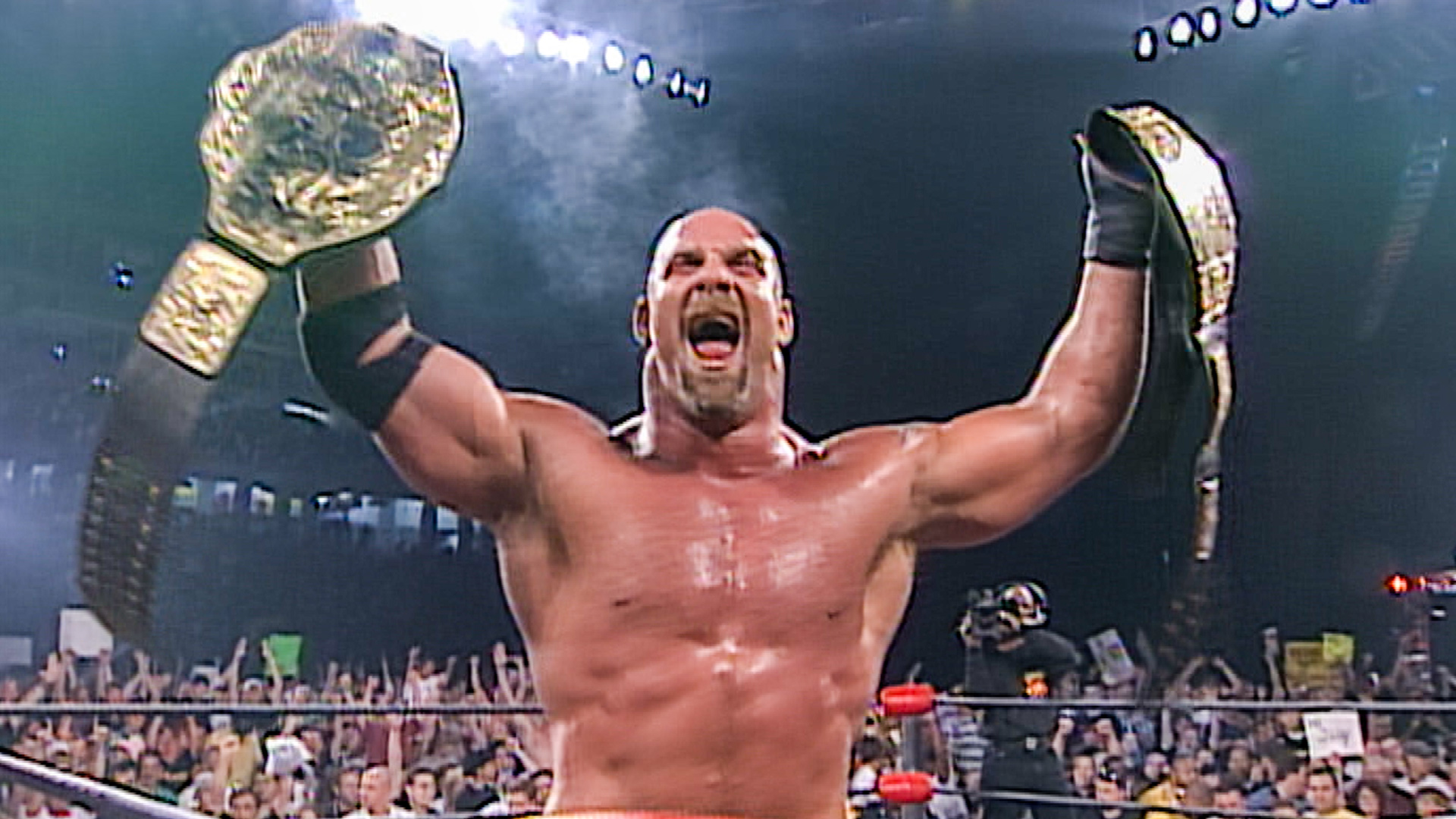
On July 6, 1998, WCW did something that felt almost impossible in real time. It took the hottest undefeated star in the company, put him in front of a packed Georgia Dome, and actually let the moment land.
That was the night Goldberg defeated Hulk Hogan for the WCW World Heavyweight Championship on Nitro, a title change delivered on free television in the middle of the Monday Night War. The match has been debated for years because of the money WCW left on the table by not saving it for pay-per-view. The reason people still talk about it, though, is much simpler. For one night, the company gave fans exactly what they wanted, and the reaction was volcanic.
Goldberg had been building toward a breakthrough for months. He was still relatively new on national television, yet he already felt different from almost everyone around him. The streak mattered, but the real key was how direct the act was. He walked out, destroyed people, and left crowds waiting for the next spear and jackhammer. In an era crowded with swerves, factions, and long talking segments, Goldberg felt brutally uncomplicated. Fans did not need to be convinced to believe in him. They had already made their choice.
WCW turned Nitro into a stadium event
The scale of the night mattered as much as the finish.
WCW ran the Georgia Dome and drew the biggest crowd in company history. Contemporary Observer coverage put the actual attendance at 41,412, with 36,506 paid and a gate of $906,330, all of them records for the promotion at the time. More importantly, it looked and sounded enormous on television. WCW had spent years telling viewers that Nitro was the center of the wrestling world. On this night, the building finally matched the claim.
The company framed the show around Goldberg from the start. Hogan announced that Goldberg first had to get through Scott Hall to earn the title shot. Goldberg beat Hall in 5:56 with the same spear and jackhammer combination that had become his signature, and that result set up the main event the live crowd had really come to see.
Even that setup told you how hot Goldberg was. Fans were willing to wait through one more hurdle because they believed the payoff was coming. WCW did not always handle that kind of anticipation well, but here it read the room correctly.
Why the title change hit so hard
The Hogan match was not remembered because it was a technical masterpiece. It was remembered because it captured a promotion at the exact point where business calculation, crowd desire, and star momentum all met in one place.
Much of the nWo black and white tried to tilt the odds, only for Diamond Dallas Page and Karl Malone to cut them off with chair shots and clear the path. That mattered. WCW had trained its audience to expect interference, protection, and escape hatches around Hogan. This time, the usual machinery was there, but it failed. The story finally moved forward.
Then Goldberg beat him clean.
That is the part that gave the moment its force. Hogan was still one of the biggest names in wrestling, still the face of the nWo era, and still the man many fans had been waiting to see dethroned. When Goldberg lifted him for the jackhammer and finished the job, the Georgia Dome reacted like months of frustration had been released all at once.
A lot of major wrestling moments become iconic because the company tells you they are important. This one became iconic because the audience decided it was. You can feel that even now when you watch it back. The noise arrives before the history does.
Goldberg was more than a streak
It is easy to reduce 1998 Goldberg to the undefeated count and the entrance smoke, but that undersells why he connected.
Goldberg represented a rare kind of faith from fans. He was not the polished corporate ace, and he was not a cool heel pretending not to care. He was a wrecking ball who seemed to belong entirely to the audience. Every squash win, every security walk, every building-shaking entrance made fans feel like they were watching a force that management would be foolish to resist.
That is why the title win felt so satisfying. It was not just that a new champion had been crowned. It was that WCW briefly aligned itself with its own momentum instead of fighting it. In a company that often overcomplicated simple answers, Goldberg was the simple answer.
The timing made it more dramatic. He was only 31, and less than ten months removed from his televised debut in September 1997. That is an unusually fast rise for a wrestler being positioned at the absolute top of a major promotion. Yet it did not feel rushed in the building. It felt overdue.
The triumph also exposed WCW's panic
What gives the moment its extra historical weight is that it was both a creative triumph and a warning sign.
WCW did not put Hogan vs. Goldberg on Nitro because it had suddenly become patient and disciplined. It did it because the ratings war had pushed the company into a short-term decision. The title match had only been officially shifted into this form a few days earlier, after an original idea that would have made it a non-title, non-televised attraction. WCW got the giant reaction and the unforgettable visual, but it also gave away a match that could have anchored a major pay-per-view.
That contradiction is part of the story now. July 6, 1998 was one of WCW's greatest television nights, and it was also a snapshot of the impulse that would hurt the company later. When WCW was frightened, it reached for the biggest possible move immediately. Sometimes that instinct created magic. Sometimes it drained the future to win the present.
On this night, the magic won.
Goldberg standing tall with the championship in the Georgia Dome remains one of the defining images of late 1990s wrestling because it captured the version of WCW people still romanticize. It was loud, oversized, star-driven, and completely in touch with the emotional payoff the audience wanted. The company would not stay that connected for long. That is one reason the moment has aged so well.
On this day in 1998, Nitro felt bigger than television. Goldberg was the man fans had chosen, Hogan was the giant in his way, and WCW, for one electric night, understood exactly what it had.