
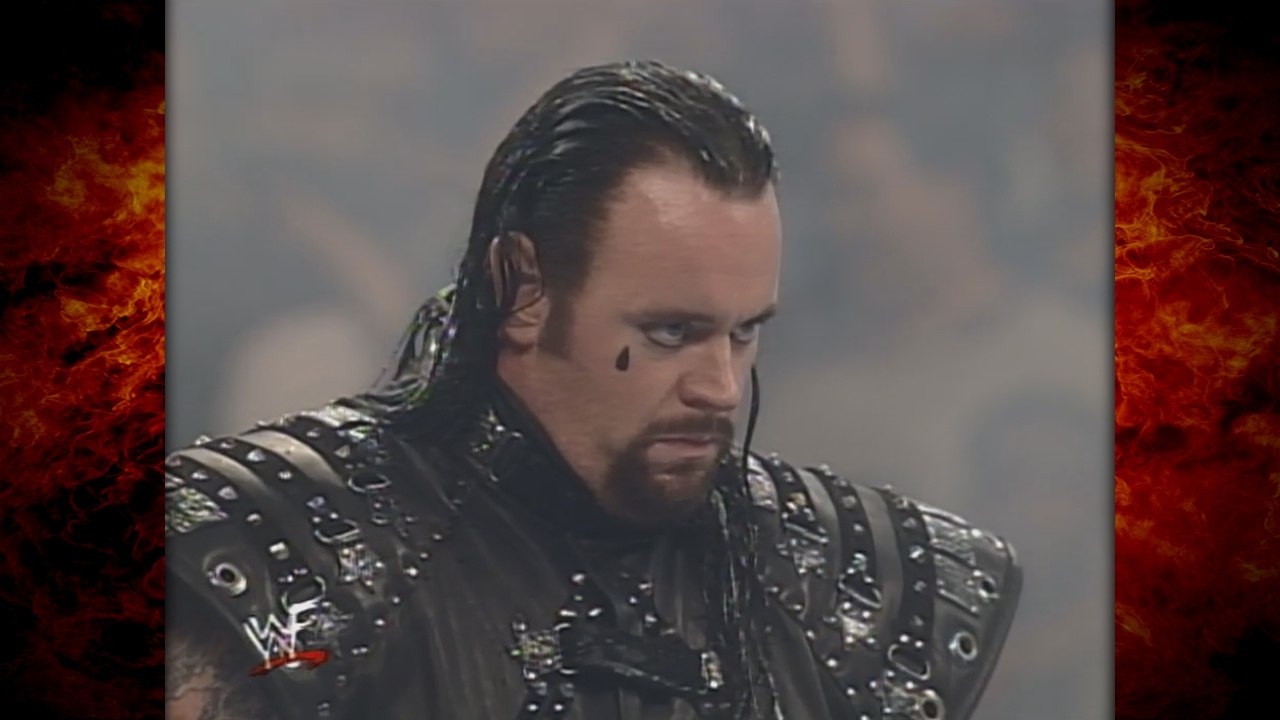
On April 26, 1998, WWF leaned all the way into the madness of the Attitude Era and gave fans something they had never seen from the company before. At Unforgiven: In Your House in Greensboro, North Carolina, The Undertaker and Kane met in the first Inferno Match in WWF history, a bout built around one simple idea: the only way to win was to set your opponent on fire.
Even by 1998 standards, it sounded outrageous. That was the point. WWF was in a fight for attention every single week, and spectacle had become just as important as clean finishes or technical wrestling. Unforgiven was already carrying a major Steve Austin vs. Dude Love main event and another chapter in the Vince McMahon power struggle, but the image most people still remember from that night is the ring surrounded by flames as The Undertaker and Kane tried to destroy each other.
The stipulation fit the rivalry better than almost anything else could have. Kane had arrived months earlier as the monster from The Undertaker's past, the brother tied to the fire that haunted the entire story. Their feud was never meant to feel ordinary. It was melodrama, horror and family revenge turned into wrestling television. After Kane cost Undertaker dearly and the two finally collided at WrestleMania XIV, the rematch needed to feel bigger, stranger and more dangerous. Putting fire around the ring was absurd, but it was absurd in exactly the way this feud demanded.
The Undertaker and Kane turned spectacle into the whole selling point
What made the match memorable was not that it was a hidden technical classic. It was the opposite. The Observer's review treated it as more spectacle than great wrestling, and that is hard to argue with. The flames were the real star for long stretches. Fans reacted every time they shot higher, every time one of the brothers got too close, and every time the match threatened to turn from a gimmick into a disaster.
That tension gave the bout its identity. The Undertaker threw himself into a wild dive to the floor that looked reckless even for a wrestler with his aura. Kane, protected by the character and the moment, felt less like a man trying to win a match and more like an unstoppable problem that had to be survived. Paul Bearer hovering over the chaos made the whole thing feel even more theatrical. By the time Kane's arm was set alight and he bolted for the back, WWF had its finish and, more importantly, its lasting visual.
It is easy to laugh at the concept now because wrestling has spent decades trying every variation of danger, cinema and excess. In 1998, though, this was still novel on a WWF pay-per-view. The company had done casket matches and buried alive matches, but this felt different because the fire was not just a prop at ringside or a post-match angle. It defined every second of the contest. That gave the match a sense of danger that fit the Kane character perfectly and made Undertaker feel like the one man willing to walk into hell just to beat him.
Unforgiven showed where WWF was heading in 1998
The rest of the show mattered too. Unforgiven drew a huge crowd in Greensboro, and the card was built around the question of whether McMahon could steal the WWF title from Austin the way management had stolen so much else in that era. Austin against Dude Love was the better wrestling match on the night, full of chaotic bumping, brawling and more McMahon interference. But the structure of the pay-per-view told you exactly where WWF's creative head was at the time.
This was no longer a promotion relying only on match quality to carry the night. It wanted moments. It wanted replayable scenes. It wanted fans leaving the building talking about McMahon getting drilled with a chair, Austin refusing to be controlled, and Kane standing in a ring walled off by fire. In that sense, Unforgiven was not just a strange pay-per-view. It was a snapshot of the broader shift that was turning WWF into a hotter and more aggressive national force.
The Inferno Match also helped lock in the Undertaker-Kane feud as one of the defining supernatural rivalries of the era. Their story had always depended on imagery as much as in-ring action: the casket, the flames, Paul Bearer's betrayals, the sense that these two were bound together in a way no other opponents were. April 26 gave that rivalry one of its signature images. Long after better matches came and went, fans still remembered the fire.
That matters when judging wrestling history. Not every important match is important because it was bell-to-bell brilliant. Some endure because they perfectly captured what a company was trying to be at a certain moment. On that level, Unforgiven 1998 was a success. It felt dangerous, loud, messy and larger than life, which is another way of saying it felt exactly like WWF in the spring of 1998.
The first Inferno Match did not reinvent wrestling technique, and it was never going to. What it did was give the Attitude Era one of its purest pieces of visual excess, a match that could only have happened in that period and with those characters. On a night when Austin and McMahon kept pushing their war forward, The Undertaker and Kane gave the company a different kind of milestone. They turned a family blood feud into a ring of fire, and nearly three decades later that image is still impossible to mistake.