
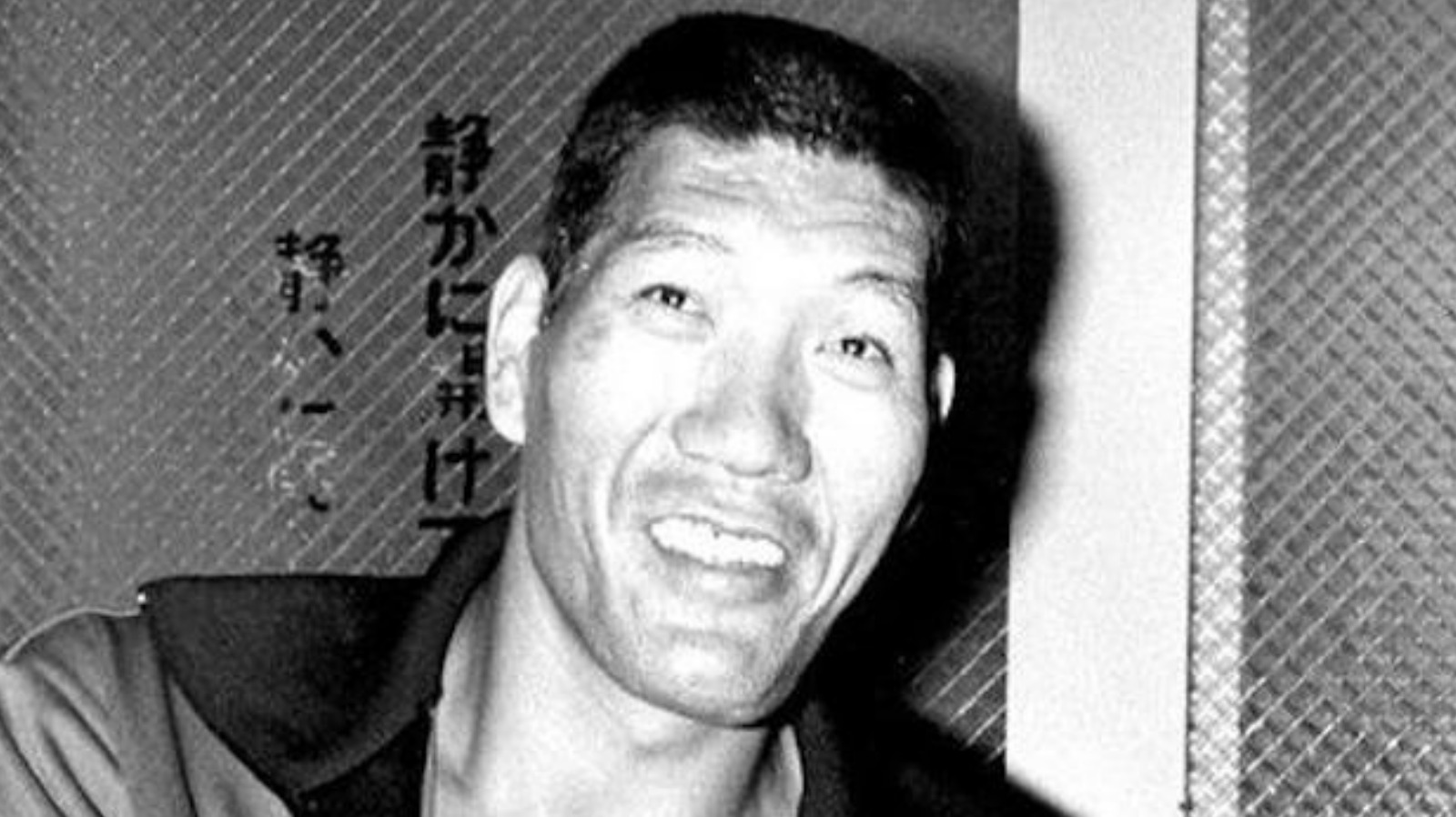
On May 2, 1999, All Japan Pro Wrestling turned the Tokyo Dome into something bigger than a major show. It became a public farewell for Giant Baba, the founder, ace and defining face of the promotion, three months after his death.
That alone would have made the date unforgettable. What pushed it into wrestling history was the scale of it.
A sold out crowd of 65,000 packed the Dome for Baba's symbolic retirement ceremony, the biggest house he had ever headlined or promoted. In life, Baba had been one of the towering figures of Japanese wrestling, a star who helped shape the industry after Rikidozan and then built All Japan into one of the world's great promotions. In death, the audience that came to honor him created the kind of overwhelming scene that only the truly foundational figures ever receive.
Baba's retirement match without Baba
The most striking idea on the show was that Baba was given the retirement match he never had.
Rather than treat the ceremony like a quick tribute between matches, All Japan staged it with the full weight of history. The Destroyer, Bruno Sammartino and Gene Kiniski came to the ring as the announced participants in an imaginary farewell bout, with veteran referee Joe Higuchi and long-time PWF figure Lord James Blears there to complete the picture. When the bell rang, the big screen played clips from Baba's greatest years, including battles with Sammartino, Kiniski, The Destroyer, Stan Hansen, Bobo Brazil, Jack Brisco and Abdullah the Butcher.
It was not nostalgia for nostalgia's sake. It was a reminder of how large Baba's footprint really was.
Baba had not merely been a famous wrestler in one territory or one boom period. He had been a national celebrity in Japan, a promotion builder, a booker, a talent developer and, for years, the living bridge between postwar wrestling's early giant figures and the modern All Japan that came to define in-ring excellence during the 1990s. By the time the ceremony reached its emotional peak, Motoko Baba placed his massive boots in the middle of the ring and the building stood for a ten-bell salute.
That image did the work no speech could do. The boots in the center of the ring said the era was over.
Misawa and Vader carried the future onto the same night
Baba's farewell would have been enough on its own, but the show also had to answer a harder question. What did All Japan look like after Baba?
The answer, at least for one night, came through Mitsuharu Misawa.
In the main event, Misawa defeated Vader to win the Triple Crown Heavyweight Championship for a record fifth time. The match gave the crowd a present-day classic on a night devoted to memory, and it also felt symbolically perfect. Misawa was Baba's great modern successor, the central figure of All Japan's Four Heavenly Kings era and the wrestler most closely identified with the company's extraordinary in-ring peak of the 1990s. Putting the Triple Crown back on him at the biggest event in company history made emotional and political sense all at once.
Emotionally, fans got to see Baba's chosen ace leave the Dome as champion. Politically, the result mattered because All Japan was already entering a fragile period. Baba was gone. Jumbo Tsuruta was out of the picture. The promotion's future leadership was uncertain. Misawa had the support of the roster, while Motoko Baba held the power that came with ownership. The company was not just mourning its founder. It was trying to figure out what came next without him.
That tension gives the date extra weight in hindsight. One year later, Misawa would leave and form Pro Wrestling Noah after a complete break with Motoko Baba's side of the company. On May 2, 1999, that split had not happened yet, but you can feel the old All Japan standing on the edge of a new chapter it did not fully understand.
Why the crowd mattered as much as the card
What makes this day special is that the attendance was not driven by a hot angle alone. It was driven by respect.
The Tokyo Dome had seen massive wrestling crowds before, but this audience was there to say goodbye to a man whose influence reached beyond match ratings and title histories. Baba was one of the few wrestlers in Japan who could be discussed as both a sports celebrity and a cultural institution. He had promoted generations of stars, helped define the King's Road identity of All Japan and turned the company into a home for a certain ideal of heavyweight wrestling that still shapes how fans talk about greatness.
That is why the ceremony worked. People in the building understood they were not just remembering an old headliner. They were closing the book on one of the industry's central architects.
There was a beautiful contradiction to it. Baba never got this exact scene while he was alive, yet only someone of his stature could have inspired it after death. The final applause was not really for a single match, a title reign or a promotional run. It was for the total body of work.
Giant Baba's last great night still says everything about him
Giant Baba's legacy has never been easy to compress into one accomplishment. He was a giant attraction, a top champion, a revered elder and the engine behind one of wrestling's most respected promotions. May 2, 1999 captured all of that at once.
The ceremony honored the legend people had grown up with. Misawa's title win honored the standard Baba had set for what top-level All Japan wrestling should look like. And the 65,000 fans in the Dome showed that even at the end, Baba could still make the whole wrestling world feel as if it had to stop and pay attention.
That is why this was more than a memorial show.
It was the public moment when All Japan said goodbye to its founder, the private moment when an era gave way to uncertainty, and the rare night when wrestling used spectacle to express genuine grief without losing its sense of grandeur.
On May 2, 1999, Giant Baba got the farewell only a true pillar of the business could command.
The Tokyo Dome did not just host a show that day. It stood still for him.