
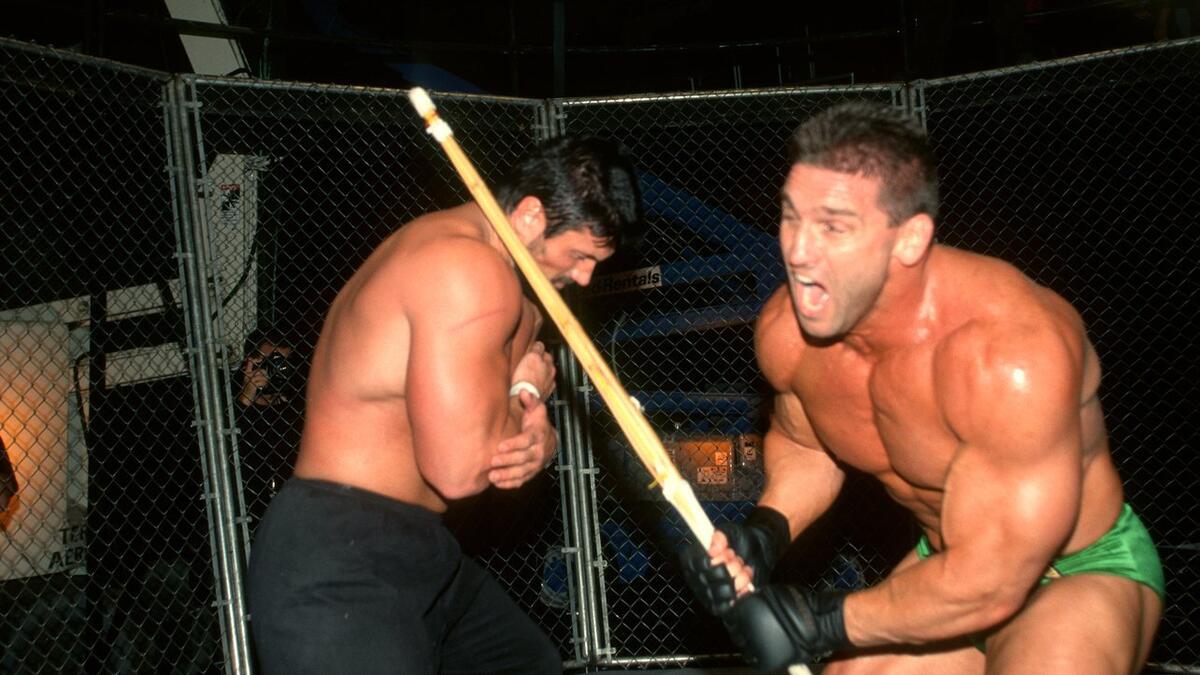
On August 22, 1999, Mankind won the WWF Championship at SummerSlam, and in a company full of swerves, that finish still stands out because of what it was really doing.
On the surface, it was a surprise title change in the middle of the Attitude Era boom. Mankind beat "Stone Cold" Steve Austin and Triple H in the main event at the Target Center in Minneapolis, with Minnesota governor Jesse Ventura serving as special referee. The belt changed hands, the crowd got its shock, and the show had its headline.
But the reason the night matters is bigger than the title switch itself. Mankind's victory was the bridge between two chapters of WWF history. Austin was still the company's defining star, but his body was wearing down. Triple H was being lined up for his first full run as the top heel champion. And Foley, who had already become one of the promotion's most valuable big-match performers, was the perfect person to connect those two realities in a way the audience would accept.
SummerSlam 1999 had more pressure on it than a normal title match
By late summer 1999, WWF was still white hot, but it was no longer as simple as giving Austin a challenger and letting the momentum carry everything. The company was trying to build its next layer of top stars while protecting the one man who still meant the most to business.
Triple H had spent months rising from featured act to genuine main event player. He had the look, the promo confidence and the sense that the company wanted him to become more than another member of a deep roster. At the same time, there were real questions about whether fans were ready to see him fully take that spot. He was important, but he was not Austin and he was not The Rock.
Mankind solved that problem.
He was already beloved, already established as tough enough to survive anything, and already credible enough that fans would accept him with the title. He also brought a different emotional texture to the main event scene. Austin was defiant. Triple H was calculating. Mankind was chaos, heart and pain all wrapped together. That made him the ideal third point in the triangle.
Ventura's presence added another layer. He was not just a nostalgia guest. He was a sitting governor stepping back into a WWF ring, which gave SummerSlam mainstream attention far beyond the usual wrestling bubble. That meant the show had to feel big, and it did. The card delivered five title changes, a wild atmosphere and one of the more memorable crowd reactions of the year.
Mankind won because the ending needed surprise and protection at the same time
The match itself was built around compromise in the best wrestling sense of the word.
Austin was working hurt. Triple H was supposed to be the man moving upward. Mankind was the one wrestler on the board who could take the title, make the audience believe in the moment, and still leave room for the larger plan to continue immediately after.
The following week's Observer coverage described a main event shaped as much by circumstance as by design. Ventura threw Chyna out after she interfered. He refused to count a tainted pin for Triple H. Shane McMahon got involved and took a Stunner before Ventura tossed him as well. The whole thing had the frantic energy WWF was chasing at the end of the 1990s, where the main event was not just about athletic drama but about keeping several power struggles alive at once.
Then came the finish. Triple H hit Austin with the Pedigree. Mankind followed with the double-arm DDT and pinned Austin to win the championship.
That choice mattered.
If Triple H had beaten Austin clean in that moment, the company would have forced a final answer on whether fans were ready to see him replace the biggest star in wrestling. If Austin had simply retained, nothing really changed. Putting the title on Mankind let WWF create a major result without closing off its options. The company got the surprise, protected Triple H from carrying the whole burden of the transition in one night, and gave Austin a loss that fit the chaos of the stipulation rather than feeling like a straight dethroning.
It also helped that the crowd trusted Foley. When Mankind won, it did not feel like a placeholder move in the dismissive sense. It felt like a payoff that this particular character had earned.
The reign lasted one night, but that does not make it a footnote
One reason SummerSlam 1999 is easy to undersell is that Mankind's reign was so short. Triple H beat him for the title the next night on Raw, which can make the SummerSlam finish look like nothing more than a holding pattern.
That misses the point.
Short reigns are often revealing. In this case, the title win showed exactly how much trust WWF had in Foley at a critical moment. He was the man they believed could carry the emotional weight of the surprise, give Austin cover in defeat and hand the belt forward without the audience rejecting the process.
That is not a minor role. That is one of the most important jobs in wrestling.
It also says something important about Foley's place in that era. He is sometimes remembered mainly as the fearless body, the man who took the sickening falls and kept getting back up. That was part of his greatness, but SummerSlam 1999 showed something else. He was also a crucial story mechanic for one of wrestling's hottest periods, someone the company could place in the center of a complicated political and creative situation and trust to make all of it work.
Without a figure like Mankind, the move from Austin's absolute peak into the Triple H title era would have been much rougher.
SummerSlam 1999 was a hinge point for the Attitude Era
The biggest stars of the Attitude Era are remembered for domination. Nights like this are worth revisiting because they show the promotion thinking on its feet.
SummerSlam 1999 was not the end of Austin, and it was not yet the full arrival of Triple H as the top champion of the company. It was the night between those realities, and that is exactly why Mankind's victory still matters.
For one evening in Minneapolis, Foley was more than the lovable underdog and more than the daredevil who could survive punishment nobody else would take. He was the answer to a difficult booking problem at the exact moment WWF needed one. The title change gave the show its shock, gave the crowd a finish it could embrace, and helped move the main event scene into its next phase without breaking the momentum that had made the company so hot in the first place.
That is why August 22, 1999 deserves more than a quick note in the record books. Mankind's win was brief, but it was not small. It was one of those one-night title changes that told you exactly how wrestling really works when a company is trying to protect the present, build the future and keep the audience roaring all at once.