
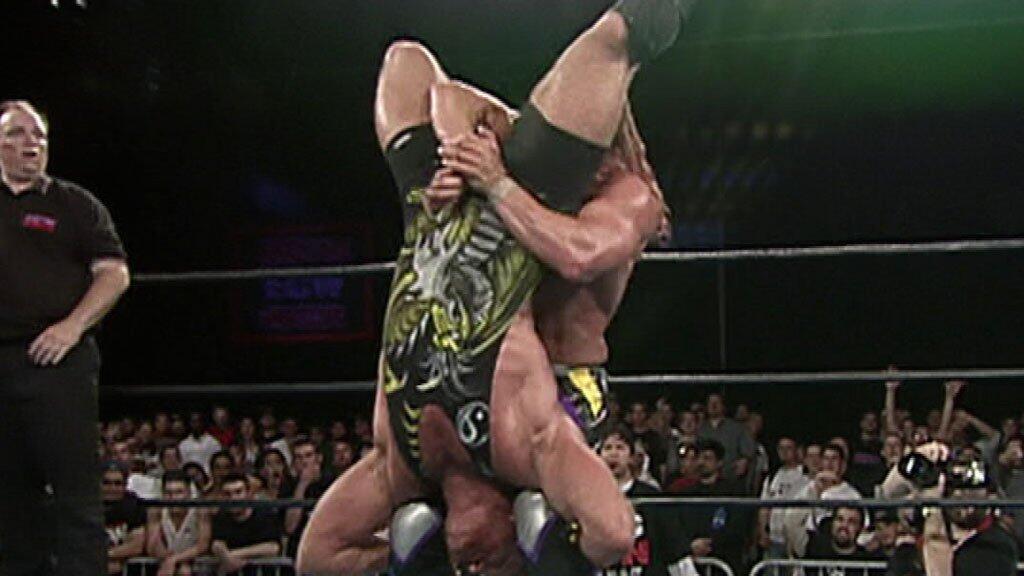
On May 16, 1999, ECW put on a pay-per-view that easily could have been remembered for everything that was going wrong around the company.
Instead, it is remembered for Rob Van Dam and Jerry Lynn.
Hardcore Heaven 1999 came at a tense moment for ECW. The promotion was drawing attention, pushing nationally, and still carrying the outlaw aura that made it feel different from everything else in American wrestling. At the same time, the company was dealing with financial strain, roster instability and the kind of backstage uncertainty that made every major show feel a little fragile. By the time Hardcore Heaven arrived in Poughkeepsie, that tension was hanging over the event.
That is what makes Van Dam vs. Lynn such an important date in ECW history. It was not just a great match dropped into an ordinary card. It was the performance that kept the night from being swallowed by the chaos around it.
Observer coverage in the days after the show painted Hardcore Heaven as a promotion trying to convince the world it still had momentum while dealing with very real problems behind the curtain. Shane Douglas, who had been expected to work Justin Credible, was gone from the show. Rumors about money problems were everywhere. Even the pay-per-view itself had a patched-together feel in places, with angles and substitutions pulling attention away from the wrestling.
Then Van Dam and Lynn went out for the ECW World Television Championship and reminded everyone what made ECW worth caring about in the first place.
Their match lasted just under 27 minutes and played like the best possible argument for ECW as more than a blood-and-guts cult brand. This was not a wild brawl built only on spectacle. It was ambitious, fast, risky and technically sharp, the kind of match that pushed the audience forward with every new exchange. Van Dam had already built a reputation as one of the most inventive wrestlers in the country, with offense that looked unlike anything most American fans were seeing week to week. Lynn was the perfect opponent for that style, not because he copied it, but because he could absorb the pace, match the timing and make the danger feel real.
That last part mattered on this night because the danger was real.
The bout became famous not only for its quality, but for how hard both men pushed through visible damage. Van Dam was left bloodied around the eye. Lynn took a frightening headfirst spill to the floor and later needed hospital attention, with a concussion and a broken nose among the injuries reported afterward. In lesser hands, that kind of match can tip into reckless self-destruction and lose its shape. This one somehow kept its emotional line. Every big move felt like it belonged to the struggle that was unfolding, and every comeback landed with the crowd because the audience could feel the stakes rising in real time.
ECW fans had already seen these two develop chemistry, but Hardcore Heaven was the match that locked the rivalry into wrestling memory. Van Dam retained the title, yet the result was only part of the story. Lynn came out of the match feeling bigger than he had going in. That was one of ECW's great strengths at its best. The promotion could use a championship defense not just to preserve a champion, but to deepen the identity of everyone involved. Van Dam looked like the promotion's most electrifying athlete. Lynn looked like a man who belonged in that air.
That is a major reason May 16, 1999 still stands out. Hardcore Heaven was supposed to be one more important stop for ECW during a period when the company was fighting to stay nationally relevant. Instead, much of the show around the match was met with mixed reactions. The Van Dam-Lynn title bout became the night's anchor. It won the Observer's best match poll by a wide margin, and even criticism of the event as a whole kept circling back to the same conclusion: this was the piece of the card people would remember.
It also says something important about where wrestling was in 1999. The major promotions were in the middle of the boom period, and much of the national conversation was driven by star power, angles and weekly television chaos. ECW had its own version of that chaos, but Van Dam and Lynn showed another lane forward. Their match felt like a bridge between the TV-title athleticism of earlier eras and the faster, more layered style that would become more mainstream in the decades that followed. You can draw a line from this match to the way American audiences later embraced longer, high-impact showcase bouts on national television and pay-per-view.
That does not mean Hardcore Heaven was a flawless masterwork. It was not. In some ways, that is part of why the match matters more. Great matches on great shows can blend into a larger success story. Great matches on unstable nights carry more weight because they have to fight for the memory of the event itself. Van Dam and Lynn did exactly that. They pulled the center of gravity away from the noise and put it back on the ring.
For Van Dam, the performance strengthened the sense that he was becoming one of ECW's defining stars, not just a standout act on the undercard. He already had charisma, originality and crowd connection. What this match added was another layer of credibility as the man most capable of delivering when a big show needed rescuing. For Lynn, it was the kind of performance that permanently altered how serious fans talked about him. He was no longer merely the opponent who complemented Van Dam well. He was part of a pairing that could headline discussion even when it did not close the show.
There is a broader ECW truth sitting inside that memory, too. The promotion's legacy has often been flattened into weapons, profanity and anti-establishment attitude. All of that was there, and it absolutely mattered. But ECW also helped teach American fans to value a different kind of intensity, one built on pace, escalation, precision and nerve. Van Dam vs. Lynn at Hardcore Heaven is one of the clearest examples of that side of the company.
Looking back now, May 16, 1999 feels less like a side note on an uneven pay-per-view and more like a snapshot of why ECW still matters. The company was unstable, loud, contradictory and frequently on the brink. It was also capable of producing matches that felt years ahead of their moment.
On this day, Rob Van Dam and Jerry Lynn gave ECW exactly what it needed most. Not a clean fix for its problems, and not a miracle that changed the company's long-term fate. What they gave it was a classic, and sometimes that is the part of history people remember longest.