
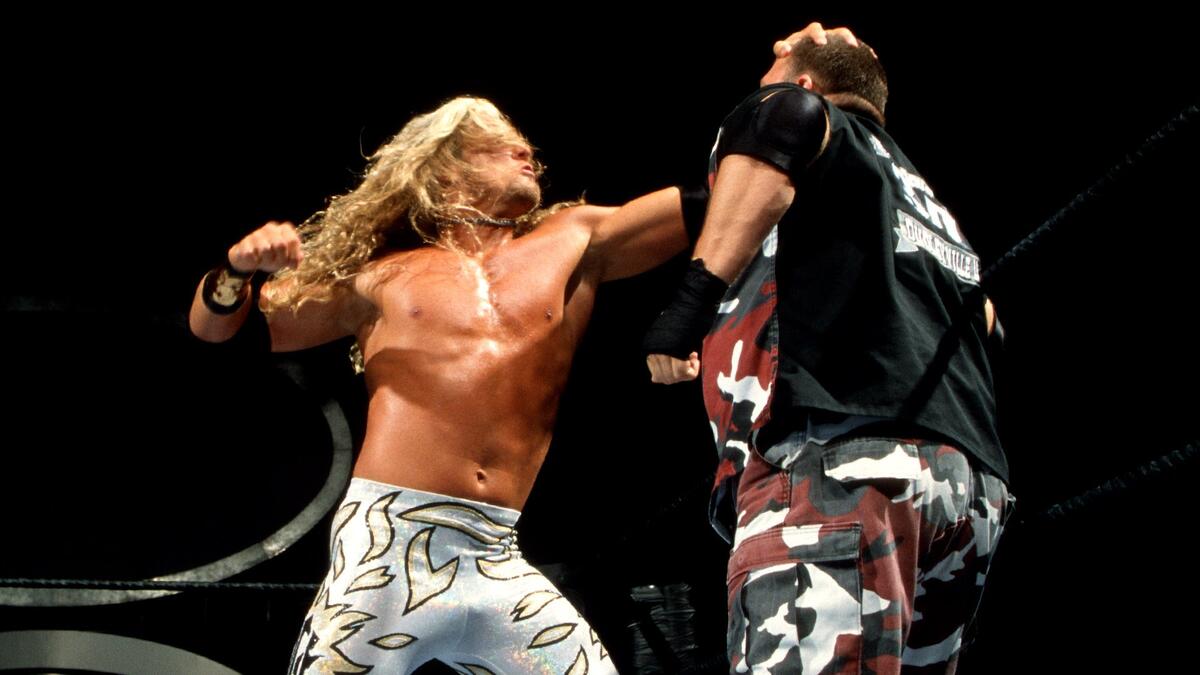
On August 27, 2000, WWF took a rivalry that was already wild, popular and escalating by the month, then gave it the perfect name. Edge and Christian, The Hardy Boyz and The Dudley Boyz had already been smashing each other with ladders and tables for months. At SummerSlam in Raleigh, they finally had a match that openly admitted what the feud had become.
It was the first bout officially promoted as a Tables, Ladders and Chairs match, and it felt like a line being crossed in real time. Tag team wrestling was no longer just a warm-up act built around quick tags and formula. For one night, it became the kind of spectacle fans talked about before the pay-per-view was even over.
Edge and Christian left with the WWF Tag Team Championship still in hand. The bigger story was that six wrestlers changed what a major-company tag match could look like, how violent it could feel and how central it could become to a pay-per-view built around world title drama.
Three teams had already outgrown the old tag formula
That was the real backdrop to SummerSlam 2000. This was not an overnight classic thrown together by accident. The triangle ladder match at WrestleMania earlier that year had already shown what these teams could do when the company trusted them with time, risk and the right stakes. By late August, the feud had outgrown ordinary rematches.
The Dudleys brought the wrecking-ball energy, always looking for the table shot that made a crowd rise before impact even came. The Hardys were the daredevils, willing to turn any rung of a ladder into a launch point. Edge and Christian were the smug champions who understood timing as well as anybody, which meant they could let the other teams absorb punishment, survive the chaos and steal the win at the exact right moment.
That combination made the match work. The Dudleys made destruction look heavy. The Hardys made it look reckless. Edge and Christian made it look opportunistic.
August 27 turned a feud into a new match type
Contemporary Observer coverage treated the SummerSlam match as the clear show-stealer, and it is easy to see why. Almost every key sequence felt built to leave a permanent mark in the memory. Christian hit a Russian legsweep backward from high on the ladder with Matt Hardy and D-Von Dudley taking the fall. Bubba Ray Dudley launched himself off a ladder into a crash that wiped out the elaborate stack of tables he had built. Matt dropped his leg from the ladder onto Edge, and Jeff followed with another legdrop in one of those sequences that made the whole feud feel like a dare escalating in public.
Then came the image that still defines the match. Jeff climbed a towering ladder on the floor and threw himself off with a Swanton Bomb, crashing through a table after his target moved. It was one of those spots that looked impossible even in an era when impossible had become the selling point.
The finish was just as smart as the stunts. After the other teams absorbed most of the punishment, Edge and Christian survived the scramble, pulled the ladder back into position and climbed up to reclaim the belts. That ending mattered. It preserved the identity of the champions and reminded viewers this was not random destruction. There was structure inside the mayhem.
SummerSlam itself was huge business. The show sold out the Raleigh Entertainment and Sports Arena on August 27, drew more than a million dollars at the gate and became the first non-WrestleMania event in American wrestling to hit that mark. The world title program with The Rock, Triple H, Kurt Angle and Stephanie McMahon was the commercial hook, but the tag title match became the part of the event people carried with them.
The danger was part of the message, and part of the legacy
What made the first TLC so influential was not just that it was great. It looked like the future, even if that future came with obvious warning signs.
The match gave WWF a new signature attraction, one that could be sold on highlights alone. The bumps were bigger, the landings were scarier and the whole presentation told fans that risk itself had become part of the spectacle.
That had consequences. The match inspired copycats across the industry, from independents trying to recreate the atmosphere to backyard wrestlers trying to recreate the danger without the experience or safety measures.
And yet that is only half the story. The other half is that the match worked because the violence was attached to characters fans already cared about. Jeff Hardy's willingness to fling himself into space meant something because fans understood his role in the feud. Bubba Ray stacking tables was not random furniture abuse. It fit the Dudleys perfectly. Edge and Christian winning through timing rather than pure sacrifice made them even more annoying, and even more effective, as champions.
Why the first TLC still matters
August 27, 2000 still matters because it gave an era one of its clearest images of ambition. The Attitude Era is often remembered for its talking, its swerves and its star power at the top. This match is a reminder that the period also reinvented the tag division by letting six wrestlers turn a secondary championship program into appointment viewing.
It also became a blueprint for how to build specialists without making them feel small. The Hardys, the Dudleys, Edge and Christian were tag teams first, but after SummerSlam they felt essential to the shape of the company. Edge would go on to become a main event singles star. Jeff Hardy would become one of the most beloved risk-takers of his generation. The Dudleys became one of the defining teams of the modern era. Christian proved again here that he was crucial to the feud's timing and intelligence.
The first TLC match did not exist in a vacuum, and later matches would go further in scale. WrestleMania X-Seven, in particular, would take the formula to an even more famous place. But SummerSlam on August 27, 2000 was the night the name became official and the concept became unavoidable.
That is why the date deserves its place in wrestling history. The match did more than steal a show. It helped redefine what tag team wrestling could be when a company stopped treating it like background noise and let it become the attraction.