
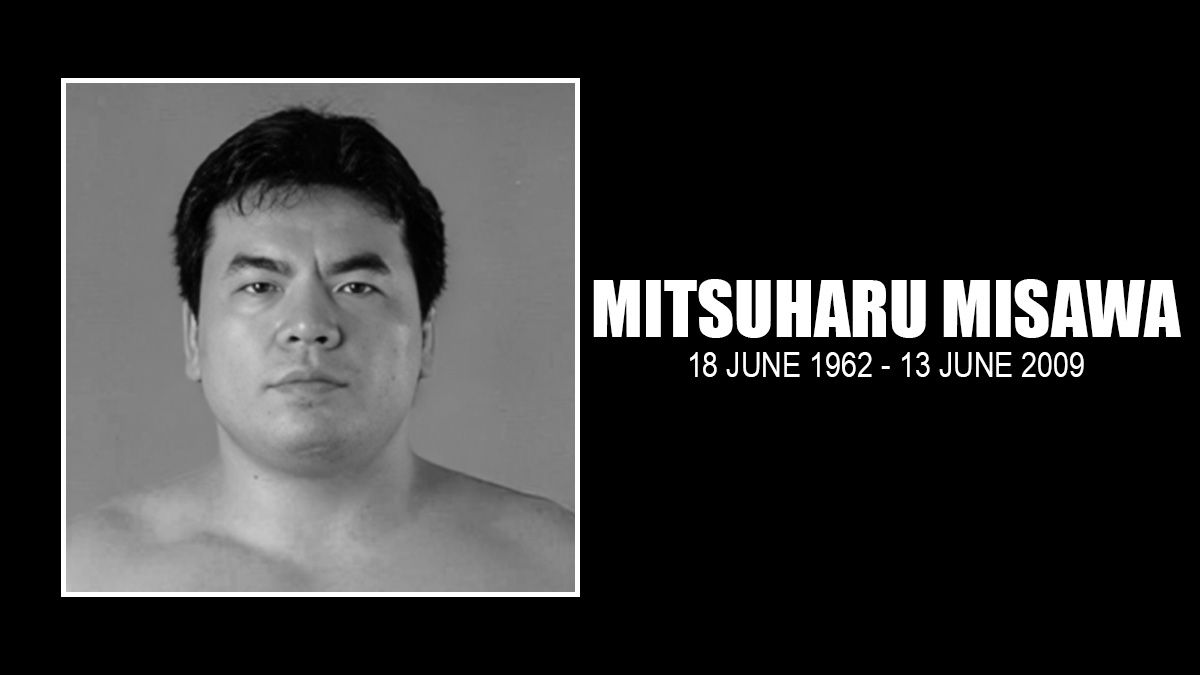
On June 12, 2000, there was no title switch, no famous finishing sequence and no single match that can carry the whole story. What happened instead was something rarer. The wrestling world learned that Mitsuharu Misawa's break from All Japan Pro Wrestling had finally burst into public view, and with it came the beginning of the end for one of the greatest promotions the sport has ever seen in its classic form.
That is why the date matters. This was the day a private power struggle stopped being a rumor and became a full-scale historical break. Within weeks, the split would lead directly to the birth of Pro Wrestling NOAH. In a broader sense, it also marked the moment 1990s All Japan, the promotion that produced so many of the era's most revered matches, stopped being a stable institution and became a before-and-after story.
The tension had been building for a long time. After Giant Baba's death in 1999, Misawa was not just the company's ace but its president, and those were not simple titles to hold. All Japan was carrying enormous history, a loyal audience and an established identity, but it was also dealing with real business strain. Misawa wanted change. He wanted to push younger wrestlers more aggressively, modernize contracts and improve conditions for the roster. Motoko Baba, protecting the company her husband had built, favored continuity and tighter control.
That kind of disagreement happens in wrestling all the time. What made this one different was the scale of the support behind Misawa. He was not a rebellious midcarder peeling off to try something new. He was the central figure in the promotion's identity, the man fans most associated with its greatness, and he had the trust of much of the locker room. Once that sort of figure reaches the point of no return, the fallout is never going to feel small.
According to contemporary Observer coverage, the actual split had started earlier, with Misawa resigning on May 28. The story was kept quiet while the promotion finished its tour, because neither side wanted to blow up cards that had already been announced and sold. That detail matters because it says a lot about how grave the situation already was. This was not a sudden emotional walkout. It was an organized rupture being held together just long enough to avoid burning paying customers before the break became impossible to hide.
When Tokyo Sports confirmed the story on June 12, the dam broke. By the following day, more board members formally resigned, and it became clear that Misawa was not leaving alone. Kenta Kobashi, Akira Taue and key office figures were among those tied to the exodus, while the expectation was that almost the entire native roster would follow Misawa into a new promotion. Only a tiny number of major names, most notably Toshiaki Kawada and Masa Fuchi, were expected to remain with Motoko Baba's version of All Japan.
That was the part that made the news feel seismic even outside Japan. Wrestling promotions lose stars all the time. Very few lose their identity in one stroke. Classic All Japan had been built on a specific kind of credibility, hard matches, athletic seriousness, emotional escalation and a main event scene anchored by Misawa and the other Four Pillars. Once Misawa and most of that ecosystem were headed out the door, this was not just a roster shuffle. It was the collapse of an era.
The split also exposed what made Misawa so important beyond his in-ring legacy. He was not simply the best wrestler in the company. He had become the company's political center of gravity. Reports at the time described him pushing for better medical coverage, full pay protection for injured wrestlers and raises that were never approved. He also wanted the promotion to invest in younger talent rather than remain chained to tradition for tradition's sake. Whether every idea would have succeeded is almost beside the point now. What mattered is that he was trying to move All Japan forward, and he no longer believed he could do that from inside the existing structure.
There was also the television question, which made the stakes even higher. Nippon TV had long been central to All Japan's place in the culture, and once it became clear that Misawa might have network support for a new group, the split stopped looking like a desperate gamble. It started looking like the foundation of a successor promotion. That eventually became NOAH, a company that would carry forward much of the personnel, style and seriousness that fans associated with peak All Japan while also creating its own identity in the 2000s.
In hindsight, June 12 feels less like the start of a rebellion than the public acknowledgment that the old order had already failed. Misawa reportedly even tried to make the transition smoother by preserving the All Japan name and avoiding an open war over Baba's legacy. When that did not happen, there was no soft landing left. The news turning public forced everyone to pick a side, and the shape of Japanese wrestling changed almost immediately.
What followed is the real proof of the date's importance. NOAH was not a vanity project that briefly flashed and faded. It became one of the defining Japanese promotions of its era. Kobashi's great title run, Jun Akiyama's place as a central figure, and later the emergence of names like Naomichi Marufuji, KENTA and Takeshi Morishima all belong to the world that opened up because Misawa and his allies broke away. At the same time, All Japan survived in diminished form and eventually rebuilt pieces of itself, but it was never again the same all-encompassing force it had been at its 1990s peak.
That is why June 12, 2000 still stands out. Some dates matter because of the match everyone remembers. Others matter because the business changed course on that day, even before the full consequences could be seen. This was one of those days. The split becoming public did not give fans a finish to celebrate or boo. It gave them something bigger, the moment they realized one legendary promotion was effectively over in the form they knew, and another was about to be born from its wreckage.