
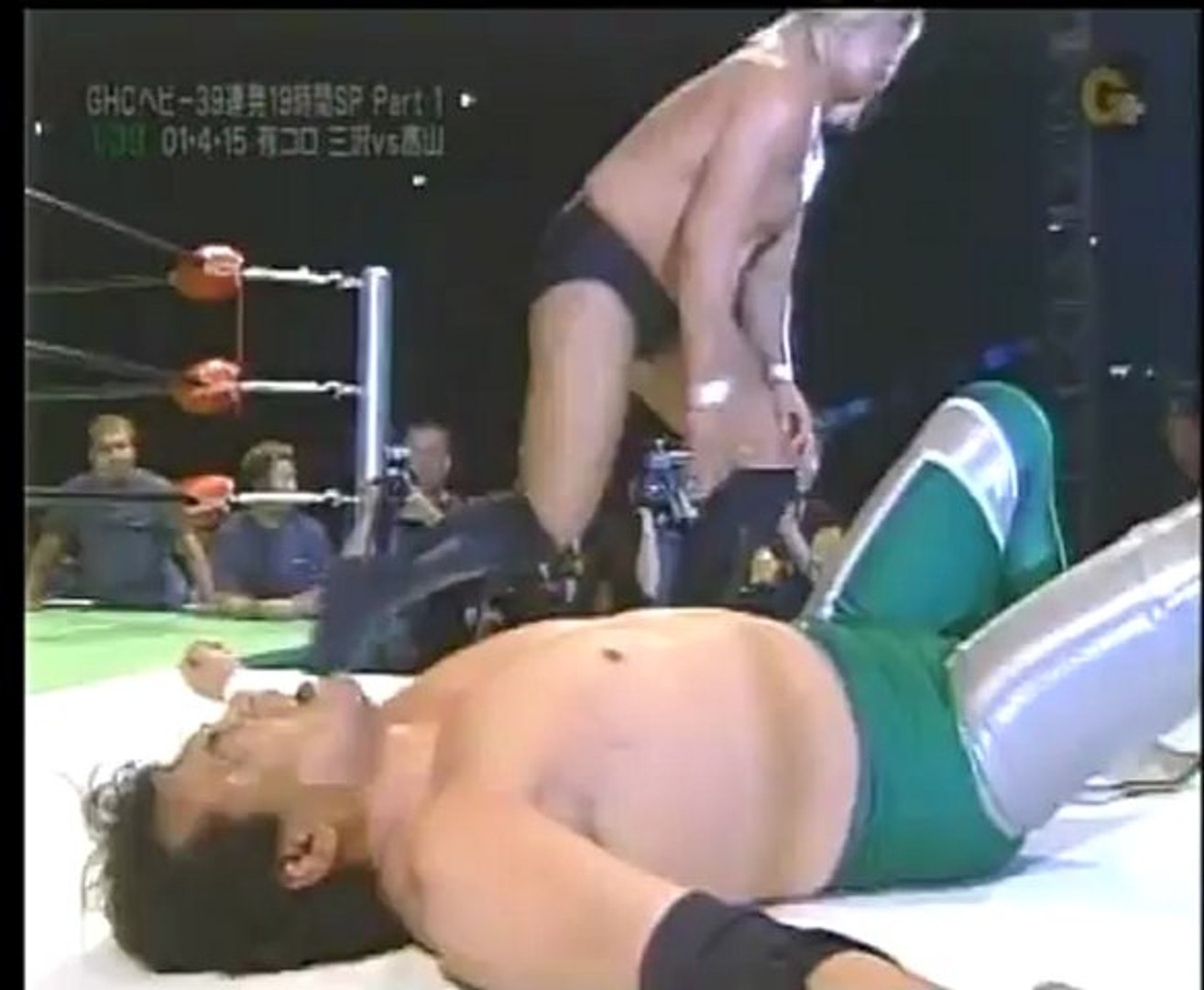
On April 15, 2001, Mitsuharu Misawa did more than win a championship. He gave Pro Wrestling NOAH the sort of image every new promotion hopes for and almost never gets, its founder standing at the top of the mountain, battered, bleeding and unmistakably central to everything the company wanted to be.
That night at Ariake Coliseum in Tokyo, before a reported sellout crowd of 12,000, Misawa defeated Yoshihiro Takayama in 21:12 with the emerald erosion to become the first GHC Heavyweight Champion. On paper, it was the final of a tournament. In reality, it felt like the moment NOAH stopped being a fascinating breakaway project and became a promotion with its own crown, its own centre of gravity and its own history.
That distinction mattered in 2001. NOAH was still less than a year old, born from the extraordinary split that followed Misawa's departure from All Japan Pro Wrestling. A new company can have a roster, television and fan goodwill and still feel provisional. Until it has a top champion who means something, it is often waiting for its identity to settle. The creation of the GHC title was NOAH's answer to that problem.
Misawa was the obvious figure to build around, but obvious does not always mean hollow. In this case it meant necessary. He was the promotion's founder, its ace and the wrestler most fans trusted to carry the emotional weight of a major NOAH main event. If the company wanted its first championship reign to feel authoritative rather than ceremonial, putting the belt on anyone else would have been a strange gamble.
Takayama, though, made the choice feel earned rather than preordained. He brought size, menace and a kind of violence that made the final feel dangerous from the opening bell. He was not there to play supporting cast in a coronation scene. He was there to force Misawa to fight for the company's future. That is a big reason the match still holds its reputation. A first champion can be crowned in a way that feels tidy and forgettable. This did not feel tidy at all.
Contemporary Observer coverage painted it as essentially a one-match show, but that almost strengthens its place in history. NOAH did not need a perfectly balanced supercard that night. It needed one defining image. It got one. Misawa left the match bleeding from the mouth after a stiff high kick knocked his jaw out of alignment, and he reportedly needed stitches afterward. The physical damage became part of the memory, because it made the victory look hard won in the purest possible sense.
That struggle fit Misawa's appeal. He was never just a symbol of excellence or a catalogue of great matches. He was compelling because his best performances made resistance feel dramatic. He could absorb punishment, steady the crowd and then slowly turn survival into control. Against Takayama, that quality mattered even more. Takayama looked like the kind of opponent who could overpower a promotion's romantic script simply by refusing to cooperate with it. Misawa beating him did not feel like a company decree. It felt like the ace proving he could still drag the night back in his direction.
The tournament itself also told a useful story about what NOAH wanted to be. Misawa had to come through Jun Akiyama, the strongest internal rival available, while Takayama arrived in the final after a controversial disqualification win over Vader in the semifinal. That left Misawa as both the company standard bearer and the wrestler carrying the cleaner road to the finish. It gave the final a subtle tension. Takayama had chaos behind him. Misawa had responsibility.
What happened next helped define the promotion's first great era. The GHC title quickly became more than a new belt with a good acronym. It became the prize that anchored NOAH's biggest matches and its most important long-form stories. That could only happen because the first reign meant something. Misawa did not just win the championship. He gave it credibility on the day it was born.
That is why April 15, 2001 still stands out. NOAH was not trying to imitate a major American launch, and it was not trying to sell itself as a novelty promotion living off a roster rebellion. It was trying to present itself as serious top-line wrestling with its own values, its own stars and its own future. Crowning Misawa completed that introduction in the clearest way possible.
There is a temptation, looking back, to reduce nights like this to inevitability. Of course Misawa was going to be the first champion. Of course the founder was going to stand tall. But wrestling history is full of obvious decisions that land flat because the match, the crowd or the moment do not quite meet the idea. This one did. The setting was big enough, the opponent was dangerous enough and the result carried enough emotional and symbolic force to feel permanent.
That permanence is the real story. The first GHC Heavyweight Championship match did not just give NOAH a champion. It gave the promotion a founding myth it could actually live up to. When people think about what made early NOAH feel important, they usually come back to the same things, hard hitting main events, emotional seriousness, and Misawa carrying himself like the company's conscience as well as its star. April 15, 2001 put all of that in one place.
It also sits on a date that has produced other weighty wrestling moments, from Brian Pillman's devastating 1996 car crash to Kenta Kobashi's 2000 Champion Carnival victory. But for NOAH, April 15 belongs above all to the night Misawa finally put a championship on the promotion he had built, and made it feel like it had been there forever.