
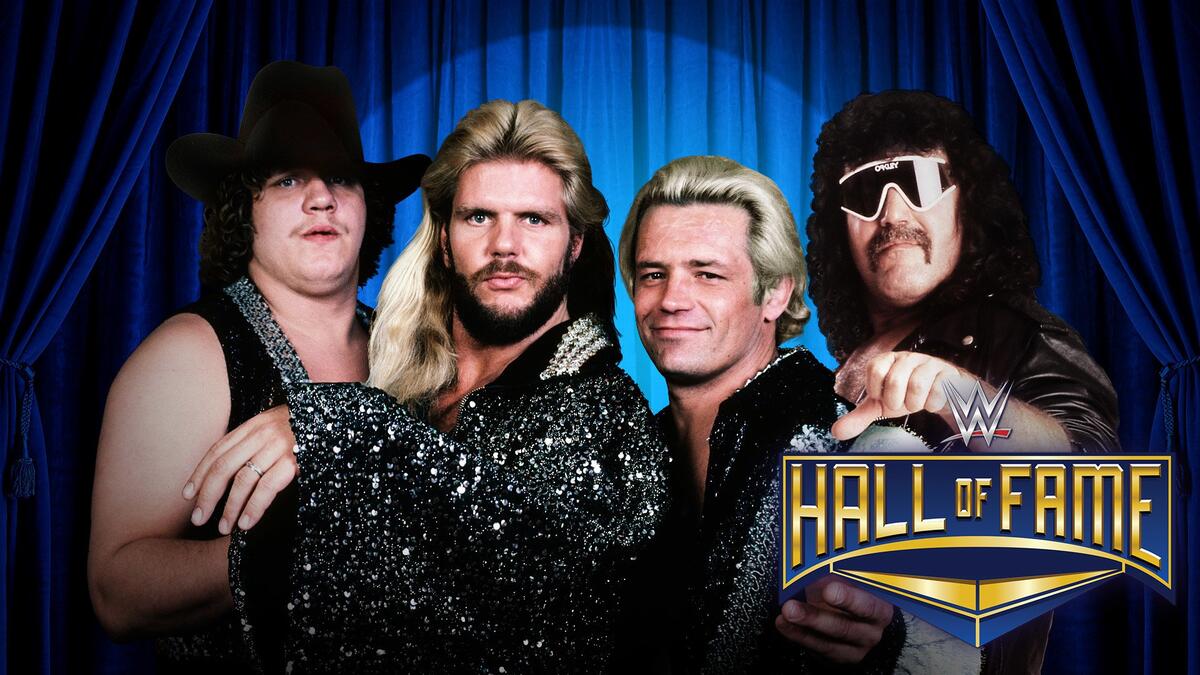
On July 16, 2001, wrestling lost Terry "Bam Bam" Gordy, and the news carried a particular kind of sadness. Gordy was only 40, young enough that fans could still imagine one more comeback, one more surprise appearance, one more night when the old aura might briefly flicker back to life. Instead, the date became a line in wrestling history that still feels heavier than it should.
According to the contemporary Observer coverage, Gordy was found dead at his home in Rossville, Georgia after suffering a heart attack. The bare facts told only part of the story. What made Gordy's death hit so hard was the gap between how short his life was and how massive his body of work had already been. By the time he was gone, he had already packed in more history than most wrestlers manage in two full careers.
Gordy mattered because he was not just another big man from the territorial era. He was one of the prototypes for a different kind of heavyweight, a brawler who looked rugged and dangerous but could move with the timing, balance and confidence of a much smaller wrestler. Long before modern fans got used to agile giants and athletic bruisers, Gordy was showing what that could look like. His powerbomb became one of the most influential finishing moves of its era, and his offense had a violence to it that always felt earned rather than theatrical.
He was still a teenager when he became a real attraction. Teaming with Michael Hayes, and later Buddy Roberts, Gordy helped turn the Fabulous Freebirds into one of the defining acts of the 1980s. Their run through Georgia and then Texas changed more than house show business. The group helped popularize entrance music as part of a wrestler's identity, and the Freebird Rule became so durable that promotions still borrow it decades later whenever a trio wants tag title flexibility.
The feud with the Von Erichs remains the center of that legacy for many American fans. Gordy slamming the cage door on Kerry Von Erich's head on Christmas night 1982 was the kind of angle that became wrestling folklore almost instantly. In Dallas, the Freebirds were not just heels. They were the villains of a regional epic, the swaggering outsiders against the hometown family. Gordy was the muscle in that picture, the one who made the danger feel real. He had Hayes' charisma around him, but his own work was what kept the heat alive once the bell rang.
If his Freebirds years were enough to guarantee his place in history, Gordy's All Japan run is what makes his story feel even bigger. He was not a nostalgia figure in Japan. He was a genuine top star there, first alongside Stan Hansen and later with Steve Williams in the Miracle Violence Connection. In 1990 he won All Japan's Triple Crown Heavyweight Championship twice, and for a stretch he looked like one of the few foreign wrestlers who could credibly sit at the very center of that promotion's world. At a time when All Japan was becoming a laboratory for harder, sharper heavyweight wrestling, Gordy was part of the reason that evolution worked.
That part of his legacy gets overlooked too often in the United States. Fans who only remember the Freebirds version of Gordy sometimes miss how respected he was in Japan, and how naturally he fit beside names like Jumbo Tsuruta, Mitsuharu Misawa, Kenta Kobashi and Toshiaki Kawada. He was not hanging on to a famous American name overseas. He was one of the major foreign stars in one of wrestling's most demanding environments.
That is also what makes the second half of his life so difficult to think about. Gordy had an uncommon gift, but he also lived hard, and the damage piled up. A serious collapse in Japan in 1990 was followed by an even more devastating overdose in 1993 that left him in a coma and caused lasting brain damage. He kept trying to wrestle after that, and there were flashes when people hoped the old Gordy might somehow return. WWE even gave him a late chance in the masked Executioner role during the Mankind and Undertaker story in 1996. But the truth was cruel and obvious. The wrestler who had once looked like the future of the heavyweight style was never fully the same again.
That is why July 16, 2001 still feels like more than an obituary date. It marks the loss of one of wrestling's great what-ifs, but it also marks the end of a career that was already extraordinary before the decline set in. Gordy had been a teenage prodigy, a territorial drawing card, the enforcer in one of wrestling's most influential trios, a UWF world champion, a major force in All Japan and a wrestler whose style echoed forward into later generations. Plenty of careers would be celebrated for just one of those chapters.
His influence is easier to see now than it may have been in 2001. Every time wrestling leans on the Freebird Rule, every time a big man throws a powerbomb with real snap, every time a promotion tries to build a trio around personality, movement and chaos, there is a little bit of Gordy's footprint in it. The posthumous honors followed in later years, including the Fabulous Freebirds entering the WWE Hall of Fame in 2016, but the bigger tribute is that so much of wrestling still carries pieces of what he did naturally.
Also on this date, Carlos Colón's son Carly Colón won the WWC Universal title in Puerto Rico in 2000, and Bob Orton Sr. passed away in 2006. Both belong to wrestling's long July 16 ledger. But the date most strongly belongs to Gordy, because few wrestlers ever packed so much brilliance, violence, innovation and unfinished promise into such a short life.