
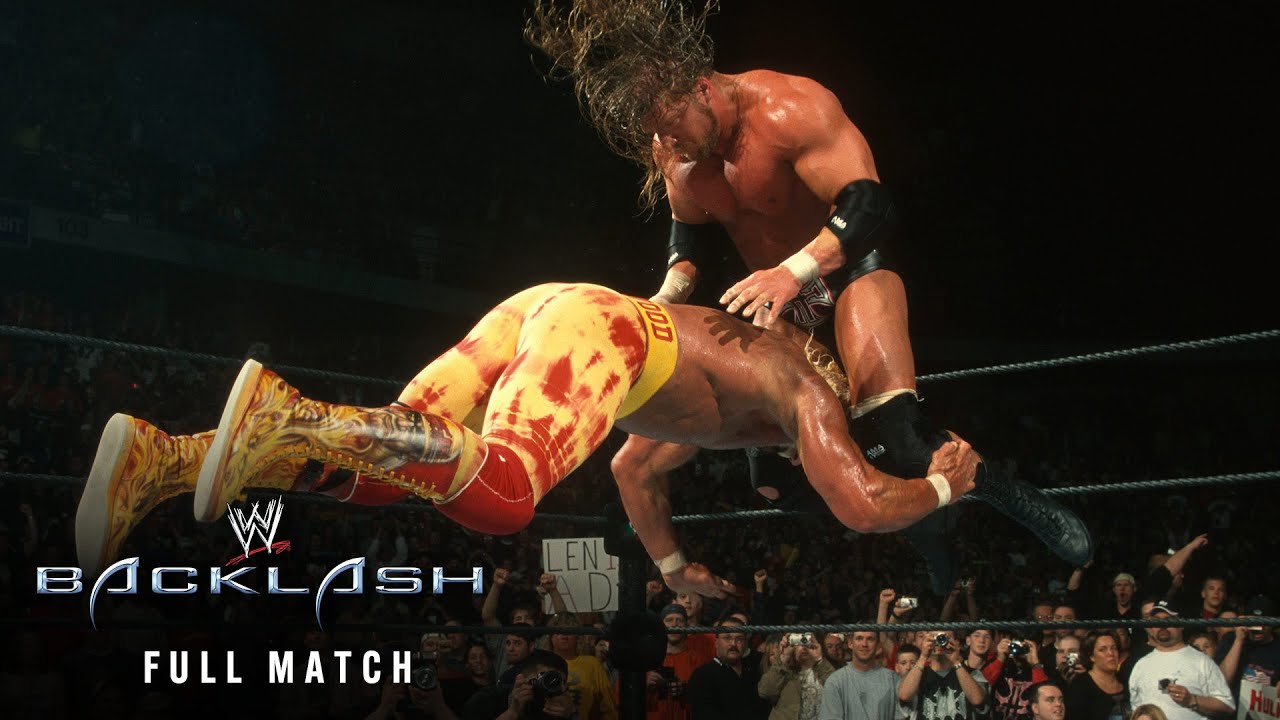
On April 21, 2002, Hulk Hogan defeated Triple H in the main event of Backlash and walked out of Kansas City with the Undisputed WWF Championship. It was one of those wrestling moments that felt both completely absurd and completely inevitable at the same time.
Absurd, because Hogan was 48 years old, had returned to the company only a few months earlier as part of the New World Order, and was supposed to be playing a heel in a promotion that was trying to define its future around newer stars. Inevitable, because the second the audience decided it wanted Hulkamania back, the company was almost powerless to resist it.
That is what makes the date worth remembering. Hogan's title win was not just another veteran nostalgia pop or a quick attempt to squeeze one more reaction out of a famous name. It was the clearest proof that in 2002, after all the attitude, chaos and reinvention of the previous few years, Hogan could still bend the emotional logic of an arena around himself.
The groundwork had been laid at WrestleMania X8. Hogan lost to The Rock that night, but the match changed the direction of his return anyway. The Toronto crowd treated him like a conquering hero, not a villain from the revived nWo. WWF television adjusted quickly. The black-and-white edge gave way to the red and yellow colors again, the old music came back, and within days the company was no longer working against the audience's affection for him. It was leaning into it.
That put Backlash in a fascinating spot. Triple H had only just completed his own comeback story by returning from a serious quadriceps injury and defeating Chris Jericho for the Undisputed title at WrestleMania. In another version of 2002, that reign lasts longer and becomes a firm declaration about who the next standard-bearer was supposed to be. Instead, he ran headfirst into a wave of fan sentiment that was bigger than the booking chart.
By the time the Backlash main event arrived, the crowd was ready for the kind of emotional payoff wrestling sometimes only gets right by accident. Triple H worked the match by attacking Hogan's knee and trying to make the champion-vs-legend story feel grounded in age and vulnerability. Hogan answered by giving the people exactly what they had come to see. He fired back, fed off the crowd and kept drawing them closer to the ending they wanted.
The finishing stretch was messy in the way a lot of memorable Attitude Era and post-Attitude Era main events were messy. Chris Jericho got involved. The Undertaker got involved. Referee chaos broke out, furniture got used and the clean sporting ideal of a title match disappeared under the larger WWF idea of spectacle. But the important part was not the neatness of the finish. It was the release. Hogan survived the interference, hit the leg drop again and pinned Triple H for the championship.
Then came the image that really sold the whole moment. Triple H, the current centerpiece who had every reason to resent the decision in storyline and out of it, extended his hand. Hogan accepted. For a company built on generational conflict, it played as a passing acknowledgment that this crowd belonged to Hogan for the night, whether the long-term plan liked it or not.
The April 29, 2002 Wrestling Observer Newsletter added an important layer afterward, noting that the decision to make the switch had not even been finalized until the day of the show. That matters because it explains why the moment felt so reactive. WWF was not calmly executing a six-month master plan. It was following the audience in real time. Hogan had gotten so hot so quickly that the company decided the happiest ending was also the smartest immediate business call.
That does not mean it was a forward-looking one. In fact, part of why the title change remains so fascinating is that everybody could see the contradiction inside it. Hogan was still a giant attraction, still capable of turning a building into his personal orchestra, but he was not a long-term answer for a company trying to move deeper into a new century. The win was powerful precisely because it felt temporary. It was wrestling choosing the perfect moment over the perfect plan.
The wider setting makes it even more interesting. Backlash 2002 was the first pay-per-view after WWF launched the original brand split, so the promotion was already in a transition phase. It was also the final Backlash held under the WWF name before the company became WWE the next month. Hogan's championship win sits right on that fault line. One of the biggest stars of the 1980s reclaimed the top belt at the exact moment the company was trying to define what the next era would look like.
That tension is why the match still holds up as a historical marker even beyond Hogan fandom. This was not simply an old icon taking one last bow. It was the business revealing how much power true star presence still carried. Triple H was younger, fresher, and much more aligned with where the company said it wanted to go. Hogan was older, less mobile and attached to an earlier mythology. None of that mattered once the bell rang and the audience decided which story it wanted.
It also helps explain why so many fans remember the 2002 comeback more fondly than they remember some of Hogan's later runs. For a brief stretch, the act did not feel forced. The reaction was organic. The company had tried to bring him back one way and the public demanded the other version instead. By Backlash, that demand had turned into a title change.
There have been cleaner matches, better title reigns and more strategically important booking decisions than Hogan beating Triple H at Backlash. But very few title changes have captured the raw democratic side of pro wrestling quite like this one. The people in the building wanted to believe one more time, and for a night, the company let belief win.
That is why April 21, 2002 still matters. Hogan did not just add another championship to a legendary resume. He completed one last great comeback arc in the company most closely tied to his fame, and he did it at a moment when wrestling was trying to move on from the past. Instead, for one loud, strange and unforgettable night in Kansas City, the past grabbed the belt and reminded everyone how hard it is to replace a real phenomenon.