
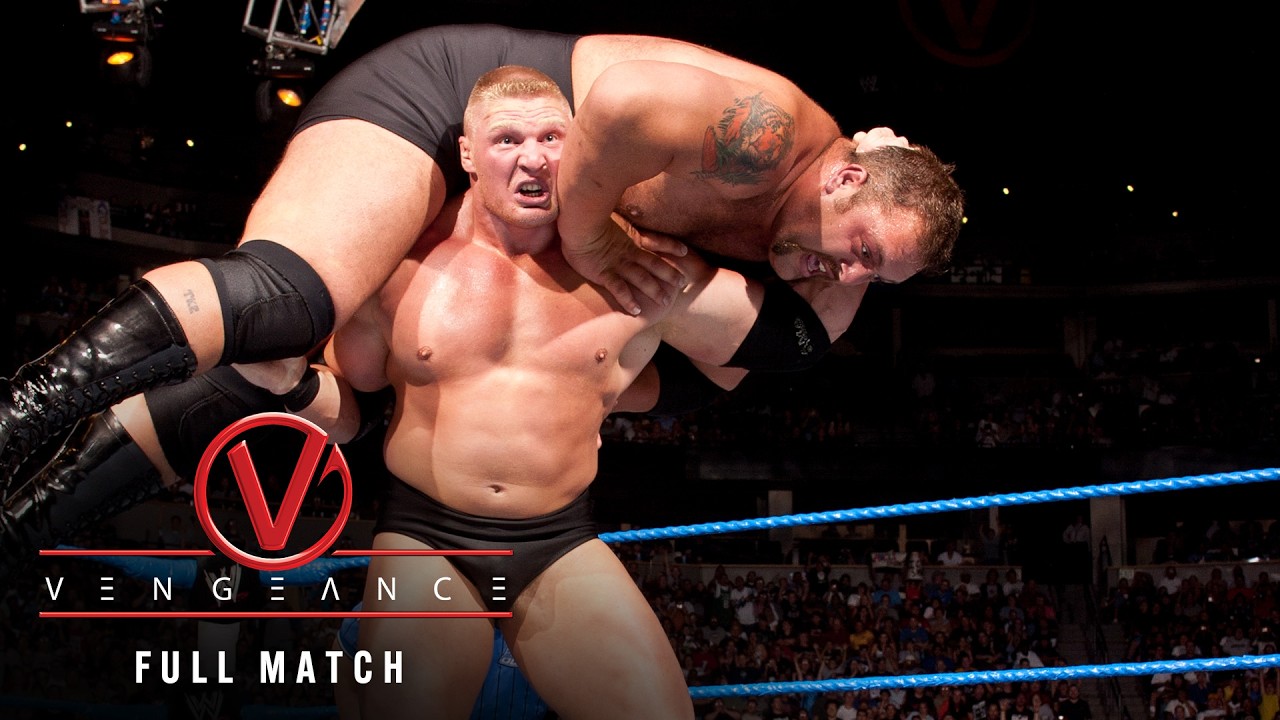
On July 27, 2003, WWE ran Vengeance in Denver and got something it badly needed out of the night. Kurt Angle, only months removed from neck surgery, walked into the first SmackDown-only pay-per-view held in the United States and walked out as WWE champion again. In a company that was still trying to work out what the brand split should actually feel like, that finish gave SmackDown a center of gravity.
Angle beat Brock Lesnar and Big Show in the main event, pinning Lesnar to win the title in a Triple Threat match. The result mattered on its own, but the bigger point was how it landed. This was not just a title change dropped into the middle of a busy summer. It felt like the moment SmackDown fully leaned into being the wrestling-heavy side of WWE, the show where workrate, pace and athletic credibility could still be presented as the main attraction.
That made Angle the ideal figure to build around. He had already established himself as one of the best all-around performers of his era, but by the summer of 2003 there was also a real sense of vulnerability around him. Neck problems had pushed him off television after WrestleMania XIX, and any return carried obvious questions. Could he still go at the same level? Could WWE trust him in a top spot right away? Vengeance answered those questions fast.
The match itself was built around shifting alliances and controlled chaos. Angle and Lesnar briefly worked together to neutralise Big Show, which made sense because Show's size changed the rhythm of any three-way match he entered. That cooperation did not last long. Lesnar tried to grab too much too early, Angle broke up a pin, and from there the match turned into exactly what it needed to be, a fight between three very different main eventers with enough personality to keep every exchange distinct.
One of the enduring images from the bout is Angle hoisting Big Show and driving him through the Spanish announce table with an Angle Slam. Even now, it looks slightly absurd that Angle could pull it off at all given Show's size and the state of his own neck. Spots like that are part of why the match still holds up. WWE did not book Angle's comeback conservatively. It asked him to look like Kurt Angle again, not a diminished version surviving on memory.
When the finish came, it was simple and strong. Angle caught Lesnar, hit the Angle Slam, and got the three-count after already dropping the same move on Big Show moments earlier. Pinning Lesnar was the detail that stood out. Lesnar had been framed as something special from the moment he arrived, and WWE did not always treat him like someone who should take clean defeats. Putting the fall on him gave Angle's win more force, and it also reset the board for SmackDown's title picture in one shot.
Contemporary Observer coverage described the show as an in-ring success, and that was the right read. Eddie Guerrero and Chris Benoit opened by fighting over the revived United States title. Charlie Haas and Shelton Benjamin had an excellent tag title defense against Rey Mysterio and Billy Kidman. Even with some of the usual WWE overbooking elsewhere on the card, the event had a clear through-line. SmackDown's best nights in that period felt like they were built around wrestlers proving themselves in the ring, and Vengeance was one of the cleanest examples.
That is a big reason the title change still feels important. In theory, WWE had split its roster to create two different major league products. In practice, the company often slipped back into the same habits, leaning on familiar stars, familiar angles, and the gravitational pull of Raw as the bigger brand. SmackDown needed nights that felt identifiably its own. Putting the belt back on Angle, a wrestler who could have a great match with almost anybody and who fit the show's competitive identity better than almost anyone on the roster, helped define what the brand was supposed to be.
It also sharpened the Brock Lesnar story. Lesnar had entered 2003 as the company's next unstoppable force, won the title from Angle at WrestleMania, and spent the following months drifting between monster dominance and a more layered partnership-rivalry dynamic with Angle. Losing at Vengeance did not damage him in the long run. If anything, it made the feud feel less one-note. Lesnar was no longer just the wrecking machine mowing through everyone in front of him. He had a rival who could outthink him, outwrestle him, and beat him on a major stage.
There was another layer to the timing. WWE in 2003 was still full of established names, but the company was always looking for the next backbone star after the peak of the Attitude Era. Angle was not new, of course, yet he represented a version of main event wrestling that felt modern in a different way. He could work at a frantic pace, make submissions feel dangerous, and switch from comedy to intensity without losing the crowd. A healthy Angle at the top gave SmackDown a different flavor from Raw, which was exactly what the split needed.
That does not mean Vengeance was some flawless masterpiece or the turning point that solved every booking problem WWE had. It was more specific than that. It was a night where the company's best instincts briefly won out. The headline match delivered, the right person won, and the champion at the end of the show matched the identity the brand was trying to project.
Twenty-three years later, July 27, 2003 still reads as one of those nights when WWE did not need a swerve, a stunt or a cheap trick to make a statement. It just needed Kurt Angle in the middle of the ring, healthy enough to fly again, and good enough to remind everyone what top-level SmackDown wrestling could look like. He came back, beat Brock Lesnar and Big Show, and for one night the whole brand snapped into focus.
July 27 has produced other notable wrestling history as well, including Maurice Smith's upset of Mark Coleman in 1997, Brock Lesnar signing with the Minnesota Vikings in 2004, and the announcement of the CyberFight merger in 2020. But Angle's Vengeance win remains the date's strongest reminder that a comeback feels biggest when it restores an entire show's identity, not just one wrestler's place on the card.