
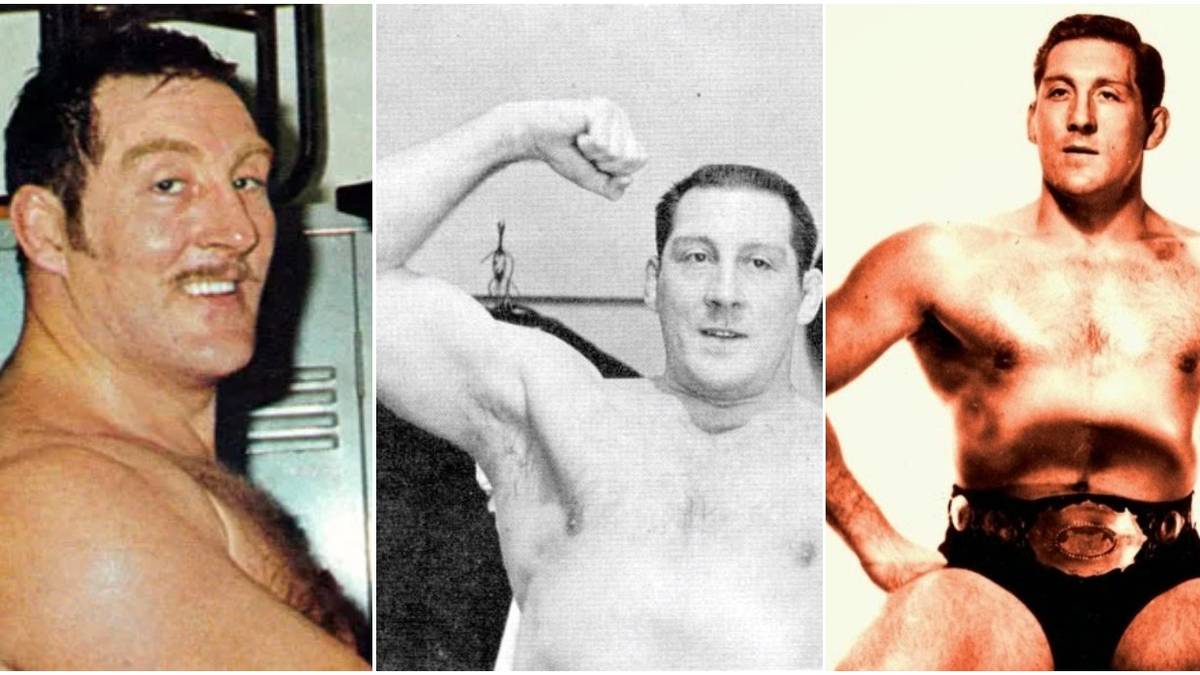
On July 28, 2007, Karl Gotch died in Tampa at 82, just days before his 83rd birthday. For a lot of American fans, that news may have landed like the passing of an old legend whose peak belonged to another era. In Japan, and in the corners of wrestling that still measure greatness by toughness, discipline, and technical authority, it felt much bigger than that. Wrestling had lost one of the men who helped decide what serious wrestling was supposed to look like.
That is what makes the date worth revisiting. Gotch was not merely a respected veteran or a name old-school wrestlers liked to invoke. He was a living standard for a certain kind of credibility. Contemporary Observer coverage framed him as a figure whose influence stretched from Antonio Inoki's generation to the later shoot-style pioneers who blurred the line between pro wrestling and real fighting. That is a huge range of history for one man to touch, and Gotch did it without ever becoming a mainstream celebrity in the American sense.
Born Karl Charles Istaz in Antwerp, Belgium, Gotch came out of an amateur background, competed in the 1948 Olympics, and learned the brutal catch-as-catch-can traditions associated with Billy Riley's Snake Pit. That background mattered because it shaped the way he saw every part of wrestling. He did not think of it as a branch of entertainment first. He thought of it as a physical art that had to look and feel credible at all times. If a hold looked soft, if a wrestler was out of shape, or if a match drifted too far into empty theater, Gotch had little patience for it.
That stubbornness probably limited him in the United States. He was admired, feared, and often difficult for promoters to package. He did not bend easily, and he was not interested in smoothing out the rough edges of his personality just to fit the business. In a country that often rewarded charisma, flash, and cooperation with the system, that made him a complicated star. He was the sort of wrestler other wrestlers revered even when promoters and peers found him hard to deal with.
Japan was different. There, Gotch became something close to an ideal. When he trained Inoki in the late 1960s, he helped give shape to a vision of wrestling that prized conditioning, precision, and the sense that a match could turn into a real struggle at any moment. That influence did not stop with one student. His bodyweight drills, his obsession with endurance, and his belief that a wrestler had to be able to control another man on the mat seeped into dojo culture for decades. The image of Japanese wrestlers grinding through endless squats, bridge work, rope climbing, and punishing calisthenics owes a lot to Gotch's worldview.
His fingerprints were all over the moves as well. The German suplex became one of the most revered finishers in Japan because it carried Gotch's aura of exactness and force. The octopus hold, which he taught to Inoki, became part of a larger style built around leverage and struggle rather than spectacle alone. Even the broader mood of strong style, that insistence that pro wrestling should feel like a contest between hardened athletes, traces back to the standards Gotch pushed in the gym.
The next wave took those ideas even further. By the 1980s and 1990s, wrestlers like Akira Maeda were pressing for a more realistic presentation, while figures such as Masakatsu Funaki and Minoru Suzuki followed the logic into actual combat sports. That does not mean Gotch single-handedly created shoot style or modern MMA. Wrestling history is never that neat. But his influence sat near the root of both. If you want to understand why Japanese wrestling produced not only great pro wrestlers but also men who wanted to test those ideas in Pancrase, RINGS, Shooto, and beyond, Gotch is part of the explanation.
What makes his legacy so unusual is that it was built as much in private as in public. Fans can point to famous matches, titles, and tours, but a lot of Gotch's power came from the stories told by the people who trained with him. He was the man whose conditioning routines sounded inhuman. He was the man older wrestlers still described as dangerous well past his prime. He was the man whose approval was worth chasing even if very few ever received it cleanly. That kind of reputation can become myth in a hurry, and with Gotch it certainly did. But myths do not last unless there is real substance underneath them.
That substance was visible in the generations that followed. Inoki's aura as a stern, legitimate martial figure did not appear out of nowhere. Neither did the respect later Japanese wrestlers showed for technical sharpness, for ring positioning, or for the idea that training itself was part of a wrestler's identity. Gotch did not invent every one of those values, but he embodied them so completely that his name became shorthand for all of them.
That is why July 28, 2007 still stands out. It was not just the day an 82-year-old former wrestler died in Florida. It was the day wrestling lost one of its last direct links to a philosophy that refused compromise. Gotch represented the belief that a wrestler should look like he could survive a real fight, control a real opponent, and outlast a real crisis. Modern wrestling has changed in a hundred ways since his prime, but you can still see pieces of him whenever a match is built around harsh grappling, punishing realism, or the pride of outlasting another expert.
Also on this date, Steve Williams ended Mitsuharu Misawa's long Triple Crown reign in 1994, Total Divas premiered on E! in 2013, and ITV relaunched World of Sport as a weekly series in 2018. All of those moments mattered in very different ways. Karl Gotch's passing still feels like the strongest July 28 marker because it reminds you that wrestling's future is often shaped by the stubborn old masters who never cared about being fashionable in the first place.