
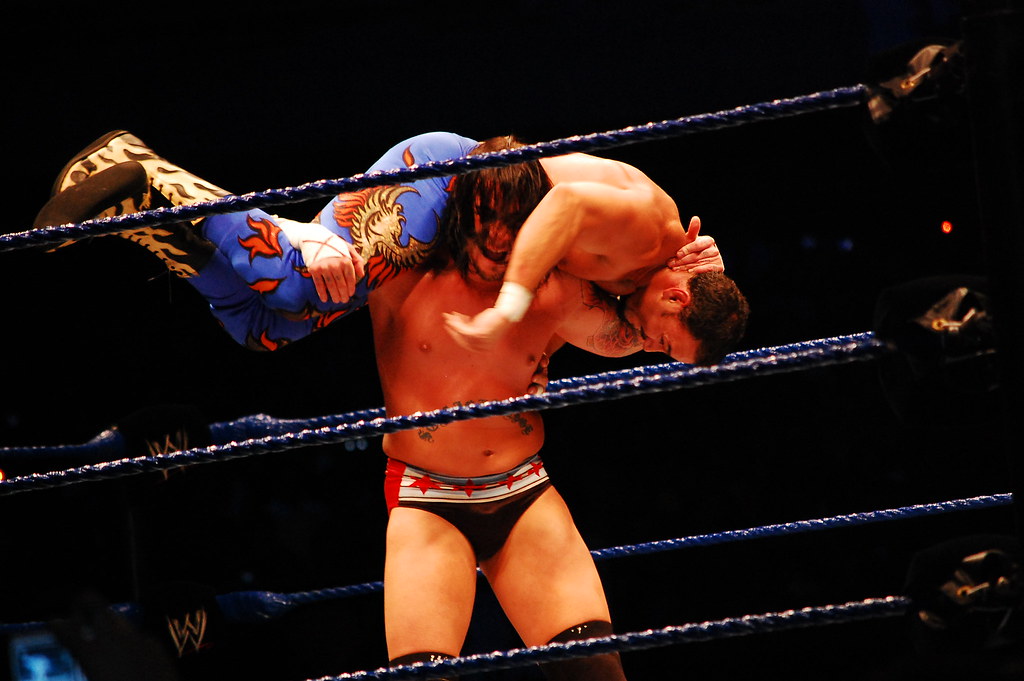
On June 30, 2008, WWE finally let CM Punk feel like more than a cult favorite.
That was the real importance of the night in Oklahoma City. Yes, Punk beat Edge in eight seconds to win the World Heavyweight Championship. Yes, the cash-in was dramatic, the crowd exploded, and the image of Punk celebrating with the belt still holds up. But the moment mattered because it was one of those rare WWE pivots where the company seemed willing to trust that the audience had already spotted a future main eventer before management fully acted on it.
Punk had been building toward something bigger for a while. He had won the Money in the Bank ladder match at WrestleMania 24, which gave him the briefcase and the promise that his opening would come eventually. He was popular, distinctive, and easy to believe in, but he was not yet presented like one of the company’s centerpieces. He still felt like the smart fans’ guy, the wrestler whose supporters saw top-level potential before the booking always reflected it.
A week earlier, the draft had moved Punk and his briefcase to Raw. That detail turned out to be crucial. It put him on the company’s biggest weekly stage at the exact moment WWE was trying to freshen up its title picture, and it placed him near a champion who had made a career out of using opportunity in the most ruthless way possible.
The perfect target was Edge
Edge was the right man to be standing on the other side of this story.
By the summer of 2008, he had become one of WWE’s defining opportunists. He had already used Money in the Bank cash-ins to steal world titles for himself, and he carried the World Heavyweight Championship with the kind of smug certainty that made fans desperate to see someone catch him slipping. That history made the June 30 cash-in more than a clever surprise. It made it feel like justice.
The setup on Raw was simple and effective. Edge arrived on the show acting as if the belt was never leaving his orbit. He bragged about SmackDown having the title and made it sound as though Raw would have to live without him, without his championship, and without any real say in the matter. Then Batista wrecked the whole speech.
Batista attacked Edge, drove him into the ring post, and left him laid out with a Batista Bomb. The opening was there, and Punk did exactly what the briefcase had been designed for him to do. He sprinted to the ring, officially cashed in, hit the Go to Sleep, and pinned Edge almost immediately.
Contemporary Observer coverage noted that the title switch came after Batista softened Edge up and that Punk finished the job in just seconds, but the larger point was how cleanly the scene played to the audience. Edge had stolen enough big moments that fans were more than ready to watch the trick come back around on him. Punk did not feel like a thief. He felt like the guy smart enough to use the rules the way a top star should.
That distinction mattered. A babyface winning a world title in a flash can sometimes feel hollow. Here, it landed because WWE had spent years teaching viewers that Edge’s opportunism was part of the game. Punk beating him with the same weapon gave the moment a satisfying symmetry.
The night Punk stopped feeling hypothetical
The title win was important on its own, but the bigger change was what it did to Punk’s standing.
Before June 30, Punk was a possibility. After June 30, he was a world champion on Raw, and WWE had to deal with what that meant.
That may sound obvious, but it was not a small leap in 2008. WWE still had a pretty rigid idea of what a top star looked and sounded like. Punk was not built like Batista or John Cena. He did not carry himself like a corporate golden boy. He felt sharper around the edges, more self-made, more connected to a different part of the fan base. Putting the belt on him, even in a short cash-in, signaled that WWE was at least willing to test a new shape of main event player.
The rest of the show underlined that the company knew it had made a meaningful move. Punk was not treated like a fluke champion who should disappear after his celebration. Later that same night, he retained the title against JBL, surviving another test in front of the same crowd. The reign ahead would have its frustrations and stop-start stretches, but June 30 was still the night the argument for Punk changed. Fans no longer had to imagine whether he belonged in that spot. He was there.
The timing also gave the victory extra weight. Raw was trying to reset itself after the draft, and WWE was clearly looking for new names to elevate. Punk’s win sat alongside other attempts to refresh the roster, but his was the one that felt the most significant because it touched the top of the card. World title changes are how companies tell viewers who matters most. For one night, WWE made a loud statement that CM Punk mattered.
There is also a reason this title win remains one of the most fondly remembered cash-ins in company history. It was not just about surprise. It was about payoff. Punk had the briefcase, the crowd support, and the credibility in the ring. What he needed was the kind of moment that could snap all those threads together at once. Eight seconds was enough.
Looking back, June 30 stands out as an early checkpoint in the larger CM Punk story. The louder controversies, the bigger promos, and the more famous title reigns would come later. But those chapters hit harder because this one came first. This was the night WWE stopped teasing the possibility and made the leap.
Punk did not simply win a championship on this day. He changed the conversation around his ceiling.
Also on this date
June 30 produced a few other strong historical candidates. In 2011, Dick Togo beat Gedo in his Japanese retirement match at Korakuen Hall. In 2014, AJ Lee returned to Raw and beat Paige to regain the Divas Championship. In 2018, Jay Lethal won the ROH World Championship in Fairfax, Virginia.
All three were notable moments. None carried the same long-term North American impact as the night CM Punk turned a briefcase into his first world title.