
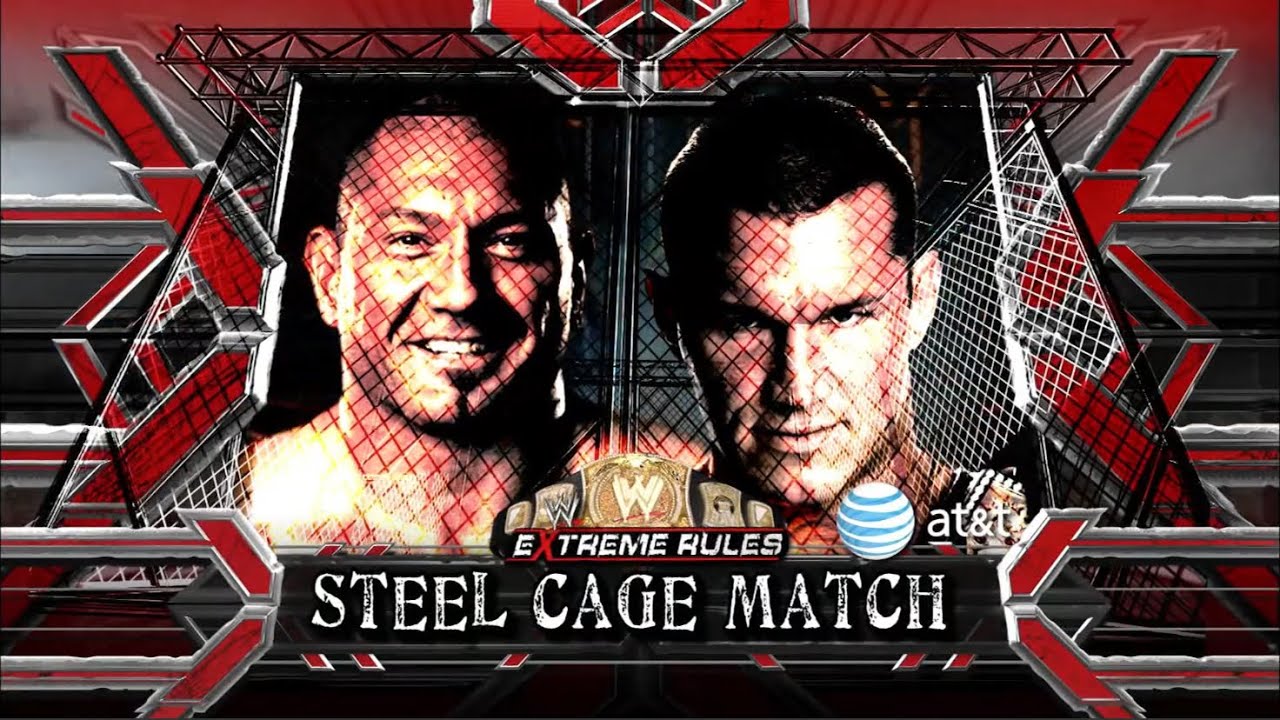
On June 7, 2009, Batista got the win that had been hanging over one of WWE's hottest rivalries for months.
Inside a steel cage at *Extreme Rules* in New Orleans, Batista beat Randy Orton to win the WWE Championship for the first time in his career. That line still lands a little strangely when you remember how established he already was. By then, Batista had been a WrestleMania main eventer, a multi-time world champion and one of the company's biggest stars. But all of that success had come with the World Heavyweight Championship. The WWE title, the belt most closely tied to the promotion's top lineage, had never been his.
That gave the match real weight before the bell even rang. Orton was deep into the vicious 2009 version of his character, leading Legacy and carrying himself like the cold center of the company. Batista was the powerhouse challenger trying to bulldoze through the politics, the interference and the loopholes that kept saving the champion. Their feud had enough personal history already because of the old Evolution connection, but it had become nastier during that spring. At *Judgment Day*, Orton escaped with the title by getting himself disqualified, a champion's trick that protected the belt and pushed Batista even further toward a fight rather than a wrestling match.
So the cage was the right stipulation and the right image. This was not about clever counters or technical leverage. It was about sealing the door, locking Legacy out and forcing Orton to survive on his own. WWE framed it that way on the night, and the crowd understood it immediately. Batista did not walk into the match as an underdog in the usual sense. He walked in as the man fans had been waiting to see get a fair shot at the champion without outside contamination.
When the match started, that was the story it told. Orton kept looking for exits because that was who he was at that stage, always hunting for the quickest path to escape with the championship still in his hands. Batista kept dragging the fight back into the middle, turning every climb into another collision. The most memorable part of the finish was how quickly the balance shifted once Orton got greedy. Instead of simply fleeing the cage, he came back toward Batista looking for one more shot. That gave Batista the opening he needed. One Batista Bomb later, the title was his.
On paper, it was a clean payoff. In practice, it became something much stranger, and that is why the date still stands out.
Contemporary *Wrestling Observer Newsletter* coverage made clear that Batista's left biceps injury was already a serious problem by the time he won the belt. He had only recently returned from a torn hamstring, and there were already signs that the comeback was not as sturdy as it looked. The title switch, then, was not just the culmination of a feud. It was a major championship change happening with a clock already ticking in the background. Two days later, Batista underwent surgery. By the next night's *Raw*, WWE had turned reality into storyline with a brutal Legacy attack that wrote him off television almost as soon as he had reached the mountaintop.
That twist changes the way the match is remembered. If Batista had gone on to hold the belt for months, June 7 would probably sit in history as a satisfying coronation and little more. Instead, it became one of the oddest top-level victories of the era, a championship win that was both decisive and instantly fragile. Batista finally climbed the last rung in WWE, only for the moment to slip out of his hands almost immediately.
There is something revealing about 2009 WWE in that. The company was moving fast, sometimes too fast, and the main event scene often felt like it was being rewritten in real time. The same *Extreme Rules* show featured four title changes. The broader product was volatile, heavy on swerves and built around urgent television hooks. Batista's win fit the emotional need of the feud because fans wanted to see Orton get beaten clean. But it also exposed how thin the margin was once injuries and weekly creative demands started piling up.
Even so, the match mattered. It gave Batista a piece of career history that had been missing from his resume, and it added a sharp, almost tragic edge to the feud. Fans did not just see him conquer Orton. They saw him do it under conditions that made the victory feel costly. That helped preserve the moment. There are title reigns that last longer and mean less. Batista's first WWE Championship reign barely had time to breathe, but people remember it because the win itself felt overdue, violent and emotionally complete.
It also serves as a neat snapshot of the two men involved. Batista was still one of the great power babyfaces of his generation, a star who could make the simple promise of getting his hands on the villain feel huge. Orton, meanwhile, was growing into the version of himself that would define the next decade, cruel, slippery and dangerous enough that beating him clean still meant something. June 7, 2009 caught both men at an important point. Batista was proving he still belonged at the very top after injury. Orton was proving that even in defeat, he was going to remain central to the company.
That is what makes this more than a trivia answer about Batista's first WWE Championship. It was the payoff to a grudge that needed a real ending, and it arrived with the kind of immediate complication wrestling history loves to preserve. The victory was legitimate, the reaction was earned and the aftermath made it impossible to file away as just another title switch.
Also on this date, New Japan's junior heavyweight scene produced two landmark tournament finals in quick succession. KUSHIDA beat Kyle O'Reilly to win *Best of the Super Juniors* in 2015, and a year later Will Ospreay beat Ryusuke Taguchi to become the tournament's first British winner. Both were major career markers. But for a broad wrestling audience, Batista finally putting Randy Orton down inside that cage remains the June 7 moment with the clearest sense of payoff.
On this day in 2009, Batista finally won the WWE Championship. It should have been the start of a long-awaited reign. Instead, it became one of wrestling's sharpest reminders that sometimes the most memorable title wins are the ones history barely lets you hold onto.