
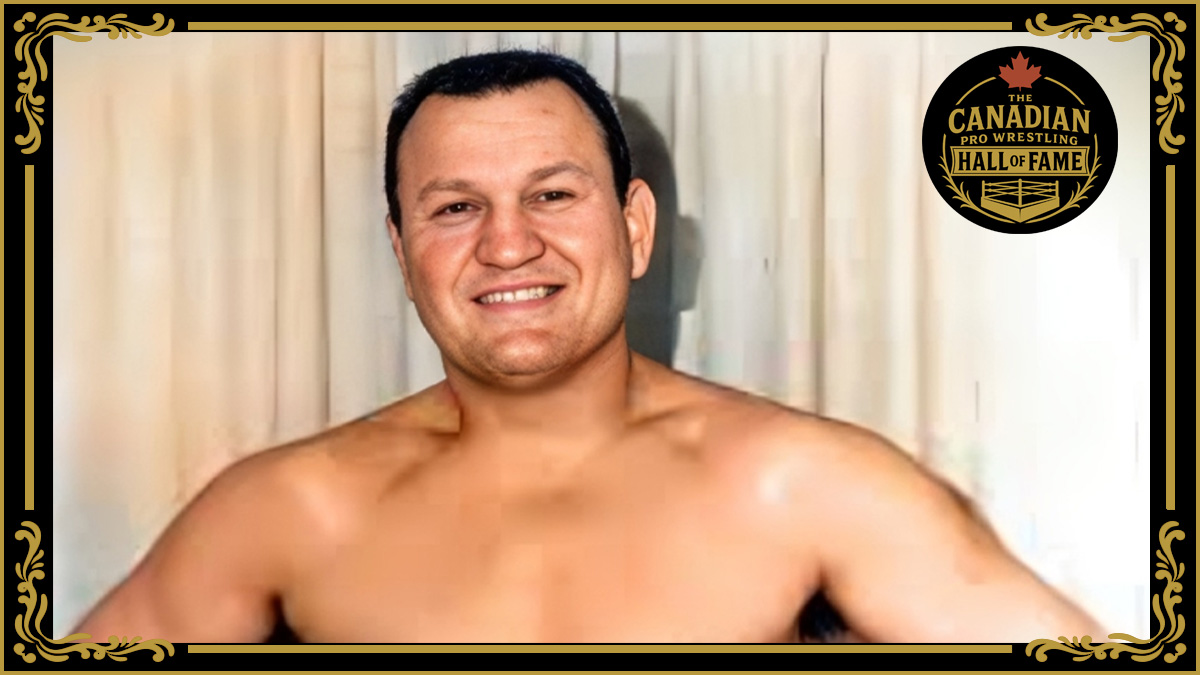
On April 14, 2010, wrestling lost one of the last men who truly looked and carried himself like the old idea of a world champion.
Gene Kiniski died that morning at his home in Blaine, Washington, after a long battle with cancer. He was 81. The basic news was simple enough, but it landed with unusual weight because Kiniski was not just another respected veteran from a distant era. He belonged to the generation that helped define what a heavyweight champion was supposed to be before national television turned the business into something faster, flashier and more openly theatrical.
He was big, educated, physically intimidating and verbally ruthless. He could make a town hate him, then make that same town pay to see if someone could shut him up. That skill made him valuable everywhere he went, from Canada to the American territories to Japan, and it is why his death felt like more than the passing of a former titleholder. It felt like the fading of a specific kind of wrestling star.
That week's Wrestling Observer Newsletter described him as a rugged villain known for his conditioning and his gift for talking, and both details go straight to the heart of why he mattered. Kiniski did not build his reputation on one famous promo or one famous feud that can be clipped and replayed forever online. He built it by being the kind of opponent promoters could trust at the top of the card, night after night, city after city, against whoever the local hero happened to be.
That was the real currency of the territory era. A world champion had to feel dangerous in every building, not just on television. Kiniski understood that better than most.
Before wrestling fully took over his life, he already looked like the kind of athlete promoters would dream about. He had an amateur background, played football, attended the University of Arizona on scholarship and carried himself with the confidence of someone who knew he belonged in any room he entered. In another era, that alone might have made him a novelty. In his era, it made him perfect for the top of the business.
Once he settled into pro wrestling, Kiniski developed the qualities that turned size and athletic pedigree into box office value. He was not presented as a clean-cut sports hero. He was arrogant, smug and mean in exactly the ways crowds understood immediately. He called himself Canada's Greatest Athlete, a boast that did not ask fans to admire him so much as dare them to resent him. That distinction mattered. Great heels do not merely brag. They make the audience want proof that they are wrong.
His biggest professional breakthrough came in January 1966, when he defeated Lou Thesz to win the NWA World Heavyweight Championship. That title still meant something enormous then. It was not one belt among many. It was the travelling symbol of top-line credibility in a fractured wrestling landscape, and the man carrying it had to satisfy many different promoters, styles and regional expectations. Kiniski held it for nearly three years, which says as much as any highlight reel could. Promotions did not keep that championship on a man unless they believed he could headline anywhere.
And he could. He was a natural antagonist in an era built on local heroes. In one town he could be the outsider sneering at the home favorite. In another he could be the polished bully who made the babyface look brave just for standing across from him. He had the kind of face, body language and confidence that let fans understand the story before the bell rang.
That is also why Kiniski's legacy stretches beyond just the title reign itself. He represented a bridge between wrestling's older sporting presentation and the more personality-driven boom periods that followed. He was not a cartoon character, but he knew how to project. He was not a pure technician in the way Thesz had been sold, but he could wrestle well enough to keep the illusion of legitimacy intact. He was, in a lot of ways, the prototype for the credible bully champion, the man smart enough to talk his way into the main event and tough enough to survive once he got there.
For Canadian wrestling history, his place is even larger. Kiniski was not simply a famous wrestler from Canada. He was one of the country's foundational stars, a man whose success gave later generations a reference point for what international wrestling stardom could look like. Long before Bret Hart, Chris Jericho or Edge carried Canadian wrestling into later generations, Kiniski was one of the names that proved a Canadian performer could stand at the absolute top of the profession.
By the time he died in 2010, wrestling had changed almost beyond recognition from the world he ruled. Champions were no longer expected to crisscross dozens of territories defending one belt as the central villain or conquering hero of the whole sport. Television had replaced much of the mystery. Pay-per-view and then streaming had replaced much of the regional rhythm. The business moved faster, and the idea of a world champion became more fragmented.
That is part of why April 14, 2010 still matters. Kiniski's death was not just sad news about an old legend. It was a reminder that wrestling's past was once built around men like him, men who could step into any building and convince people that the championship on the line represented the toughest prize in the sport. He came from a time when being champion meant being believable everywhere.
He also remained memorable because he seemed to understand the performance better than many of his peers. Accounts from those who covered him and worked with him consistently returned to the same qualities: intelligence, media savvy and total command of how to present himself. Kiniski knew that drawing money was not only about the match. It was about the interview before the match, the local resentment he could stir up, the feeling that a ticket buyer had a personal stake in seeing him lose.
That talent is harder to preserve in clips than a spectacular move or a famous bloodbath, but it may be the most important thing he left behind. Kiniski showed how a champion could feel larger than one promotion and larger than one moment. He felt like an institution, and wrestling does not produce many of those.
So when April 14 comes around, it is worth remembering Gene Kiniski not only as a former NWA and AWA world champion, but as one of the men who helped define the job description. His final bell marked the loss of a Hall of Fame career. More than that, it marked the loss of a style of star that once sat at the very centre of professional wrestling.
Kiniski spent decades making sure people paid attention when he walked into a room. On the day he died, wrestling had to stop and acknowledge that one of its old giants was gone.