
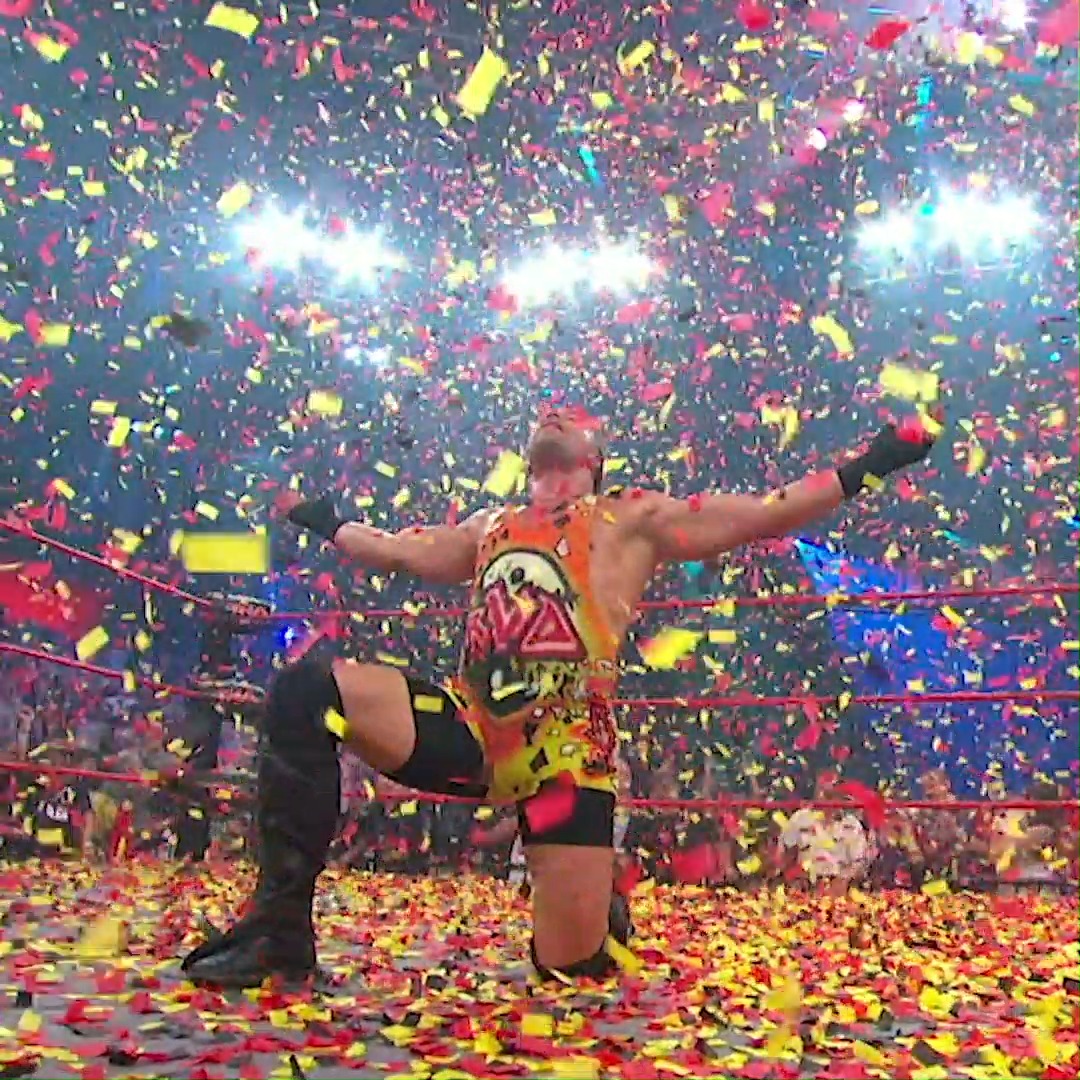
On April 19, 2010, TNA stopped pretending it had time to ease into anything.
The promotion was deep into its risky Monday night push against WWE Raw, the ratings had already gone soft, and the early Eric Bischoff and Hulk Hogan era often felt like a company throwing every idea it had at the wall in the hope that one of them would stick. Then came a live episode of Impact from Orlando that cut through a lot of that noise in one shot.
By the end of the night, Rob Van Dam had beaten Jeff Hardy to earn a title match, then beaten AJ Styles clean to win the TNA World Heavyweight Championship.
It was one of the most effective hotshot title changes the company ever pulled off. It was also one of the clearest windows into what TNA thought it needed to become.
The timing matters.
TNA had moved Impact to Monday nights the previous month, directly opposite Raw, and the decision carried all the old echoes of wrestling war romance. The problem was that the romance wore off fast when the numbers did not follow. Observer coverage at the time noted that a 0.6 rating only weeks earlier had created real panic internally, and the promotion responded the way struggling wrestling companies often do, by deciding that a big moment had to happen right now.
That urgency was all over the April 19 show, but for once it worked in TNA's favor.
Instead of the usual clutter, the episode was built around a simple idea. The world title mattered. Hogan opened the show talking about it like it was the one thing in the company that should sit above every other angle. That may sound obvious, but TNA had not always presented its belts that way in that era. The previous night's Lockdown card had included title chaos elsewhere on the show, and this live Impact felt like a deliberate correction. Less nonsense, fewer swerves for the sake of swerves, more emphasis on matches and on the championship itself.
Van Dam was the obvious man to build around if the goal was an instant reaction.
He had debuted in TNA on March 8 by beating Sting, arriving as a fresh national name at a time when the company was leaning heavily on recognizable stars. He was not homegrown the way Styles was, and that tension would matter later, but there was no denying how easy he was to slot into a main-event television role. Fans knew who he was, they knew his offense, and they knew what a Rob Van Dam push was supposed to feel like.
The company leaned into that recognition hard on April 19.
Van Dam first faced Jeff Hardy in a number one contender's match and beat him clean with the frog splash in 13:29. That result alone told viewers what the night was about. This was not a tease. This was not a half-step. TNA was not testing the waters. The promotion was spending the whole show getting one man over, and it did so with a level of focus that was unusual for the company at the time.
That set up the bigger decision.
AJ Styles entered the night as champion and as the wrestler who most represented TNA's original promise. He was the homegrown ace, the athletic centerpiece, the talent the company could point to whenever it wanted to argue that it was building something distinct from the larger promotions. By April 2010 he had been champion for 211 days, a then-record reign for the title, and he had just retained the belt against D'Angelo Dinero in a cage match at Lockdown the night before.
So when TNA put Styles in the main event against Van Dam, it was making a statement either way.
If Styles survived, the company could claim it still believed its future rested with the man it had developed. If Van Dam won, then the message was just as clear, TNA believed urgency mattered more than patience.
Van Dam won.
The match was not built as some sprawling epic. It did not need to be. Styles hit his usual fast, sharp offense and still looked every bit like the man the company had spent years grooming for this level. Van Dam, though, wrestled like the night belonged to him from the opening bell. Late in the match, after Styles came off the ropes looking to stay on the attack, Van Dam caught the moment, turned the momentum, and followed with the Five Star Frog Splash for the clean pin in 10:33.
That clean finish might have mattered as much as the title change itself.
TNA in that period had a habit of undercutting its biggest moments with overbooking, interference, ref bumps, loopholes or reversals that made everything feel temporary. This one landed clean. Then the company doubled down on it. Confetti fell. The celebration filled the screen. Top babyfaces, company figures and agents all came out to frame the moment as a genuine turning point, not just another angle to be rewritten the following week.
For one night, TNA looked disciplined enough to sell a major championship win as a major championship win.
That is why the date still holds up.
Van Dam's title victory was exciting in real time because it felt sudden and decisive, but it remains interesting because of what it revealed underneath. On one level, it showed that TNA could still produce a hot television moment when it simplified its instincts and trusted wrestling to do the heavy lifting. On another, it exposed the insecurity that kept following the promotion. Styles had been the champion who symbolized what TNA said it wanted to be. Van Dam was the star imported to give the company a jolt when it lost confidence in that identity.
Both truths can exist at once. The title change worked. It also told a more complicated story about the promotion.
That tension is part of why the night is remembered. Van Dam became the first wrestler to hold WWE, ECW and TNA world titles, which gave the victory a place in the broader record book. But the bigger legacy is the snapshot it provides of TNA in 2010, ambitious, anxious, capable of real energy, and always one decision away from revealing what it trusted most.
On this day, what it trusted most was the idea that a live title change, built around a star entrance and a clean finish, could make fans believe again.
For at least one Monday night, it did.
Also on April 19, wrestling history turned in very different directions. In 2000, New Japan's Masakazu Fukuda died days after collapsing in the ring, a tragedy that still hangs over that era. In 1992, Andre the Giant was billed for what was promoted as his final match in Mexico, another reminder of how often late-career wrestling history can feel both grand and sad at the same time.