
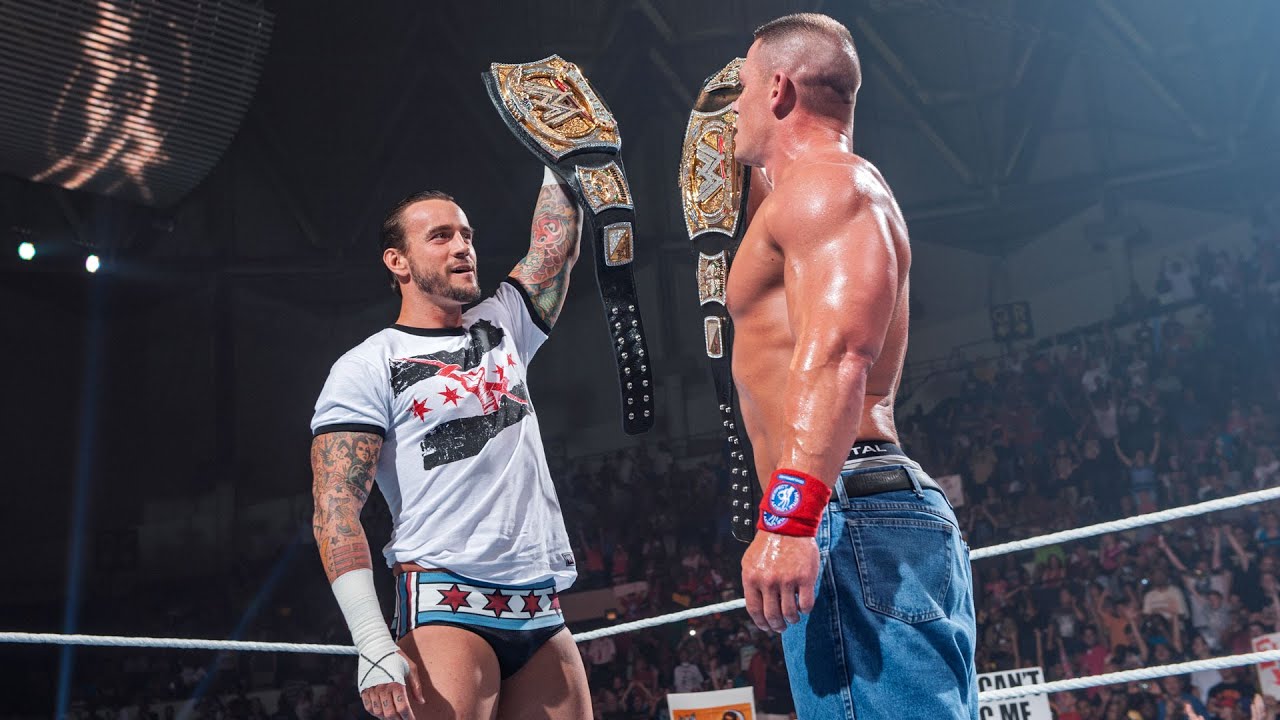
On July 25, 2011, WWE managed to make a single episode of Raw feel like a month of television crammed into one night. By the time the show ended in Hampton, Virginia, Rey Mysterio had won the vacant WWE Championship, John Cena had taken it from him, and CM Punk had walked back into the company carrying the version of the belt he had left with eight days earlier.
That combination is why the date still stands out. Plenty of wrestling angles are memorable in isolation. This one hit differently because it stacked title changes, storyline upheaval and a genuine jolt of surprise onto the same broadcast, then ended with a visual that instantly reframed WWE's biggest story of the summer.
The backdrop mattered. Punk had beaten Cena at Money in the Bank on July 17 and left with the WWE title as his contract storyline reached its peak. Vince McMahon had been removed from power on television, Triple H had stepped in as the new authority figure, and WWE needed a follow-up that could keep the hottest angle in the company moving without letting the energy cool off.
What happened instead was a piece of wrestling television that felt almost reckless in how much it was willing to burn through at once.
Raw opened with the final of a tournament to crown a new WWE champion. Mysterio, one of the company's most beloved babyfaces, beat The Miz to win the title and complete one of the best feel-good moments of his WWE run. In another setting, that victory could have anchored the entire night. Mysterio was an undersized superstar who had spent years turning crowd support into real star power, and seeing him finally hold the WWE Championship on his own was the kind of image WWE usually tries to savor.
Instead, the celebration barely had time to settle.
Triple H announced that Mysterio would have to defend the championship later that same night against Cena. That decision is a huge part of why July 25 remains such a debated date. The twist added drama and gave the show a major main event, but it also turned Mysterio's crowning moment into a setup. WWE wanted urgency. What it created was emotional whiplash.
Cena and Mysterio then delivered exactly the sort of match the situation demanded. It was not a lazy television placeholder. It felt important, and that helped the show. Cena beat Mysterio to win the championship, giving him another major accolade, but the result also made Mysterio feel like collateral damage in a much bigger story. He had finally reached the top, only to be pushed aside before the audience could even process it.
And then came the image everyone remembers.
Just after Cena's victory, Punk returned. He walked out with the championship belt he had taken from Money in the Bank, making the point without needing much explanation: WWE had crowned a champion, but the man who had never lost the title was standing right there. The confrontation with Cena was simple and perfect. No brawl, no overcomplication, just both men in the ring holding up their belts while the crowd realized what WWE had created.
That ending was the real hook of the night. It took a storyline that had already felt hot and gave it a sharper shape. Punk was no longer an absent rebel people were waiting to hear from. He was back in the building, still defiant, still champion in his own mind, and now standing face to face with the company's ultimate standard-bearer. In one visual, WWE had its SummerSlam direction.
The night also showed both the strengths and weaknesses of WWE's creative instincts in that era. On one hand, this was elite episodic wrestling television. The company understood suspense, escalation and the value of sending viewers home with a question big enough to carry the next few weeks. The Hampton taping drew an 8,000 sellout, and the episode landed as must-see television because it felt like anything could happen.
On the other hand, the handling of Mysterio exposed a problem WWE often had when it found a hotter angle. Rey's title win should have been a career-defining destination. Instead, it became an emotional device used to get the Cena-Punk showdown into position. Fans still remember the night fondly because the angle with Punk was so electric, but they also remember how harshly Mysterio was treated in the process.
That tension is part of why July 25, 2011 still has a grip on people. It was thrilling and frustrating at the same time. It gave viewers one of the most unforgettable closing scenes of the modern Raw era, while also reminding them how quickly WWE could sacrifice one story beat for another if a bigger headline was available.
In the long run, the show became an essential chapter in the Summer of Punk. Without this episode, the Money in the Bank finish is still legendary, but the follow-up would have looked very different. Punk's return made it clear that WWE was not going to treat his walkout as a one-night stunt. It was turning the angle into the center of the company, and for a while, that gave the promotion a level of week-to-week electricity it badly needed.
It also helped define how fans remember that whole stretch of 2011. Not just as a great match at a pay-per-view, but as a rare period when WWE television felt unstable in the best possible way. Authority was changing hands, titles felt contested, and the main event scene had real friction to it. Even viewers who did not love every booking choice could feel the pulse of the angle.
On this day in 2011, WWE did not simply book a title change or a surprise return. It built a live television episode around escalation, risk and a closing image strong enough to carry an entire summer. Rey Mysterio gave the night its heart. John Cena gave it star power. CM Punk gave it its lasting myth.
That is why July 25 still matters. For a few hours, Raw stopped feeling like a weekly obligation and started feeling dangerous again.