
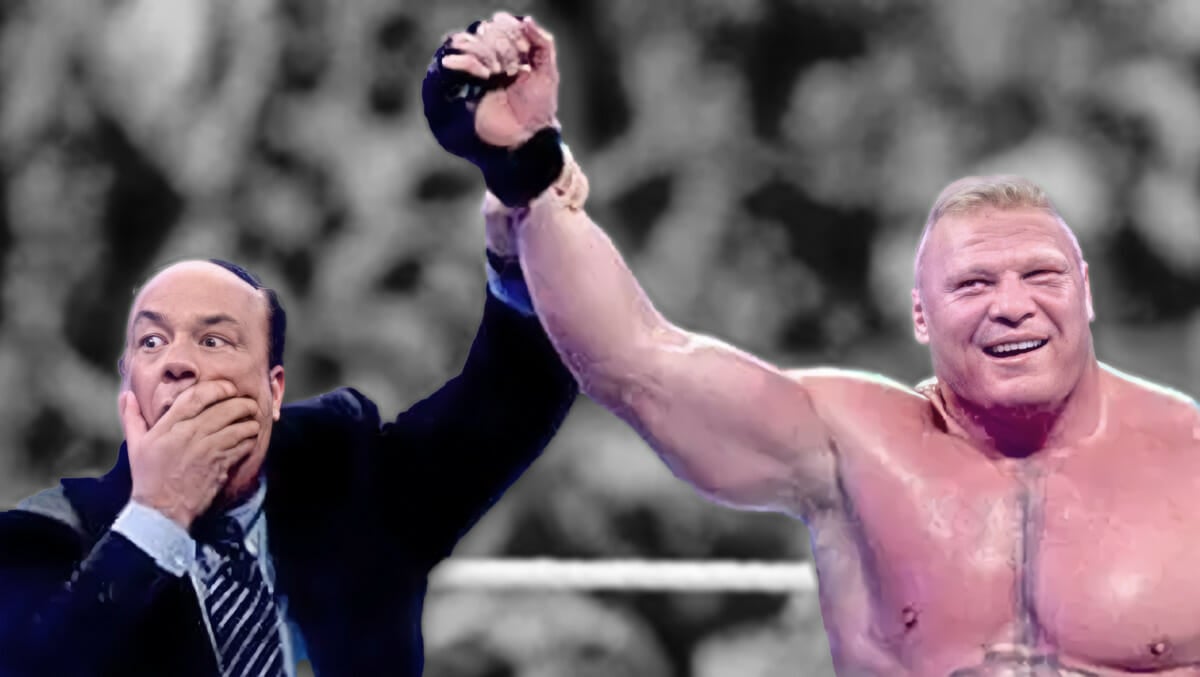
On May 7, 2012, one of wrestling's most recognizable voices walked back onto WWE television and instantly changed the temperature of the room.
Paul Heyman had been gone from the company for more than five years. He was not a weekly personality anymore, not a familiar authority figure, not even somebody fans expected to see making cameos. Then, in the middle of Raw from Greensboro, he stepped into the ring as Brock Lesnar's legal representative and delivered a message that sounded like a threat wrapped in a resignation letter.
Lesnar, according to Heyman, had quit WWE.
That was the storyline hook. The real significance was bigger than the announcement itself.
May 7 was the night WWE put the Heyman-Lesnar partnership back on television, and in hindsight it became one of the smartest presentation choices of the modern era. Lesnar had already returned to WWE a month earlier with huge star power from his UFC run, but he was still an awkward fit for the rhythms of weekly television. He was an event attraction, a destroyer, a special appearance. What he was not was a man who needed to stand in the ring every Monday and explain himself for ten minutes.
Heyman fixed that immediately.
The segment came at a tense moment in the company calendar. Lesnar had attacked John Cena after WrestleMania, then left another trail of chaos when Triple H got pulled into the fallout. WWE needed a way to keep Lesnar central to the show without burning through all of his appearances at once. As the Wrestling Observer Newsletter noted that week, Lesnar's contract gave the company only a limited number of dates, which made a strong mouthpiece even more valuable. Heyman gave them one. In a single promo, he could make Lesnar feel present even when Lesnar himself was nowhere in the building.
That was the genius of the pairing, and it was obvious from night one.
Heyman did not return as a nostalgic ECW cameo or a quick surprise for longtime viewers. He returned with purpose. The message he delivered framed Lesnar not as a loose cannon who had briefly reappeared, but as a grievance-fueled attraction who believed he was bigger than the system around him. WWE's own coverage of the show leaned into that idea, presenting Heyman as the spokesman for a man who felt mistreated, underappreciated and ready to walk away on his own terms.
That shift mattered because it turned Lesnar from a short-term comeback into a continuing power in the story. Instead of making fans wait silently for the next ambush, Heyman kept the character alive every time he touched a microphone. He could threaten lawsuits, justify assaults, insult opponents and sell the myth of Lesnar as a once-in-a-generation force who answered to nobody. He did not just talk for Lesnar. He translated him.
That part is easy to underrate now because the image became so normal. For a whole generation of fans, Brock Lesnar and Paul Heyman feel inseparable. But on that May 7 episode, the reunion still had real shock value. Heyman had been out of the wrestling spotlight long enough that his return carried genuine weight. Observer reporting from the time described how closely the appearance was guarded, with even people in the company not fully aware of the plan until late. That secrecy helped the segment land the way it did. Heyman was not telegraphed. He just appeared, and once he did, the entire Brock presentation made more sense.
It also reconnected WWE to a piece of unfinished history. Heyman had been the advocate for Lesnar during the original rise in 2002, when Lesnar steamrolled through the roster as an absurdly gifted rookie monster. Reuniting them in 2012 brought back that old chemistry, but it also updated it. This was not the teenage-next-big-thing version of Brock anymore. This was a former UFC heavyweight champion carrying himself like an elite hired gun. Heyman no longer needed to sell potential. He needed to sell inevitability.
That distinction is a big reason the segment has aged so well.
Plenty of returns get remembered for the pop and not much else. Heyman's return mattered because it solved a creative problem and established a voice that would define the next phase of WWE main event storytelling. Lesnar's second run became more than a series of cameo fights. With Heyman at his side, it became a universe of its own, one where every feud sounded enormous before the bell even rang.
It also revived Heyman as an on-screen force at the highest level of the business. Before this night, it was fair to wonder whether his WWE television role was finished for good. After it, he became essential again. His speaking style, half courtroom brief and half street-corner threat, gave Lesnar's aura structure. That eventually made the act feel bigger than a standard manager-client relationship. Heyman was not just introducing a wrestler. He was selling catastrophe.
That is why May 7, 2012 still stands up as more than a fun surprise return.
It was the night WWE figured out how Brock Lesnar's comeback needed to work. Lesnar brought the menace, the legitimacy and the star power. Heyman brought the narrative glue. Together, they turned limited appearances into major events and made silence feel strategic instead of absent.
A lot of wrestling history looks obvious once it succeeds. This one did not feel automatic at the time. It felt risky, secretive and improvised, which is part of what makes it memorable. But once Heyman stood in that ring and started speaking for Brock Lesnar again, the shape of the next several years came into view.
Some returns are about nostalgia. This one was about function.
And on that level, it was one of the most important returns WWE made all decade.