
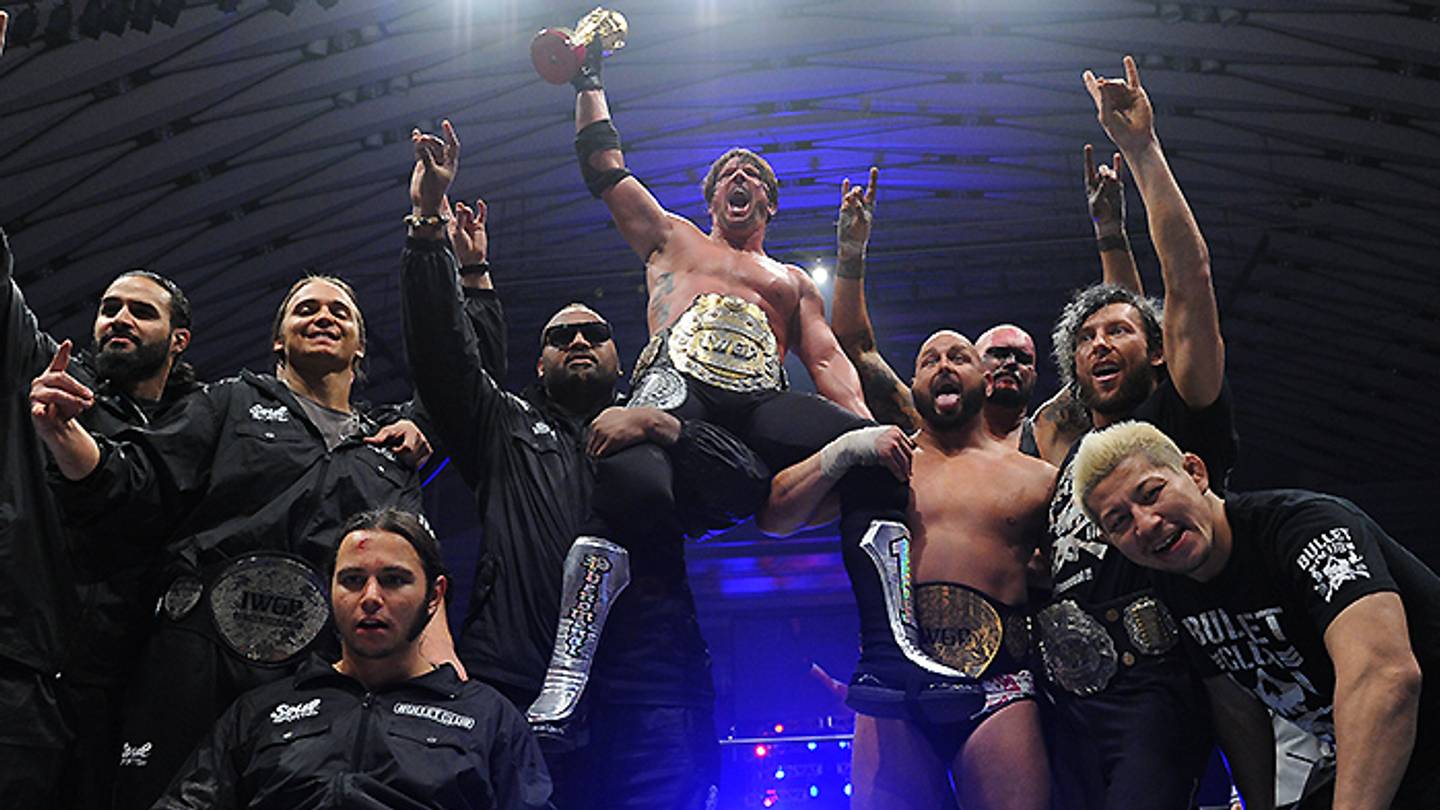
On May 3, 2014, AJ Styles walked into New Japan's Wrestling Dontaku as a dangerous outsider and walked out as IWGP Heavyweight Champion.
That sentence still feels a little wild because of how fast it happened.
Styles had already built a long reputation in the United States, but this was not the version of his career most fans expected. He had left the place where he had spent more than a decade as a cornerstone performer, landed in Japan at exactly the moment New Japan was heating up internationally, and was thrown straight into the biggest possible spot. Across the ring stood Kazuchika Okada, the Rainmaker, already carrying himself like the promotion's modern ace.
The gamble was enormous. So was the payoff.
As reported in the Wrestling Observer Newsletter at the time, Styles defeated Okada in the main event at the Fukuoka International Center Arena to become only the seventh non-Japanese wrestler to hold the IWGP Heavyweight Championship. That alone made the result stand out. This was not just another foreign challenger getting a brief main event showcase. This was New Japan putting its top prize on an American star almost immediately and asking the audience to believe he belonged there.
By the end of the match, they had their answer.
The bout itself was strong, even if the finish divided people. Styles and Okada had obvious chemistry from the start, but the larger story hung over every exchange. Styles was still a fresh face in this environment, which meant the crowd was feeling him out in real time. Okada, meanwhile, was the standard bearer, the homegrown champion fans trusted, the wrestler the company had spent years positioning as the centerpiece of its future.
That made every near fall feel like a referendum. Was Styles really going to take this title so quickly, or was he just here to create a short burst of intrigue before Okada moved on?
New Japan answered with a swerve that pushed the whole thing into overdrive. Bullet Club interference had already shaped the atmosphere, but the decisive moment came when Yujiro Takahashi turned on Okada, revealed a Bullet Club shirt beneath his cover and left the champion exposed. Styles followed with a brainbuster and the Styles Clash for the pin.
It was a finish that broke from the cleaner IWGP title-match style fans had grown used to, and that was part of why it mattered. Styles was not being introduced as a respectful visiting ace. He was being installed as a disruptive force, the foreign heel at the center of a group that wanted to drag New Japan's main event scene into something uglier, louder and more chaotic.
That shift changed more than one championship reign.
Styles had always been one of wrestling's great in-ring natural talents, but this title win gave him a different kind of aura. In TNA, he had often felt like the brilliant constant in a promotion that never quite knew how to maximize its own strengths. In New Japan, the presentation clicked almost instantly. He was not framed as an underdog workhorse or a company loyalist. He was presented as a world-class star, a threat, and a man important enough to build around.
That distinction mattered because New Japan in 2014 was becoming appointment viewing for a growing global audience. Okada was already essential. Hiroshi Tanahashi remained the promotion's emotional center. Shinsuke Nakamura brought his own magnetism. Bullet Club was catching fire. When Styles won the title on that stage, he did not just become champion. He became part of the promotion's international expansion story.
There was also something fascinating about the choice of opponent. Okada was not a fading name chosen to give a newcomer credibility. He was already elite, already central, already the wrestler who represented where New Japan was going. Taking the belt from him immediately told fans that Styles was meant to be taken seriously at that same level.
And even if the interference-heavy finish annoyed some viewers, it served a purpose. Okada was protected. Styles got the belt. Bullet Club grew more dangerous. Yujiro's turn gave the stable another jolt. One match advanced several pieces on the board at once.
That is a big reason the date still holds up. Plenty of title changes are memorable in the moment and fade later. This one became a hinge point.
Styles' New Japan run helped redefine how a lot of fans saw him. He was no longer just the gifted American standout people argued had been underrated for years. He looked like a genuine global main eventer, someone who could drop into a different wrestling culture, grab the top belt and make it feel believable. From there came the major matches, the deeper Bullet Club identity and, eventually, the stretch that made his jump to WWE feel less like a surprise and more like the next logical step.
For New Japan, the result also showed a growing confidence in how the company could use imported talent. Foreign champions were rare enough to mean something, and Styles winning placed him in a line that included only a handful of outsiders trusted with that responsibility. It was a statement that the company could protect its identity while still making bold choices for a broader audience.
The house that night was a sellout 7,190, and the decision in the main event gave those fans something lasting. Not just a title switch, but the beginning of one of the most important late-career reinventions any major wrestler had in that era.
AJ Styles did not spend years in Japan building slowly toward acceptance. He arrived, detonated the scene around him and left with the richest prize in the company.
On May 3, 2014, New Japan bet big on him.
It was one of the smartest bets anyone made that decade.