
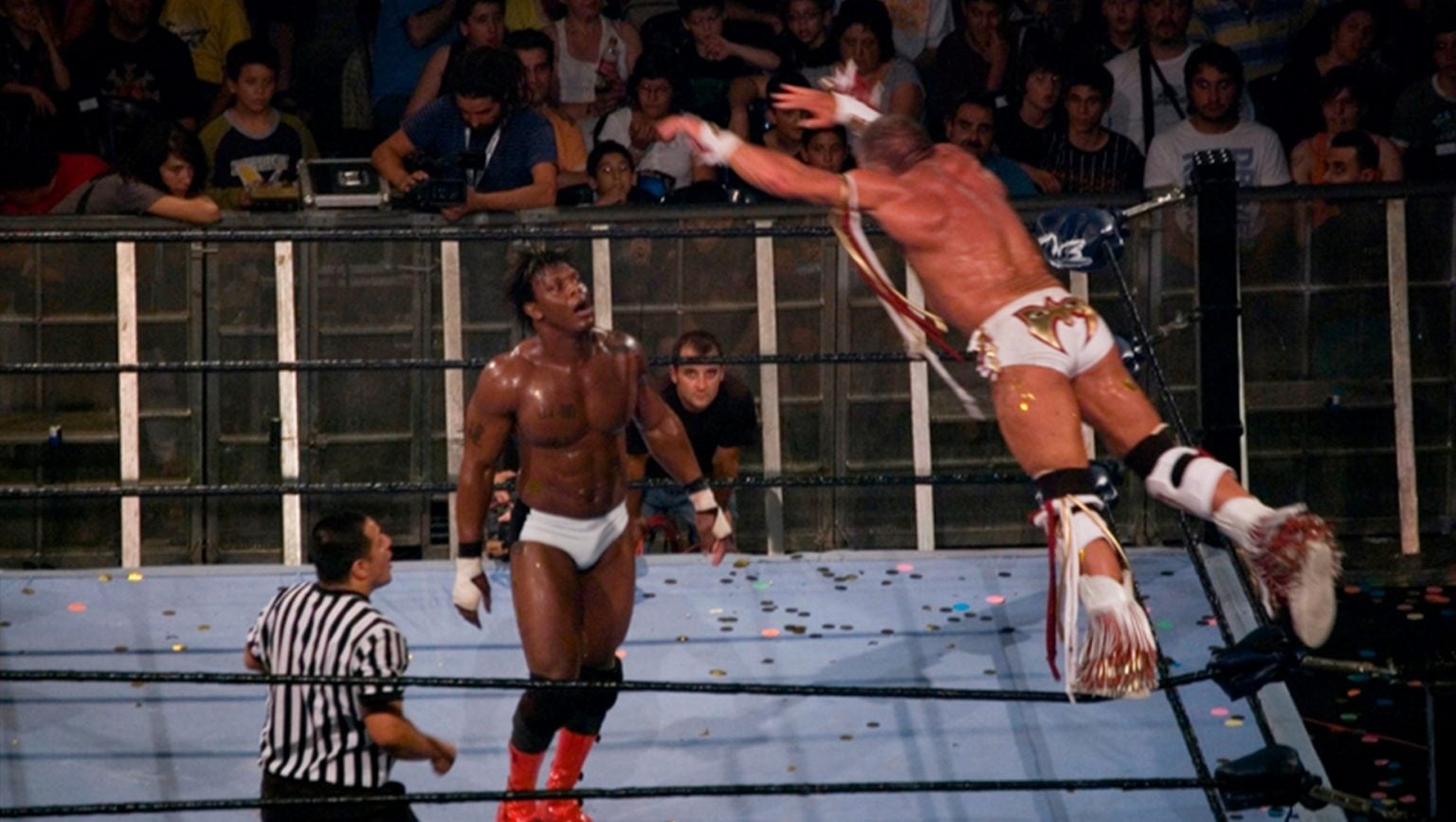
On April 8, 2014, Jim Hellwig, known to wrestling fans forever as Ultimate Warrior, died in Scottsdale, Arizona at the age of 54. The timing made the news feel almost unreal. Just three nights earlier he had taken his place in the WWE Hall of Fame. A night after that he appeared at WrestleMania XXX. Then, on the Raw after WrestleMania, he stood in the ring one last time and delivered a promo that would be replayed for years as something close to a farewell.
That sequence is what turned the story from shocking into haunting. Warrior had already been one of the most polarising and unforgettable stars of his era. His final weekend put him back in front of a modern WWE audience for the first time in a truly meaningful way, then history slammed the door almost immediately behind him.
The account published in the following week’s Wrestling Observer Newsletter laid out the basic facts. Warrior collapsed while walking with his wife outside their hotel in Scottsdale on the evening of April 8. He was taken to hospital and pronounced dead soon after. Later reporting confirmed the cause as a heart attack tied to cardiovascular disease.
For fans who lived through Warrior’s peak, the loss landed hard because there had never been anyone else who felt quite like him. Plenty of wrestlers were intense. Plenty had bodybuilder physiques. Plenty were pushed as larger-than-life attractions. Warrior felt like something different. He exploded into frame rather than walking into it. He shook the ropes like he was trying to tear the ring apart. His interviews were not normal wrestling promos so much as pure comic-book chaos, all force and volume and conviction.
That style made him one of the defining stars of the late 1980s boom. He was the kind of act a kid could understand instantly. Face paint, neon tassels, impossible energy, total certainty. You did not need nuance. You just knew this guy mattered. When he beat Hulk Hogan in the title versus title main event at WrestleMania VI, it felt like WWF had crowned a new kind of superhero.
Warrior’s career, of course, was never tidy. His relationship with WWE fractured more than once. His 1996 return did not last. His WCW run in 1998 is remembered more for spectacle and confusion than sustained success. Outside the ring, he remained a complicated and often divisive figure. That is part of the truth of his legacy, and it was part of the reason his Hall of Fame induction in 2014 felt so notable. It was not just a nostalgia pop. It was a genuine reconciliation after years of distance, grievance and very public bad blood.
That is what made the WrestleMania XXX weekend so powerful in hindsight. Warrior was not simply making a cameo. He was being restored to the official history of WWE. He stood on the Hall of Fame stage with his family. He appeared in front of the massive WrestleMania crowd in New Orleans. Then on Raw, with the painted mask and old cadence still intact, he spoke directly to the audience about a wrestler’s spirit living on through the people who remember him.
If that sounds eerie now, it is because the words were followed so quickly by tragedy. It is tempting to read the Raw speech as prophecy. Maybe that is unavoidable. But even without turning it into myth, the sequence carried a rare emotional weight. Wrestling almost never gets endings this clean, or this cruel. Careers drift off. Legends vanish for years. Reputations stay broken. Warrior came back long enough to be seen again as part of the company’s living history, and then he was gone.
That mattered to WWE as much as it mattered to fans. In purely historical terms, Warrior was too big a figure to leave stranded outside the story. He was one of the faces of an era when the company became pop culture, pay-per-view business and cartoon spectacle all at once. His feud and partnership with Hogan, his Intercontinental title run, his sprint to the ring, the visual excess of the character, all of it helped define what late-80s and early-90s WWF looked and felt like. Bringing him back into the fold closed a major gap in that lineage.
It also mattered because 2014 was a weekend built on WWE celebrating its past while selling its future. WrestleMania XXX had the long arc of Daniel Bryan reaching the top, but the Hall of Fame and the surrounding festivities were still about generations colliding. Warrior fit that theme perfectly. He was one of the clearest symbols of wrestling’s larger-than-life excess, a star from a period when character presentation was often the whole event.
His death the next day froze that final image in place. Fans did not get a long retirement tour, a documentary comeback a few years later, or another convention cycle full of stories. They got one last weekend where Warrior felt central again. For many, that is now how the memory settles, not in the bitterness of his exits or the weirdness of his later public persona, but in the strange stillness after Raw, when wrestling realised one of its loudest figures had suddenly gone silent.
Other April 8 references from that era were mostly routine weekly notes. None carried the same historical weight as Warrior’s death in 2014.