
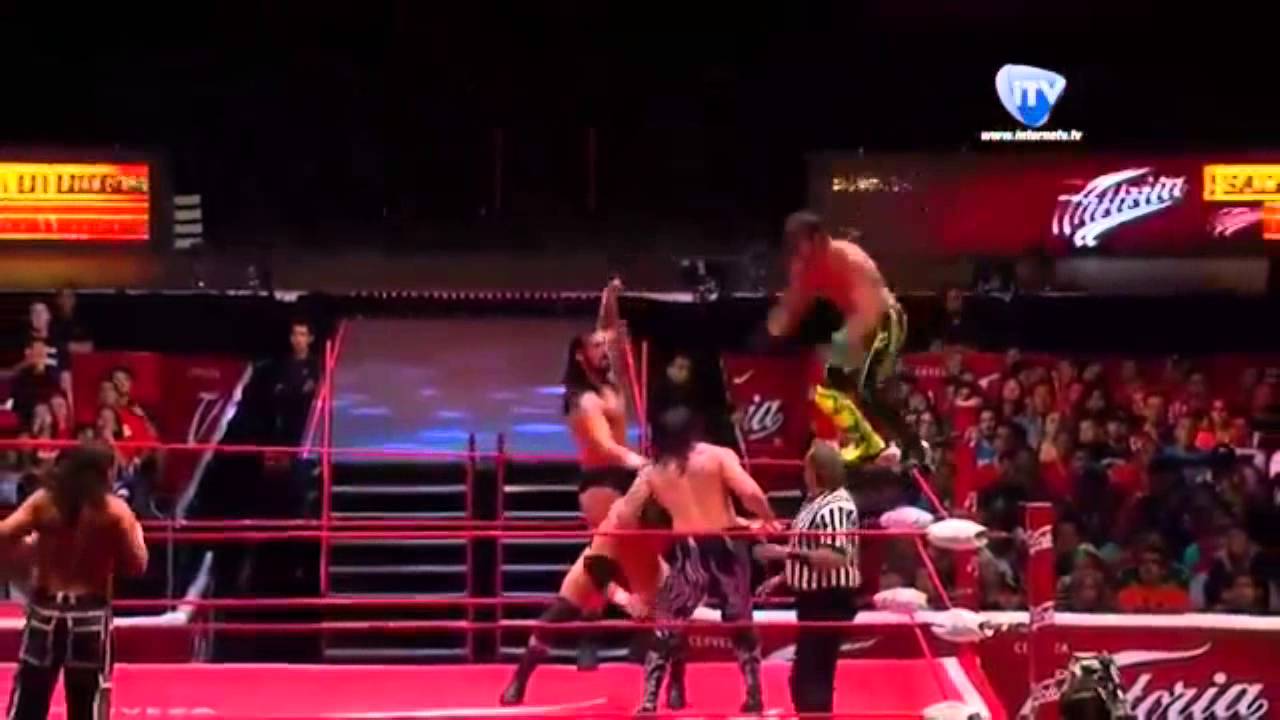
On May 24, 2015, AAA tried something that felt almost rebellious for modern wrestling. Instead of protecting borders, guarding contracts, and pretending the rest of the industry did not exist, it built a one-night tournament around the opposite idea.
The first Lucha Libre World Cup brought together wrestlers from AAA, Lucha Underground, TNA, Ring of Honor, Pro Wrestling NOAH, and All Japan, then put them all in one building in Mexico City and asked whether the chaos could turn into something memorable. By the end of the night, it had.
Rey Mysterio Jr., Myzteziz, and Alberto El Patron, billed as the Dream Team, won the tournament in triple overtime over the TNA and Lucha Underground trio of Matt Hardy, Ken Anderson, and Johnny Mundo. The result mattered, but the bigger story was the ambition behind it. AAA was not just running another major show. It was trying to present itself as the center of a wrestling world large enough to include everybody.
Why the World Cup felt different in 2015
That idea sounds more familiar now than it did then. In 2025, wrestling fans are used to crossover cards, talent sharing, and promotions borrowing each other's stars when business makes sense. In 2015, it still felt unusual for so many branded acts from different companies to appear on the same show without the entire thing turning into a novelty act.
AAA leaned into that novelty, but it also gave the tournament structure. Every match had a 15-minute time limit. If there was no winner, each side would choose a representative for a five-minute singles overtime. If that still did not settle it, another wrestler would go. The concept made the tournament feel less like a random exhibition and more like a sporting event with its own internal logic.
That presentation mattered. According to the Wrestling Observer Newsletter, the show also avoided the usual shortcuts that often defined major wrestling spectacles of the era. There were no referee bumps, no outside interference deciding the tournament, and no cheap dissension angles forced into the teams just because they would have been easy heat. Even Team AAA, which included rivals Psycho Clown and El Texano Jr., was allowed to work as a team instead of collapsing into the obvious storyline split.
That gave the night a different texture. It was still pro wrestling, still loud and dramatic and occasionally messy, but it was framed like a genuine international competition instead of a collection of swerves.
Rey Mysterio and the Dream Team gave AAA its headline moment
AAA was smart enough to understand what image it wanted at the center of the night.
Rey Mysterio was the emotional hook, the globally recognizable name who could make the whole project feel bigger than the local market. Alberto brought main event stature and the sense that he belonged at the front of a major card. Myzteziz added the kind of speed and flash that tied the group back to lucha libre's own identity. Put together, they looked exactly like what the promotion wanted the World Cup to represent: star power, home-country pride, and a version of modern lucha that could hold the room even when surrounded by imported talent.
They beat Team NOAH in the opening round, survived the tournament grind, and then closed the show by outlasting Hardy, Anderson, and Mundo in the final. That last matchup was telling. Team TNA and Lucha Underground had familiar American television faces, but AAA still chose to make the decisive image a Mexican trio standing over a crossover team loaded with outside recognition. For a tournament built around global reach, the payoff was deliberately local.
That balance was part of the appeal. AAA wanted the buzz that came from using outsiders, but it did not want its own identity swallowed by them. The Dream Team winning was the company telling fans that international expansion only worked if the home side still looked like the main event.
The show was uneven, but the ambition is what lasted
The World Cup was not perfect. Even in the moment, that was obvious.
The different styles did not always blend smoothly. Some matches felt like American television wrestling dropped into a lucha setting and asked to adjust on the fly. One quarterfinal between Team ROH and Team AAA became memorable for the wrong reason when a communication issue with the finish created visible confusion and forced an improvised overtime solution. The card had exciting dives, big personalities, and a hot crowd, but it also had the kind of awkward seams that show up when a promotion tries to make several wrestling languages coexist in real time.
But those imperfections are also part of why the event still stands out.
AAA was reaching for something bigger than a safe card. It staged the tournament in a configuration that reportedly drew around 14,000 fans, and the building came across like a major-event setting. The crowd responded loudly not only to the imported names, but to the Mexican legends presented around the tournament itself. That detail mattered because it showed what the promotion was actually selling. This was not a surrender to outside brands. It was AAA trying to prove that lucha libre could host the world's wrestling traffic on its own terms.
That is why the show has aged better as an idea than as a pure bell-to-bell classic. The first World Cup captured a moment when promotions were still far more territorial in how they sold themselves, and AAA briefly punched through that mindset. It created a card that treated interpromotional variety as the attraction, not the problem.
For Rey Mysterio, the night also fit an interesting point in his career. He was already a made star, already past the stage where one tournament could define him, but he gave the event instant legitimacy. His presence told fans this was not some side experiment. It was meant to feel important. When he stood at the center of the winning team, AAA got the exact closing image it needed.
Wrestling has since moved closer to the kind of open-door spectacle that the 2015 World Cup hinted at. That is part of what makes the date worth remembering. On May 24, 2015, AAA tried to think bigger than its lane. It did not produce a flawless masterpiece. It produced something more revealing.
It showed how hungry wrestling was for crossover before the industry fully admitted it.