
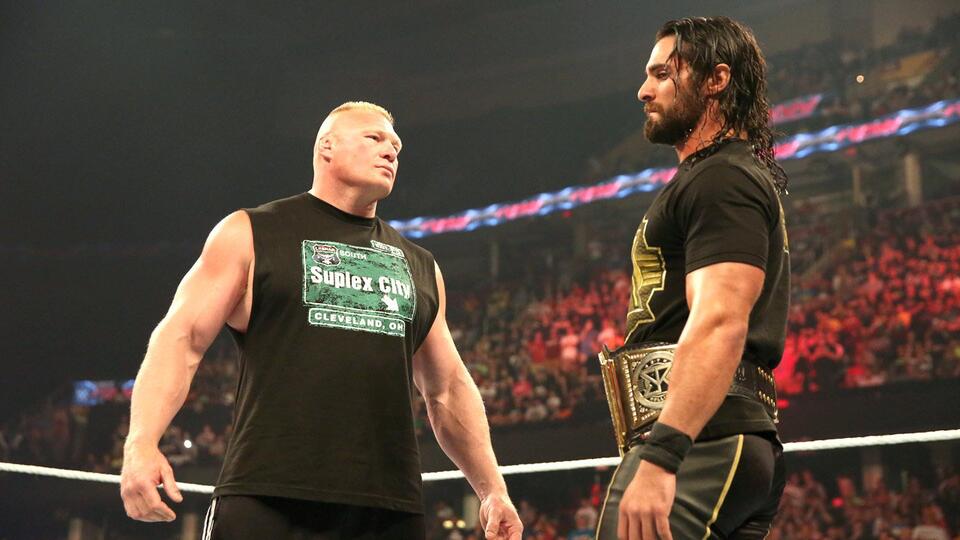
On June 15, 2015, WWE did not need a long mystery to close Raw. It just needed Brock Lesnar to walk out.
That moment, saved for the final stretch of the post-Money in the Bank episode from Cleveland, instantly changed the tone of the company’s summer. Seth Rollins was still the WWE World Heavyweight Champion, still slippery enough to talk like he had everything under control, and still fresh off escaping Dean Ambrose the night before. Then The Authority revealed its choice for his next challenger, and the entire show snapped into a different gear. Lesnar was back, Paul Heyman was back, and Rollins suddenly looked a lot smaller.
A lot of returns get remembered because they bring back a familiar face. This one mattered because it restored a very specific kind of danger. By mid-2015, Lesnar was not presented like a normal top star. He was an attraction who showed up sparingly, wrecked people in a way nobody else on the roster could, and made the whole promotion feel larger whenever he appeared. That scarcity was part of the act. When Lesnar was gone, WWE could still run big title programs. When he came back, everything around the title scene felt more serious.
That was exactly the point of the June 15 reveal. Rollins had spent the spring benefiting from chaos. He cashed in at WrestleMania 31, escaped with the championship, and leaned heavily on The Authority whenever pressure arrived. He was a strong heel champion in the sense that he understood how to duck direct danger and make people want to see him cornered. What he still needed was the kind of opponent who could make the audience believe that all the excuses, alliances and escape routes might finally stop working.
Lesnar gave WWE that in one shot. The company built the show around teasing a mystery challenger for Rollins, and once the reveal came, the segment did not need much more than Rollins’ body language. WWE’s own recap leaned into that idea, framing Lesnar as the punishment for Rollins’ recent attitude. It worked because fans already understood the scale of the threat. This was not some fresh contender being elevated into the spot. This was the same force of nature who had ended The Undertaker’s WrestleMania streak the year before and spent the previous twelve months being treated as the most intimidating man in the company.
Contemporary Observer coverage the following week underlined how big the move felt inside the larger WWE picture. Lesnar was presented as the hand-picked top contender for Battleground, and the return helped push Raw to 4.10 million viewers, its largest audience since the night after WrestleMania despite going head-to-head with the deciding game of the Stanley Cup Final. That number matters because it shows this was more than a loud arena pop. WWE had created a segment and a direction that cut through on a crowded night and reminded people that Lesnar still meant something different.
It also helped sharpen Rollins’ championship run. Rollins was a very effective heel in 2015, but his reign is easier to remember because of the monsters lined up in front of him. Ambrose gave him a wild, emotional rival. John Cena was working his own major program with Kevin Owens. Roman Reigns and Bray Wyatt were moving into their next issue. Lesnar, though, gave the title picture its most obvious sense of looming disaster. Rollins could out-scheme plenty of wrestlers. Lesnar was the guy who made scheming feel flimsy.
There is another reason the date holds up. The June 15 return became the hinge point for WWE’s next stretch of summer storytelling. Battleground followed from it, and that match in turn fed directly into the next major turn in Lesnar’s year when The Undertaker re-entered the picture. In other words, this was not a one-night nostalgia hit or a quick ratings stunt that disappeared a week later. It was the moment WWE put one of its biggest stars back on the board and let the next phase of the calendar build around him.
It is easy now to forget how much of Lesnar’s aura in that era depended on timing. Because he was not around every week, the company had to pick its spots. When they chose well, the effect was immediate. June 15 was one of those nights. The reveal was simple, almost blunt, but that was why it landed. Rollins had spent the evening talking like a champion who could handle whatever came next. Lesnar’s music hit, and the argument was over.
That is why June 15, 2015 still deserves a place on the calendar. Not every important wrestling date belongs to a title change or a classic match. Some belong to the moment a promotion re-centers its world around one arrival. Lesnar’s return did that. It reopened Suplex City, gave Rollins his most dangerous problem of the summer, and reminded everyone watching that in 2015 WWE still had one star who could alter the temperature of the room just by showing up.