
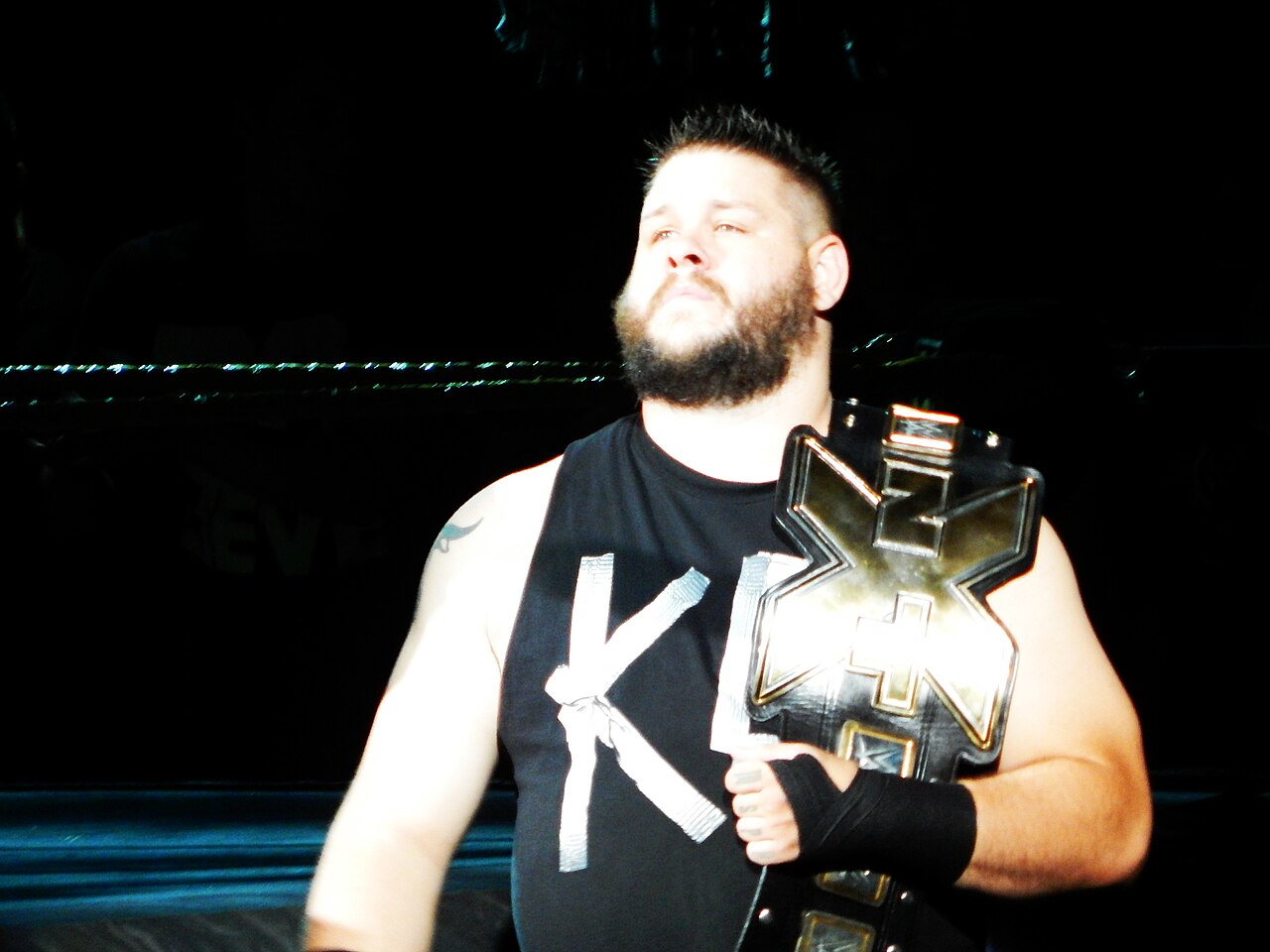
On May 31, 2015, WWE gave Kevin Owens the kind of debut most wrestlers spend an entire career chasing.
He did not show up, trade a few lines, and lose a respectable first match to the biggest star in the company. He walked into Elimination Chamber as NXT champion, faced United States champion John Cena in a non-title match, beat him clean in the middle of the ring, and left Corpus Christi feeling like somebody WWE could build around immediately.
That is what made the night so memorable. Wins over Cena always mattered, but a clean win over Cena in your first proper main roster match felt almost unreal in that era. WWE had spent years teaching its audience that Cena was the measuring stick. You could have a strong match with him and gain credibility. You could even push him to the limit and come away looking better than when you started. Very few people got what Owens got that night, which was the company telling viewers without hesitation that this new arrival belonged at the top of the card.
The setting helped make it feel even stranger. Elimination Chamber 2015 was not a normal pay-per-view rollout. The show had originally been a house show date before being turned into a Network exclusive special, and contemporary Observer coverage noted that the result was a crowd with more of a live event feel than a typical major WWE broadcast. There were plenty of kids in the building, plenty of Cena shirts in sight, and a kind of loose unpredictability that made the Owens experiment feel even riskier.
That risk was exactly why it worked.
Owens had already made noise in NXT. He had power, sharp timing, and the sort of presence that made every line sound personal. His attack on Sami Zayn in NXT had established him as more than just another good independent signing passing through developmental. But NXT success and main roster success were still treated as very different things in 2015. Plenty of wrestlers arrived from the smaller stage with momentum and then got flattened by the habits of the bigger machine.
Owens did not get flattened. He got launched.
The match itself was laid out like a test of nerve. Cena gave Owens everything a top babyface could give a new heel without sacrificing the logic of the bout. He let Owens survive, answer back, and keep the audience guessing deep into the match. Cena kicked out of the first pop-up powerbomb, which made the finish feel less inevitable and more earned. Owens then had to keep climbing, endure Cena's best offense, and find another opening.
What followed is the part people still remember so clearly. Owens escaped the STF, mocked Cena by hitting him with his own Attitude Adjustment, traded big near falls, and finally put him away with another pop-up powerbomb. Clean. No distraction. No cheap roll-up. No booking escape hatch.
That finish mattered as much as the performance. WWE had spent so many years protecting Cena that even when he lost, there was often some built-in explanation waiting nearby. This time there was none. Owens beat him with his move after a long, hard match, and the building reacted like it knew it had just watched a line get crossed. Cena did not stay in the ring to reclaim the moment either. He rolled out, leaving Owens to own the aftermath and turn Cena's own catchphrase back on him.
That final beat was perfect because it told the whole story in a few seconds. Owens was not being introduced as another name for the roster page. He was being introduced as a threat to the old order.
It also showed how valuable Cena could be when WWE fully committed to using him as a star-maker. By 2015, Cena was already secure enough that losing one night did not diminish him. If anything, his willingness to give Owens that win made the result feel bigger. It is easy now to look at Owens' later run, his championships, his promos, his WrestleMania-level programs, and assume that WWE always saw him as a major piece. That is not how it felt at the time. This was still a company that often hesitated with wrestlers who did not fit its old casting ideas of what a top act should look and sound like.
Owens forced the issue by being too good to deny, and Cena helped seal it by treating the moment like it deserved full weight.
There was also something smart about doing it in that exact match instead of saving the payoff for later. Had Owens lost a competitive first meeting and won the rematch weeks later, the company could still have told a success story. It just would not have had the same jolt. The clean upset on night one made people recalibrate in real time. Suddenly Owens was not a prospect. He was a made man, at least for that night, and wrestling fans understand how rare that feeling is.
The loss did not derail Cena. In fact, it deepened the feud and gave their later matches more edge. But the lasting importance of May 31 belongs to Owens. It was the night he stopped being a fascinating NXT standout and became a genuine WWE star in front of a national audience.
A lot of wrestlers debut with hype. A smaller number debut with a plan. Even fewer debut with total conviction from the promotion. Kevin Owens got that conviction on May 31, 2015, and he justified every bit of it.
That is why the match still holds its place all these years later. It was not just a great surprise result on a strange one-off event. It was one of those rare WWE nights where the company saw exactly what it had, acted boldly, and was rewarded instantly. Owens beat John Cena clean, and from that point on nobody had to pretend he might become a star someday. He already was one.