
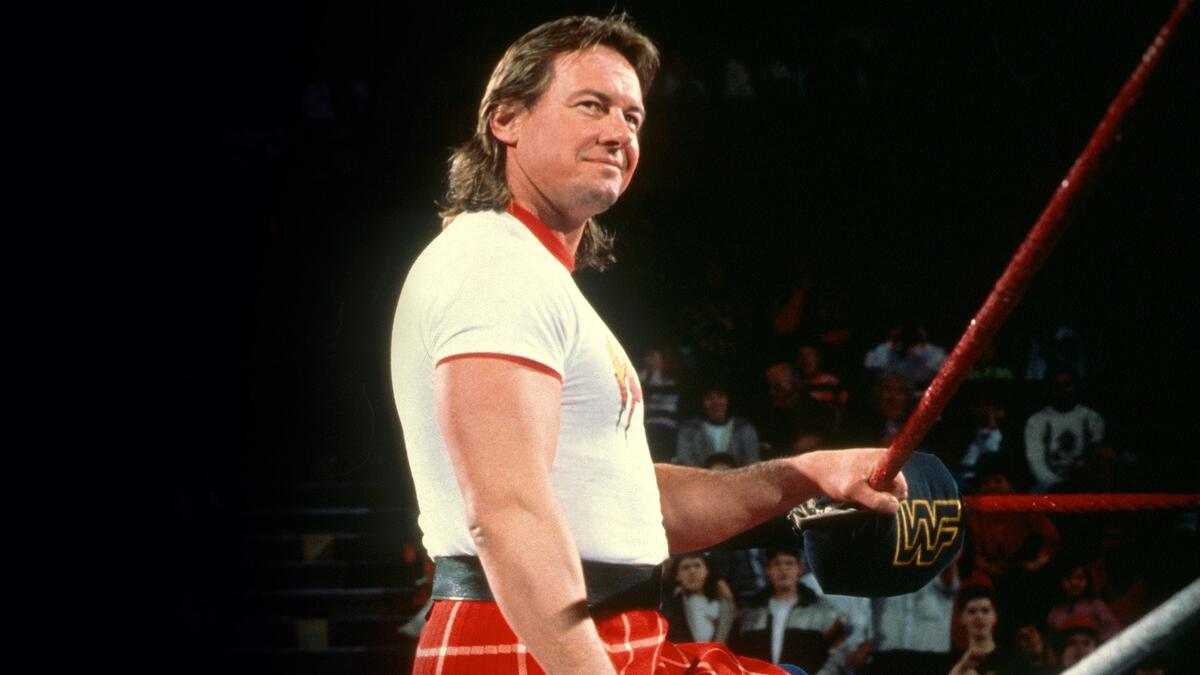
On July 30, 2015, Roddy Piper died at his Hollywood home at 61 years old. The news became public the following morning, and it landed with the particular jolt that comes when wrestling loses someone who never felt replaceable in the first place. Promotions have always produced stars, champions, and larger-than-life attractions. Piper was something trickier and rarer. He was a born disruptor, the kind of performer who could seize control of a segment before a punch had been thrown, then make the whole direction of a feud feel different just by talking.
That is why the date still matters. Piper was not simply another Hall of Fame name from the 1980s boom. He was one of the central reasons that boom felt dangerous, loud, and impossible to ignore.
The Observer's obituary coverage put it plainly by treating Piper as a heel whose work changed the complexion of wrestling. That was exactly right. Hulk Hogan was the clean-cut superhero face of national expansion, but Piper was the tension that made the act work. He was smaller than many of the era's headline monsters, not built like a bodybuilding cartoon, and never presented as the polished all-American ideal. What he had instead was a voice that could cut through anything. He sounded clever, unpredictable, offended, amused, and threatening all at once. Fans did not just watch Piper. They leaned in to hear what he would say next.
That talent had been sharpened long before cable and pay-per-view turned the WWF into a national machine. Piper had already made himself impossible to miss in Los Angeles, Oregon, Georgia, and the Carolinas. He learned how to provoke people, how to make an insult sound personal, and how to turn a crowd's anger into heat that felt alive rather than mechanical. He could be cruel, but he was rarely dull. Even when he was playing the villain, there was something recognisably human in the way he carried himself. He looked like a man who had to fight for his place, and that chip on his shoulder became the engine of the character.
By the time Vince McMahon reshaped wrestling's map in the mid-1980s, Piper was the perfect antagonist for the project. Hogan needed rivals who felt dangerous enough to justify the superhero framing. Piper gave the whole expansion an edge. His feud work with Cyndi Lauper's orbit, Captain Lou Albano, Mr. T, and eventually the first WrestleMania did more than sell a handful of angles. It helped make wrestling feel culturally noisy. The first WrestleMania is often remembered through celebrity involvement and Hogan's star power, but it needed Piper's chaos just as badly. He made the thing feel volatile.
That was true on interview television as much as it was in the ring. Piper's Pit became one of the most important segment ideas wrestling ever produced because Piper understood that talking could be the match before the match. He did not treat interviews as time to stall until the next brawl. He treated them as the place where personalities either lived or died. Plenty of wrestlers have shouted. Plenty have insulted opponents. Very few have ever made a set, a microphone, and a few minutes of television feel as combustible as Piper could.
His genius also sat in the contradictions. He was a vicious heel who often felt more honest than the heroes. He could insult the audience and still fascinate them. He was a villain, but not a cold one. Modern wrestling eventually became filled with antiheroes, wink-at-the-camera rebels, and performers whose popularity depended on sounding too real to be contained by company lines. Piper was not the only ancestor of that style, but he was one of the clearest. He showed that a bad guy could be magnetic without becoming tidy, and that an audience would follow a troublemaker if the trouble felt authentic.
There was also a loyalty to Piper that separated him from a lot of his peers. During the expansion period, he did not simply vanish from old relationships the moment the money changed. He finished dates, honoured commitments, and even drew lines about where he would and would not work because of the respect he had for people who had treated him well on the way up. That part of his story tends to get lost beneath the louder legends, but it matters. Wrestling remembers the noise first. It should also remember the code beneath it.
Piper's later life only added to the sense that he belonged to a wider pop culture than most wrestlers ever reach. His role in *They Live* was not some novelty crossover. It fit because the same thing that made him compelling in wrestling made him compelling on screen. He did not look manufactured. He looked lived in. Even outside the ring, he carried the energy of somebody who could not quite be cleaned up for mass consumption, which was exactly why audiences believed him.
His death in 2015 felt like the loss of one of the last great territory-forged personalities who remained fully legible to modern fans. You did not need to have watched Portland in real time, or Georgia television on Saturday night, to understand him. You could see it immediately. The kilt, the swagger, the bagpipes, the sneer, the sudden humor, the sense that any conversation might turn into a riot, all of it translated across generations because the character was built on instincts deeper than fashion.
More than a decade later, July 30 still stands out because it marks the end of a particular kind of wrestling greatness. Piper was not the promotion owner's dream of a corporate ambassador. He was not the neatest worker, the biggest body, or the most carefully controlled public face. He was better for history than that. He was the rebel presence that made polished stars feel vulnerable, the talker who taught wrestling that a segment could be every bit as memorable as a main event, and the villain whose fingerprints are still all over the business.
Also on this date, The Rock's return episode of Raw in Philadelphia drew a sellout in 2001 as WWF leaned harder into the Invasion summer, and Shinya Hashimoto's public memorial drew 8,000 fans in Tokyo in 2005. Both were major July 30 wrestling stories. Piper's passing remains the strongest marker because it closed the life of a performer who helped define how wrestling talks, provokes, and sells itself.