
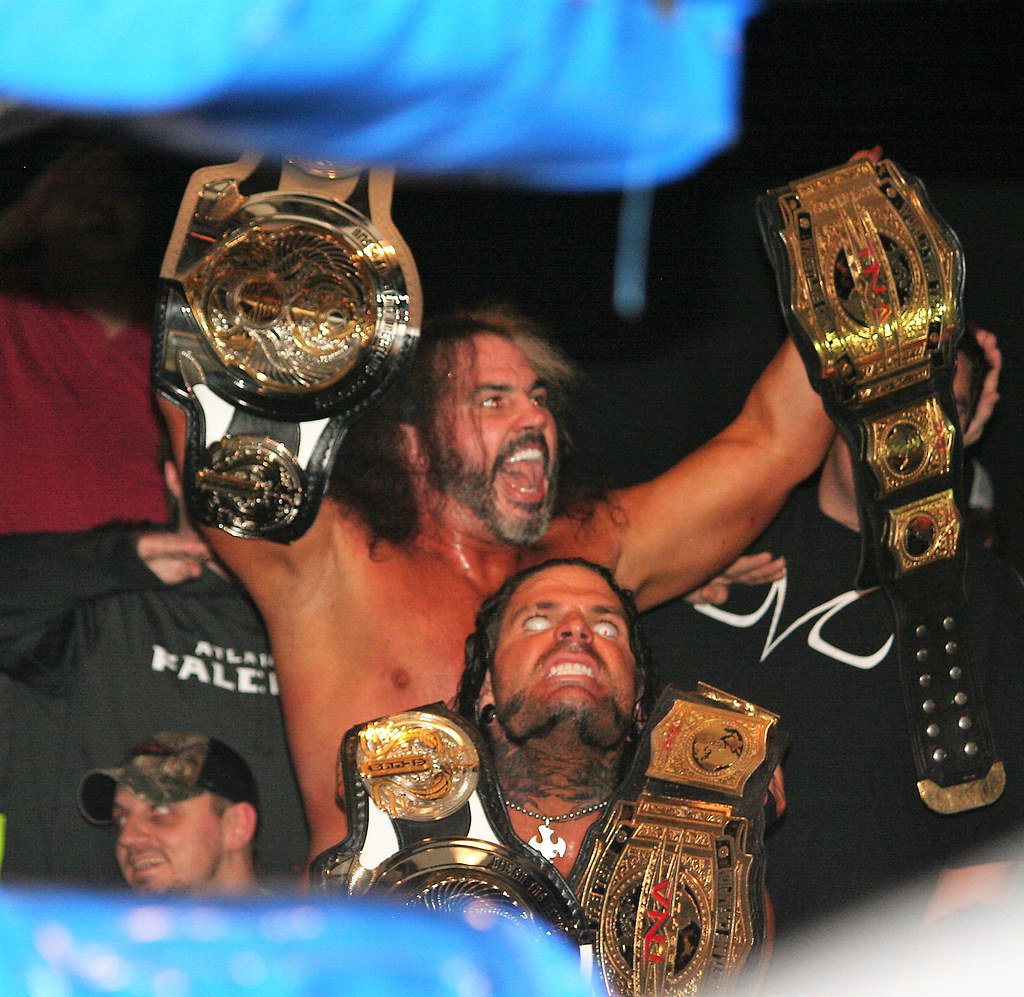
On July 5, 2016, TNA aired something that barely looked like a wrestling match and somehow felt more alive than most wrestling television at the time.
That night, Matt Hardy and Jeff Hardy brought their feud to the Hardy compound in Cameron, North Carolina for Final Deletion, a nocturnal fight built around the broken version of Matt, the doomed fate of Brother Nero, and a level of theatrical nonsense that sounded impossible on paper. There was a ring in the yard, fireworks used as weapons, a drone treated like a character, and enough chaos to make the whole thing feel like Southern gothic backyard wrestling shot through a fever dream.
It was ridiculous. It was also a genuine turning point.
Final Deletion mattered because it showed that wrestling could still surprise people by breaking its own visual grammar. In a period when so much weekly television blurred together, TNA suddenly had the most talked-about segment in the business by doing something no major American promotion had really committed to in that way before.
The Hardy feud had already outgrown normal wrestling logic
Matt and Jeff were not just revisiting old brother-against-brother history in 2016. The story had become stranger and more obsessive with each step. Matt had fully embraced the Broken Matt persona, talking in grand declarations, treating Jeff as Brother Nero, and framing the rivalry like a personal apocalypse rather than a standard wrestling grudge.
That escalation is what made Final Deletion work. If the match had arrived out of nowhere, it would have felt like empty camp. Instead, it came at the end of a feud that had already slipped out of the usual reality of wrestling TV. By the time the brothers reached the compound, the audience had been trained to expect that a regular arena blowoff would not be enough.
So TNA leaned all the way in. Rebecca Hardy was part of the presentation. Señor Benjamin was not just a side character, but part of the machinery of Matt's world. Vanguard 1, the drone, was treated with total sincerity. Jeff even re-emerged in Willow imagery during the madness, which told viewers the match was operating inside Hardy lore rather than normal promotion logic.
That commitment was the key. Final Deletion never asked fans to take just one weird element seriously. It demanded that they accept the whole universe for one night.
Why the absurdity worked
The easiest way to remember Final Deletion is to laugh at it, and there is nothing wrong with that. It was funny on purpose. It was overblown on purpose. It wanted the audience to react to every insane visual and every melodramatic beat.
But the match worked because there was structure underneath the chaos.
The fight still had wrestling stakes. Matt and Jeff were trying to settle their feud, and the winner would claim the Hardy name and brand. The ridiculous imagery was not random decoration. It was all built around the idea that Matt was trying to erase his brother and remake the family story in his own image.
Contemporary Observer coverage described it as something completely different from anything a major promotion had done before, and that is the clearest way to understand why it cut through. Final Deletion did not feel like a lightly tweaked falls count anywhere match. It felt like wrestling giving itself permission to use horror, comedy, stunt work, and character mythology all at once.
The lasting image was Jeff crashing from a burning structure into the sand below, which set up Matt's victory and the symbolic end of Brother Nero as he had existed before. It was not elegant. It was not slick. That roughness actually helped. Final Deletion felt handmade in the best possible sense, like something driven by conviction rather than polish.
The night TNA stopped feeling invisible
TNA did not suddenly solve every problem it had in 2016. The company was still dealing with instability, shrinking relevance, and years of damaged trust with viewers. One segment could not wipe all of that away.
What Final Deletion did do was make the promotion impossible to ignore for a week.
The buzz was immediate, and the follow-up numbers proved it was more than a niche internet talking point. The July 5 episode built around the match drew 410,000 viewers, a 27 percent jump and the best first-run audience the show had posted since moving to Pop TV. Just as important, the audience skewed younger and much more male than the week before, which suggested the spectacle had brought back lapsed curiosity instead of only pleasing the same existing base.
That mattered because TNA had spent years chasing relevance by looking like a smaller version of something else. Final Deletion worked for the opposite reason. It was unapologetically its own thing. Even viewers who hated it had to admit they had seen something they were not going to get from Raw or SmackDown that week.
Wrestling learned from that, even if not every promotion copied the lesson well. In the years that followed, heavily produced off-site fights and cinematic-style matches became a more familiar part of the landscape. Final Deletion was not the only reason that shift happened, but it was one of the clearest early proofs that the format could connect when the characters were strong enough and the presentation was fearless enough.
Why it still holds up
A lot of wrestling innovations age badly once the shock wears off. Final Deletion has the opposite advantage. Now that the industry has spent years experimenting with cinematic presentation, it is easier to see what made this one special.
It was not expensive spectacle for its own sake. It was character-driven spectacle.
Everything in the match came from Matt Hardy's broken worldview and Jeff Hardy's willingness to meet him there. The drones, the fireworks, the gothic narration, the backyard battlefield, all of it only works because the brothers committed completely to the idea that this family war had become larger than wrestling convention.
That is why people still talk about Final Deletion a decade later. Not because it was perfect, and definitely not because it looked refined, but because it felt bold. It reminded wrestling that ambition can be messy and still be memorable.
On this day in 2016, TNA turned one feud into a piece of wrestling folklore. Final Deletion did more than end a chapter between Matt and Jeff Hardy. It expanded the medium for a night, and the business has been borrowing from that freedom ever since.