
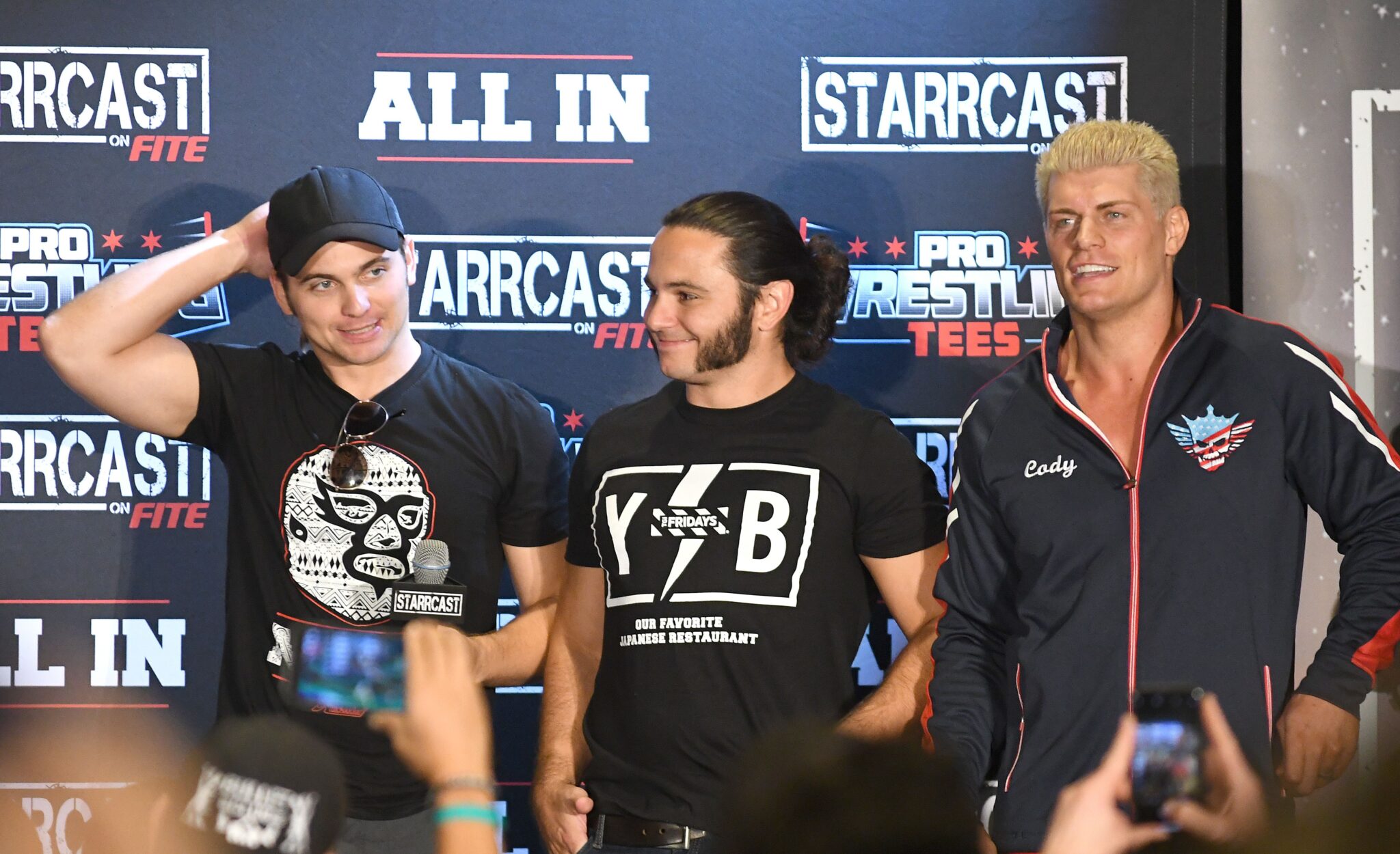
On May 13, 2018, All In stopped being a bold wrestling idea and became something much bigger.
That afternoon, tickets went on sale for the self-financed September supercard that Cody Rhodes and The Young Bucks had built around a simple challenge: could wrestlers operating outside WWE sell 10,000 seats in the United States? The answer came back almost immediately. The original allotment of 9,164 tickets was gone in just under 30 minutes.
For longtime wrestling fans, that number landed like a thunderclap. Promotions had drawn big crowds outside WWE before, of course, but this was different. All In was not being sold as a legacy major promotion with decades of television muscle behind it. It was being sold on trust, momentum, internet-era fandom and the drawing power of wrestlers who had built their followings across Ring of Honor, New Japan, Being The Elite and the wider independent scene.
By the time the sale was over, the old argument about what non-WWE wrestling could or could not do in North America looked badly out of date.
The bet became real
The roots of All In are part of modern wrestling folklore now, but they mattered because they captured the mood of the moment. In 2017, a public back-and-forth about whether Ring of Honor could ever sell 10,000 tickets turned into a challenge Cody Rhodes decided to take seriously. Over time, that challenge evolved into something bigger than an ROH house show or a vanity project.
What Rhodes and the Jackson brothers understood better than most was that fan loyalty had changed. Wrestling audiences were no longer following promotions in the old territorial sense. They were following wrestlers, online shows, recurring bits, friendships, inside jokes and a larger shared universe that played out across YouTube, convention appearances and match announcements from several promotions at once.
All In was built for that audience.
The card was still mostly an idea when tickets went on sale. Rey Mysterio was announced that day. Cody's planned challenge for the NWA Worlds Heavyweight Championship was known. Names like Kenny Omega, Kazuchika Okada, Hangman Page and Marty Scurll gave the event star power. But fans were not buying a finished lineup. They were buying into a movement, and they were buying into the belief that this crew represented something wrestling had been missing.
That is why the speed of the sellout mattered so much. A strong first day would have been a success. A sellout inside half an hour was a statement.
The moment the ceiling moved
The week's Wrestling Observer Newsletter treated the accomplishment as unprecedented in the American wrestling landscape, and it is easy to understand why. The promotion's original goal was to prove 10,000 was possible. Instead, All In blew past that psychological barrier before the summer even began.
The significance was not just the number itself. It was what the number said about demand.
For years, the accepted industry logic was that WWE had swallowed up the mainstream audience so completely that anything outside its system had a hard cap. Independent wrestling could be hot. New Japan could be respected. Ring of Honor could be influential. But there was still supposed to be a ceiling, especially in the United States, especially at arena scale, and especially without the machine of Monday night television behind you.
All In exposed that ceiling as much lower in people's minds than it was in reality.
Fans did not need a full match card. They did not need months of television. They did not need the event to come with the branding of a national giant. They needed a reason to believe the show would feel important. All In gave them that, and on May 13 they responded with their wallets fast enough to change the conversation around the entire industry.
Why All In mattered before the bell even rang
What happened on September 1, 2018, would go on to justify the excitement. The show delivered, the crowd was enormous and the event quickly took on an almost mythic place in modern wrestling history. But the real historical pivot came months earlier, on the day the tickets disappeared.
That was the day the concept was proven.
Without the May 13 sellout, All In might still be remembered as an ambitious curiosity. With it, the show became proof that an alternative could be scaled. Not instantly, not easily, and not without money, risk and the right talent at the center of it, but scaled nonetheless.
That matters because wrestling history is full of great events that were never really repeatable. All In felt different the moment the tickets sold out because it suggested a market inefficiency. There was a large audience of fans who wanted something outside the WWE structure and were ready to support it at a major league level if the presentation felt special enough.
A few months later, that idea would lead directly into the launch of AEW. Tony Khan's money, television strategy and executive structure would become the next chapter, but the emotional proof of concept was already there. When thousands of fans bought into All In before the card was complete, they were not just backing one pay-per-view. They were signaling that a new national promotion had a real chance to exist.
That is why May 13, 2018 holds up as more than a ticketing milestone. It was the day a generation of wrestlers and fans showed that wrestling's future did not have to be inherited from the old system. It could be built from a different starting point.
Also on this date
May 13 has produced other notable wrestling markers in the 1992-2020 archive window, including WWF's final Boston Garden card in 1995 and the death of Jumbo Tsuruta in 2000. Both were historically important in very different ways.
But for the shape of the modern business, it is hard to top the afternoon All In sold out and the industry's sense of what was possible suddenly got a lot bigger.