
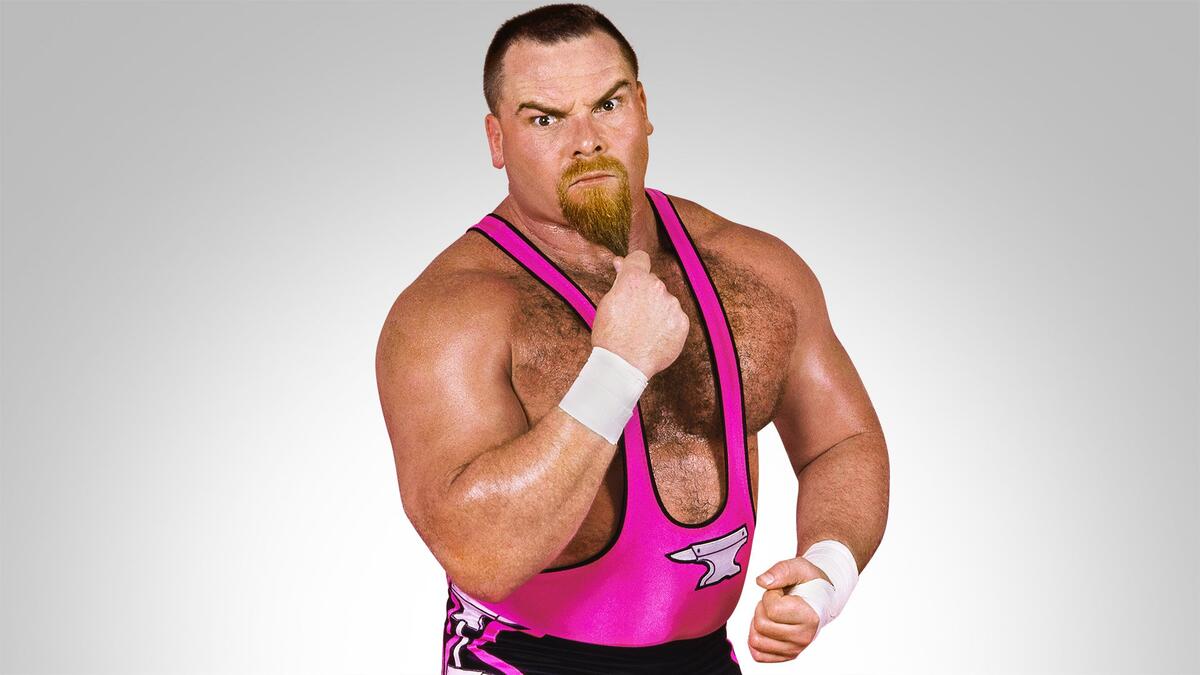
On August 13, 2018, Jim Neidhart died at 63 after suffering a seizure and a fall at his home in Florida. Wrestling lost no shortage of famous names in that era, but Neidhart's death landed differently because he was tied to one of the clearest visual and emotional memories of the 1980s WWF. Put Bret Hart next to him and the picture makes sense instantly. Bret was precision. Neidhart was force, noise and momentum. One without the other still meant something. Together, they felt complete.
That is the easiest way to understand why Neidhart mattered so much. He was not the Hart Foundation's technician or future singles ace. He was the ballast. He was the wrestler who made the team feel dangerous before the bell rang, the one with the goatee, the anvil laugh, the wild energy and the build of a man who looked like he could throw opponents through a wall. Bret Hart became one of the greatest singles wrestlers ever, but the Hart Foundation only became a classic team because Neidhart gave the act its weight and personality.
More than Bret Hart's partner
It is easy, especially in hindsight, to flatten Neidhart into a supporting character in Bret's rise. That sells him short.
Before pro wrestling, Neidhart had been a standout shot putter and football player. He trained under Stu Hart in Calgary, married into the Hart family, and carried real athletic credibility into wrestling. He was not simply a large body standing next to a future legend. He had presence of his own, and in tag wrestling presence matters. Great teams do not just need two good wrestlers. They need contrast, chemistry and an identity that fans can recognize in seconds.
The Hart Foundation had all of that. Managed at first by Jimmy Hart, Bret and Neidhart entered the WWF as heels and eventually grew into one of the promotion's defining tag teams. They won the WWF Tag Team Championship twice, worked in one of the era's deepest divisions, and helped make tag wrestling feel important on major WWF cards at a time when the company had an unusual amount of depth in that area. Their matches against the British Bulldogs, Demolition, the Rougeaus and others are still part of the foundation of late 80s WWF tag team history.
Neidhart's role in those matches was never decorative. He brought urgency. He cut off the ring, threw heavy offense, fed comeback sequences and made Bret's hot tags matter more because the danger looked real when he was in control. He also had the charisma to keep the team from feeling too clean or too careful. Bret was becoming the serious craftsman. Neidhart gave the act its snarl.
Why his death hit so hard in 2018
By 2018, Neidhart had long since moved from active national relevance into the category many older wrestlers eventually occupy, deeply familiar to longtime fans, less visible week to week, but still woven into wrestling's memory. That can sometimes make a death feel distant. This one did not.
Contemporary coverage made clear how sudden and jarring it was. Neidhart had been dealing with health problems, including seizures, and his family had spoken publicly about his struggles. Even so, the news still came as a shock. WWE responded immediately with a memorial statement that framed him the way most fans remembered him: as the powerhouse of the Hart Foundation and the father of Natalya. That was not corporate shorthand. It was the cleanest summary of how two generations of fans knew him.
Older fans remembered the original team with Bret, one of the acts that helped bridge the WWF from cartoon excess into a more athletic and emotionally grounded style. Younger fans, even those who never saw prime Hart Foundation matches live, often knew Neidhart through the extended Hart family story, through appearances connected to Natalya, or simply through the way his name kept resurfacing whenever great tag teams were discussed.
There is something revealing in that. Neidhart was not usually treated as the deepest promo or the most refined worker of his generation. What lasted was the shape of him in wrestling history. Fans remembered how he sounded, how he moved, how he looked next to Bret, and how much more real the Hart Foundation felt because he was there. That is legacy too.
The Hart Foundation's missing ingredient
When people revisit the Hart Foundation now, there is a temptation to treat the act as a prelude to Bret Hart becoming Bret Hart. That is true in one sense, but incomplete.
The team mattered on its own terms. It helped define an era when tag wrestling in North America still felt like a major attraction rather than a side division. It also gave Bret the right environment to grow. He could sharpen his timing, structure and crowd connection inside a team that already worked because Neidhart supplied the power game and the emotional volume.
That is not an accident. Many technically gifted wrestlers have had tag partners. Very few had one whose strengths complemented their own so perfectly. Neidhart made the Hart Foundation feel less like an experiment and more like a finished product. Even his rougher edges helped. Wrestling teams often become memorable because one wrestler is the blade and the other is the handle. Bret and Neidhart understood that instinctively.
Neidhart also mattered beyond the original run. He later teamed with Owen Hart as the New Foundation, and he remained part of the larger Hart family mythology that kept reappearing across generations. When the 1997 Hart Foundation faction revived the name in a totally different political and emotional context, Neidhart's presence helped give it lineage rather than just nostalgia.
Why August 13, 2018 still matters
Neidhart's death did not change wrestling history in the way a title win or a shocking angle does. What it changed was the living connection to a specific period of wrestling that still matters enormously. Every era loses its figures one by one, and with each loss the past becomes a little less direct.
August 13, 2018 was one of those dates that forced fans to stop and remember what Jim Neidhart actually was, not as a punchline, not as a side note to Bret Hart, and not as a supporting figure in reality TV family lore. He was a major part of one of wrestling's great tag acts, a wrestler whose physical presence and personality gave shape to a team that still stands up decades later.
The Hart Foundation endures because fans remember the balance it struck. Skill and violence. Timing and chaos. Bret Hart and Jim Neidhart. When Neidhart died, that balance suddenly felt historical in a more permanent way. That is why August 13 still holds weight. It was the day wrestling lost the man who made one half of a legendary team feel unmistakably alive.
Also on this date
August 13 has produced other notable wrestling moments, including Kenny Omega's 2017 G1 Climax final win over Tetsuya Naito and the death of Brian Adams in 2007. But for sheer breadth of recognition across generations of fans, Neidhart's death remains the date's most resonant wrestling marker in the 1992 to 2020 archive.