On August 10, 2018, a wrestling ticket sale told the industry something it had been slowly inching toward for months, but had not fully proven yet.
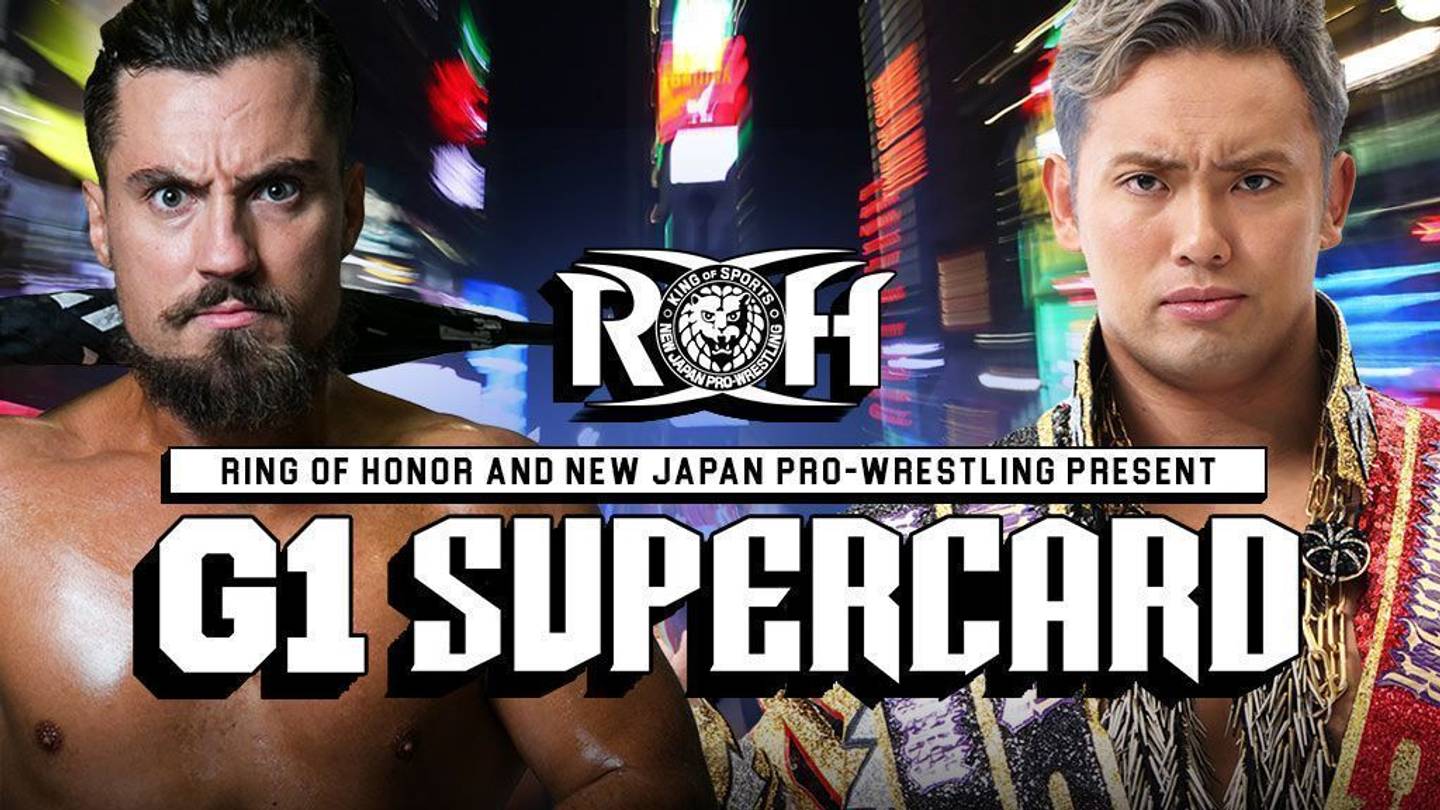
Ring of Honor and New Japan Pro-Wrestling put tickets on sale to the general public for the G1 Supercard at Madison Square Garden. Nineteen minutes later, they were gone.
That kind of line reads almost casually now because the business has changed so much since then. In the moment, it landed like a jolt. Madison Square Garden was still the building most closely tied to WWE's history, and the idea that another wrestling event could walk into that arena on WrestleMania weekend, run against NXT TakeOver, and sell out before lunch felt like a direct challenge to years of accepted wisdom.
The show itself would not take place until April 6, 2019. On August 10, 2018, there was not even a finished card to sell. That was part of what made the result feel so important. Fans were not buying one dream match. They were buying the strength of two brands, the momentum of a scene, and the belief that a major league American wrestling event could exist outside WWE's umbrella.
Madison Square Garden still meant something different
Plenty of buildings carry prestige, but Madison Square Garden has always lived in wrestling as more than a venue. It is shorthand for big nights, old territory power, and the idea that if you could draw there, you were operating on the industry's most public stage.
That symbolism mattered in 2018 because Ring of Honor had never tried to run a room of that scale. The Garden could be configured for roughly 18,500 wrestling fans. The year before, ROH's WrestleMania weekend Supercard in New Orleans had drawn about 6,000. That was a strong number on its own, but it still lived in the normal range of a hot specialty promotion. Madison Square Garden was a different proposition entirely.
New Japan's involvement changed the ceiling. So did the timing. The show was slotted for WrestleMania weekend, when tens of thousands of hardcores were already planning their travel, but it was not just scavenging leftover tourism. The point was that ROH and New Japan were presenting their event as a destination, not a side attraction.
That distinction is why the sale mattered so much. Plenty of promotions have had buzz. Far fewer have converted that buzz into instant arena-scale demand in New York.
The road to the sale was not smooth
Part of the story is that the event almost felt fragile before it ever became historic.
Months before tickets went on sale, Sinclair CEO Chris Ripley had revealed that Ring of Honor was planning to run the Garden in 2019. Then the deal became murky. ROH's Joe Koff publicly said the promotion believed communications from WWE had helped stall the original arrangement, while WWE denied that it had blocked anything. However anyone interprets that back-and-forth, the important point is that the booking did not feel routine. It felt contested.
By July, the show was official. That alone created a wave of attention because the matchup was so unusual. ROH and New Japan were not simply booking another arena. They were planting a flag in the building that had for decades served as pro wrestling's most famous home court.
Then came the early sales data. Reports that week indicated an HonorClub presale had already moved about 60 percent of the available inventory before the public onsale ever began. That meant August 10 was never just a cold-market test. A committed audience had already shown up with its wallet out.
Still, there is a major difference between a healthy presale and a 19-minute public sellout. One says a show has interest. The other says the market was waiting for it.
The sellout proved the audience was bigger than people admitted
The Observer's coverage later that month treated the result as one of the clearest business signals of the year, and that feels right in hindsight.
For a long time, the default assumption around American wrestling was that there was a hard cap outside WWE. A promotion might get hot. A card might draw unusually well. Independent stars might build cult followings online. But the broader belief was that once you moved into true major-event territory, the audience would thin out fast.
The Garden sale punched a hole in that argument.
This was not a loaded WrestleMania card with decades of television behind it. It was a co-promoted show built on credibility, style and fan trust. Very few names had been publicly attached to it at that stage and no actual matches had been announced. Yet people bought tickets anyway because ROH and New Japan had spent years teaching a certain audience that their big events were worth believing in.
That is the part of the story that can get lost if you only focus on the speed of the sale. Nineteen minutes was impressive, but the real meaning sat underneath it. Fans were no longer acting like non-WWE wrestling had to stay in a niche lane. They were willing to support it at a level that looked major league.
That was especially important in 2018 because the business was already shifting. All In had sold out earlier that year. New Japan had built real North American buzz through its U.S. expansion and through the global reach of names like Kenny Omega, Kazuchika Okada, Tetsuya Naito and Hiroshi Tanahashi. Ring of Honor had become more than a developmental waypoint. August 10 turned all of that momentum into a number nobody could dismiss.
Why this date still matters
The April 2019 G1 Supercard ended up becoming a complicated show, but the historical importance of August 10 does not depend on how the event played out bell to bell.
The ticket sale was the statement.
It showed that the appetite for a large-scale alternative in the United States was not theoretical. It showed that Madison Square Garden could host a major wrestling event without WWE branding on the marquee. It showed that the audience for this version of wrestling was organized, motivated and willing to spend quickly.
Just as importantly, it helped change the tone of the conversation going into 2019. By the time AEW launched, nobody could honestly argue that the market had given no warning signs. Wrestling fans had already used their money to say they wanted more than one major destination.
That is why August 10, 2018 holds up as more than a nice ticketing story. It was a business milestone, a symbolic breakthrough, and a loud reminder that wrestling's old map was being redrawn in real time.
For Ring of Honor and New Japan, the Garden sellout was proof they belonged in that space. For the wider industry, it was a warning shot. The biggest point was no longer whether an audience existed outside WWE. On that Friday morning, the audience answered for itself.