
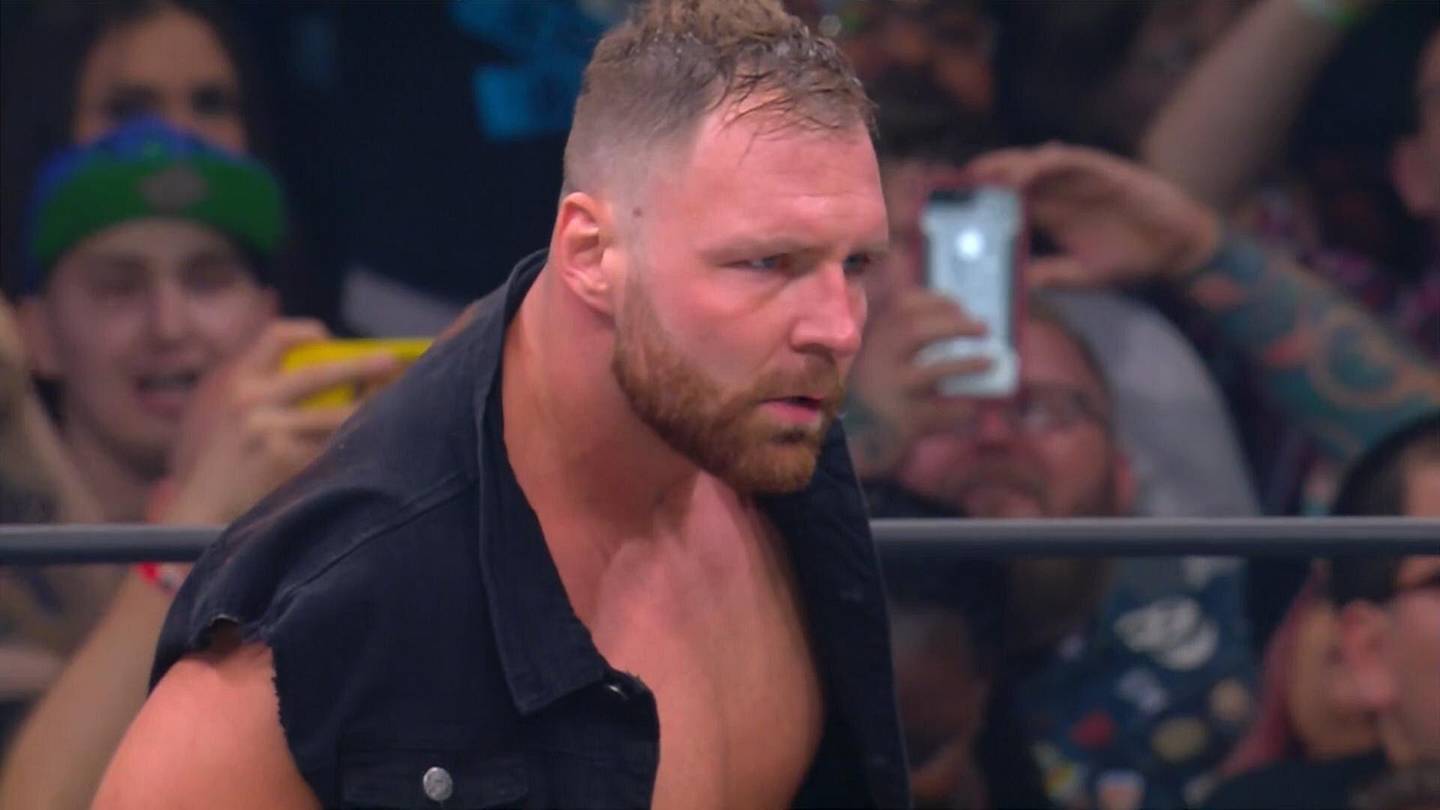
On June 5, 2019, Jon Moxley had his first match after leaving WWE, and he made sure nobody could mistake it for a fresh coat of paint on an old act.
That night at New Japan's *Best of the Super Juniors* final in Tokyo, Moxley beat Juice Robinson to win the IWGP United States Heavyweight Championship. On paper, that is a title change. In wrestling history, it was a lot more than that. It was the night Moxley showed what the next phase of his career was going to look like, and how far he was willing to push it.
The timing was part of what made it hit so hard. Moxley had already created a storm by showing up at AEW's *Double or Nothing* less than two weeks earlier, but that was an arrival angle. June 5 was the first real test. He had to wrestle, he had to connect, and he had to do it in a company and a style that would expose anybody trying to coast on name value alone.
He did the opposite.
Contemporary *Wrestling Observer Newsletter* coverage described him as a completely different wrestler from the one viewers had just spent years watching on American television, and that was the heart of the moment. Moxley did not come into New Japan trying to recreate Dean Ambrose in a new building. He came in meaner, rougher and far more dangerous. The match with Robinson turned into a fight built around biting, chair shots, table spots and a level of physical ugliness that felt intentional. It was not violence for the sake of shock. It was Moxley making a statement that freedom, for him, was going to look messy.
That mattered because Robinson was the right opponent for it. He was not some placeholder champion there to hand over a belt and get out of the way. By mid-2019, Robinson had become one of the promotion's most convincing babyfaces, a loud, emotional American who had rebuilt himself in Japan after washing out of the WWE system. In that sense, the match had a clever mirror to it. Robinson was one version of reinvention. Moxley was another. Robinson had become a New Japan success story through patience and growth. Moxley arrived like a wrecking ball and tried to seize the room on contact.
The result was a match that felt unstable in the best possible way. Robinson's big balcony dive, the table crashes, the blood and the sense that neither man wanted to blink first all gave the bout a tension you do not usually get from a standard debut showcase. Moxley won with Death Rider, the elevated version of Dirty Deeds that soon became one of the signature images of his post-WWE run. The move itself was symbolic. It was familiar enough that you knew exactly who was delivering it, but different enough to tell you he was no longer interested in being packaged the same way.
That is why June 5 still stands out. Plenty of wrestlers leave WWE and immediately promise that fans are finally about to see the "real" version of them. Sometimes that is true. Sometimes it lasts for a week. Moxley backed it up in one night. His New Japan debut did not feel like a nostalgia trip, a rebellion speech or a side quest. It felt like a hard reset from a wrestler who had been waiting to rip the lid off his own career.
It also changed the shape of New Japan's summer. The U.S. title gave Moxley an instant stake in the promotion, and within days he was not just a visiting attraction. He was part of the conversation. That run carried into the G1 Climax, where he became one of the tournament's biggest stories, and it helped establish the version of Moxley that would soon become central in AEW as well. When people talk about his post-2019 career now, this is one of the dates they keep circling back to because the identity was so clear so quickly.
There was another reason the moment landed the way it did. It happened on a card that already felt historic. The same show ended with Will Ospreay beating Shingo Takagi in a final that many fans still consider one of the greatest junior heavyweight matches ever wrestled. Hiroshi Tanahashi returned. Jay White beat him. The building was already buzzing before Moxley and Robinson even got to the ring. Instead of getting lost on a loaded show, Moxley forced his way into the memory of it. That tells you how strong the performance was.
There is a bigger career lesson in that. Wrestling reinventions usually work best when they are not explained to death. They work when the audience can feel the change immediately. On June 5, 2019, Moxley did not need a long monologue to tell fans he was done being boxed in. He wrestled like a man trying to prove that every version of himself people thought they knew had been incomplete.
And in a lot of ways, he was right.
The Moxley who left WWE in 2019 was interesting because of the mystery around him. The Moxley who beat Juice Robinson in Tokyo was important because the mystery was gone. Fans could see the blueprint now. He was going to brawl, bleed, throw himself into danger and chase work that felt alive to him. He was going to bet that his edge would hold up outside the machine that had made him famous. June 5 was the first night that bet paid off in full view.
On this day in 2019, Jon Moxley did more than win a championship. He introduced the version of himself that would define the next era of his career, and he did it with the kind of performance that made the whole wrestling world stop and pay attention.